Japanese Maple Leaves: The Cultural Heart of Autumn in Japan
On this page
The first blush of red appears not on the trees, but in the old poetry—a thousand years before Instagram made autumn famous.
When a Leaf Becomes a Hand
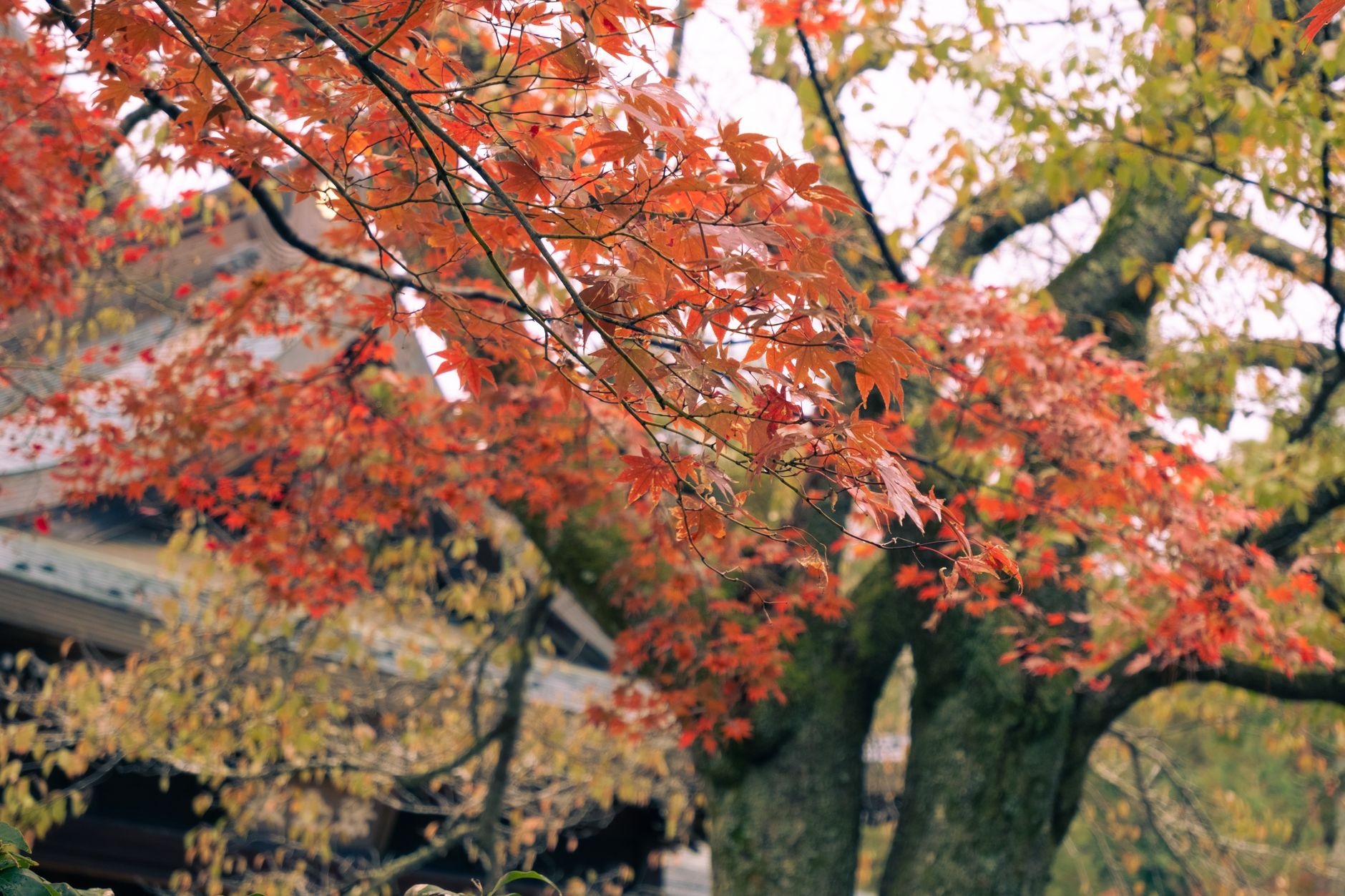
The Japanese don't just call them autumn leaves. They call them momiji (紅葉), and the word itself tells you something essential: it means "to become crimson," a verb turned into a thing. The leaf isn't just red—it's becoming red, caught in the act of transformation.
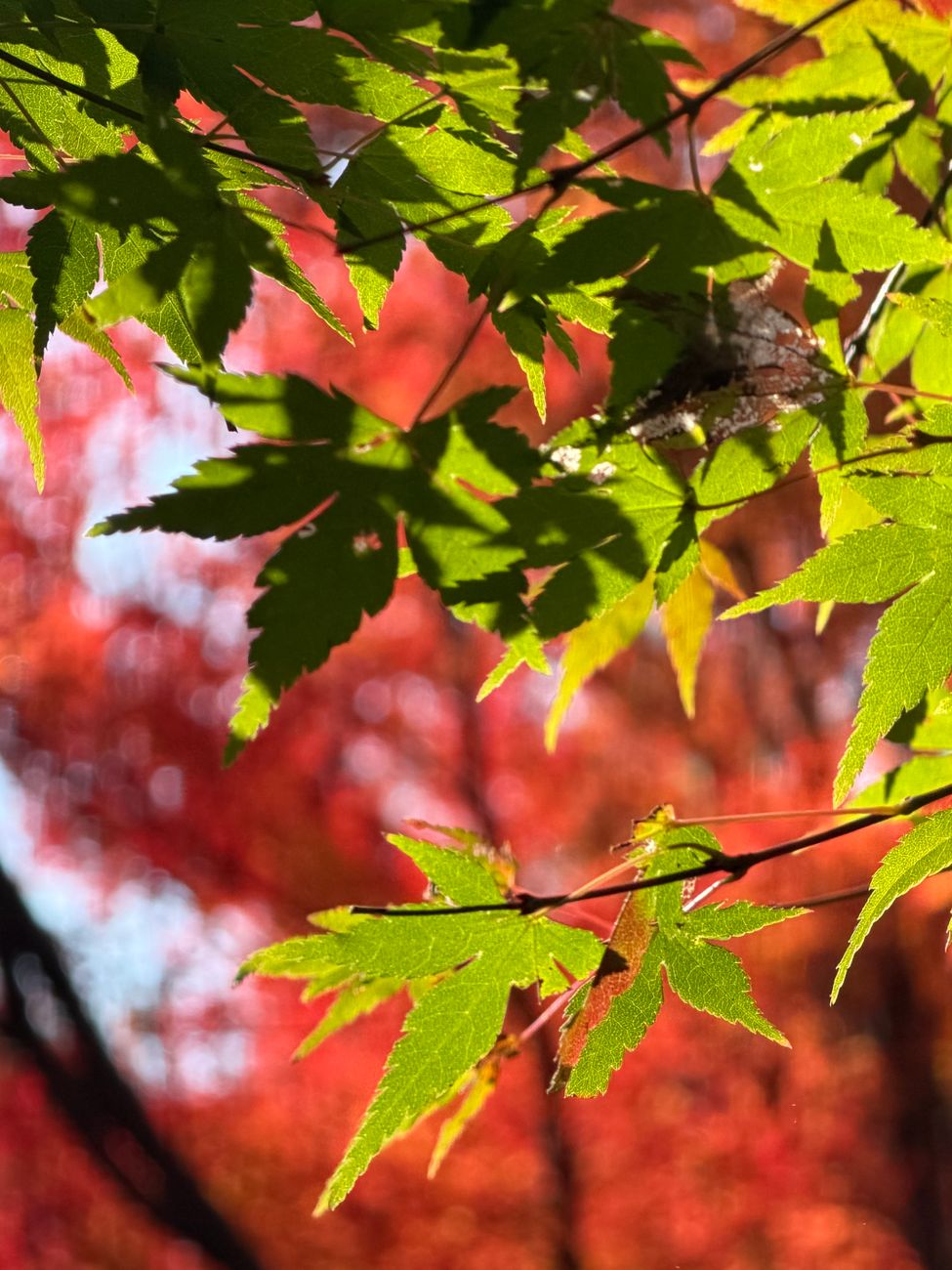
Stand beneath a maple in late November and you'll understand why this matters. The leaves don't simply change color and fall. They seem to glow from within, backlit by slanting autumn sun, each one a small stained-glass window. The Japanese maple, with its delicate, hand-shaped leaves, looks less like foliage and more like a thousand open palms reaching toward the sky.
That hand shape isn't coincidence in the cultural imagination. Children are still taught to trace their hands and see the maple's form—five points, slender fingers, the slight curve of a gentle wave.
The Art of Watching Leaves Fall
Momijigari (紅葉狩り)—literally "hunting for autumn leaves"—is the practice of seeking out the season's most spectacular displays. But calling it "hunting" is wonderfully misleading. No one captures anything. You simply go, look, and let the season wash over you.
The practice teaches you that beauty arrives on its own schedule, and your only job is to show up.
Families pack bentō boxes and travel to mountain temples. Couples stroll through gardens designed centuries ago to frame a single perfect maple against a stone lantern. The practice is democratic—farmers and emperors alike have done this for over a millennium. What matters isn't status but attention: the willingness to stop, to notice, to feel the chill in the air that makes the colors possible.
Maple Leaves in the Palm of Your Hand
In Kyoto's kaiseki restaurants, you might find a single maple leaf—tempura-fried to golden translucence—resting on your plate beside grilled fish. It's edible, delicate, barely sweet. The chef isn't garnishing. They're serving you the season itself.
This is where the maple leaf transcends decoration and becomes language. On a tea sweet, its shape pressed into sugar. Floating in your sake cup at an autumn festival. Scattered across lacquerware, frozen mid-fall for centuries. The Japanese aesthetic principle of shun (旬)—celebrating ingredients and images at their peak moment—finds perhaps no better expression than the maple leaf, which exists in its full glory for mere weeks.
Even the word for the autumn viewing season, aki (秋), appears in poetry as a time of both beauty and gentle melancholy. The leaves are most beautiful just before they fall. Everyone knows this. No one looks away.
Red Mountains, Red Rivers
Travel north to Hokkaido in October or south to Kyoto in late November, and you'll find entire mountainsides on fire with color. The effect is so total that rivers seem to run red with reflected leaves, and the air itself takes on a warm, amber quality.
The momiji viewing season moves like a slow wave down the archipelago, following the cold. Weather reports track it with the seriousness usually reserved for storms. The momiji zensen (紅葉前線)—the "autumn color front"—is mapped, predicted, celebrated. Timing a trip to catch peak color requires the same attention as cherry blossom season, but with a different emotional register. Softer. More introspective.
The cherry blossom asks you to notice fragility. The maple leaf asks you to notice transformation—and to remember that the most vivid beauty often comes just before a season ends.
FAQ
Chaware curates authentic Japanese crafts — straight from the makers in Japan to your table.
Explore the Chaware collection →