Tanabata: Japan's Star Festival and the Seasons That Shape It
On this page
Two lovers, separated by the river of stars, meet only once a year. And on that single summer night, all of Japan looks up.
Tanabata, the Star Festival, is many things at once: a romance written in constellations, a harvest prayer disguised as wishes on bamboo, and one of Japan's most visually poetic celebrations. But beneath the colorful paper streamers and handwritten dreams lies something older—a festival shaped by the rhythms of agriculture, monsoon rains, and the slow wheel of the cosmos.
## When the weaver crosses the river
The story at the heart of Tanabata comes from Chinese legend: Orihime, the weaving princess (the star Vega), and Hikoboshi, the cowherd (Altair), fell so deeply in love they neglected their work. As punishment, they were banished to opposite sides of the Amanogawa—the Milky Way—allowed to meet only on the seventh night of the seventh month.
But here's where the festival becomes truly Japanese.
When the story arrived from China over a millennium ago, it merged with local Shinto purification rituals and agricultural customs tied to the summer growing season. The seventh month once marked a critical moment: crops were maturing, but still vulnerable. Communities needed the favor of the heavens—especially rain, but not too much.
The wishes written on paper strips weren't always for love; they were prayers for skillful hands and abundant harvests.
## Bamboo, paper, and the art of asking
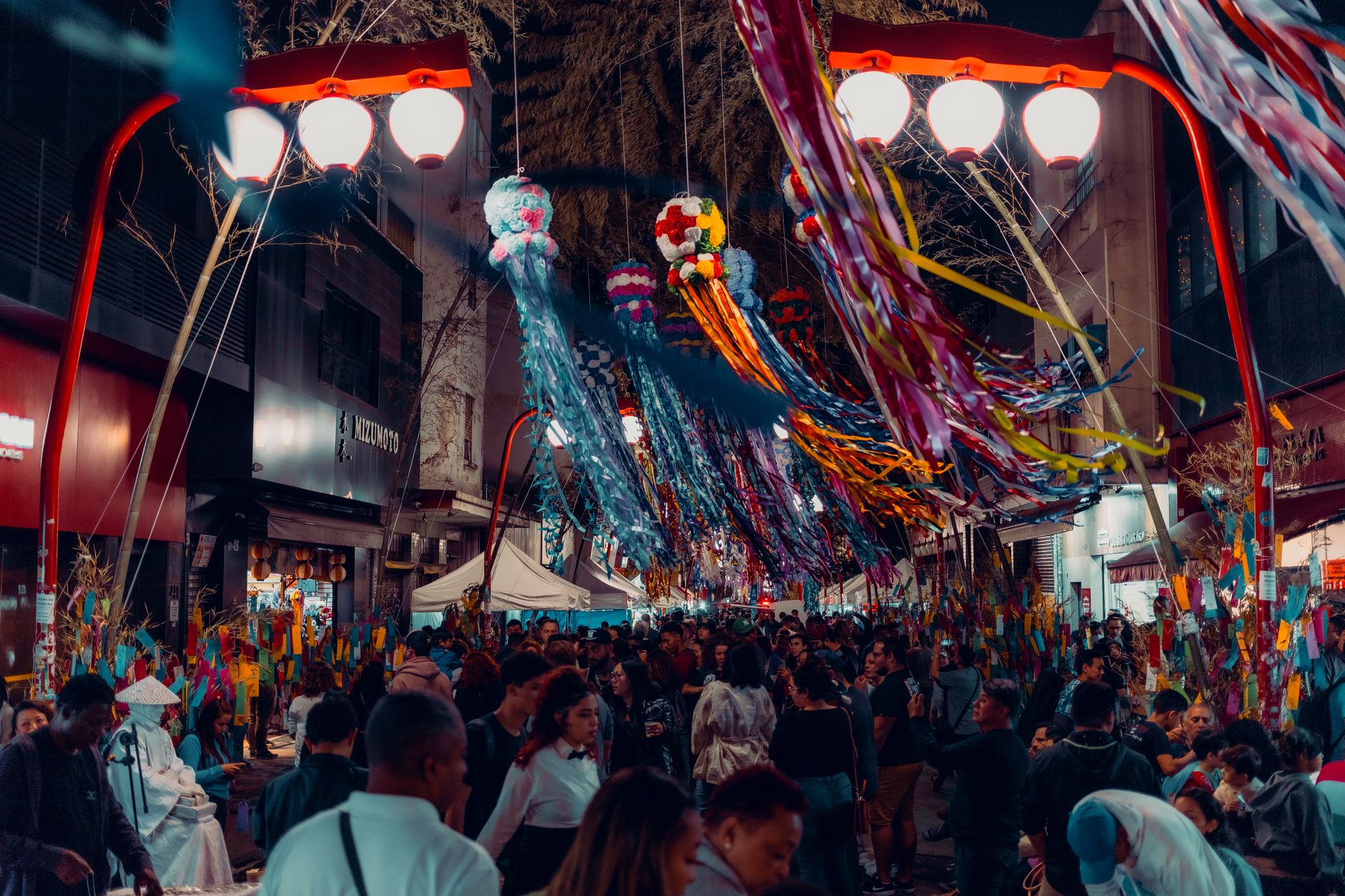
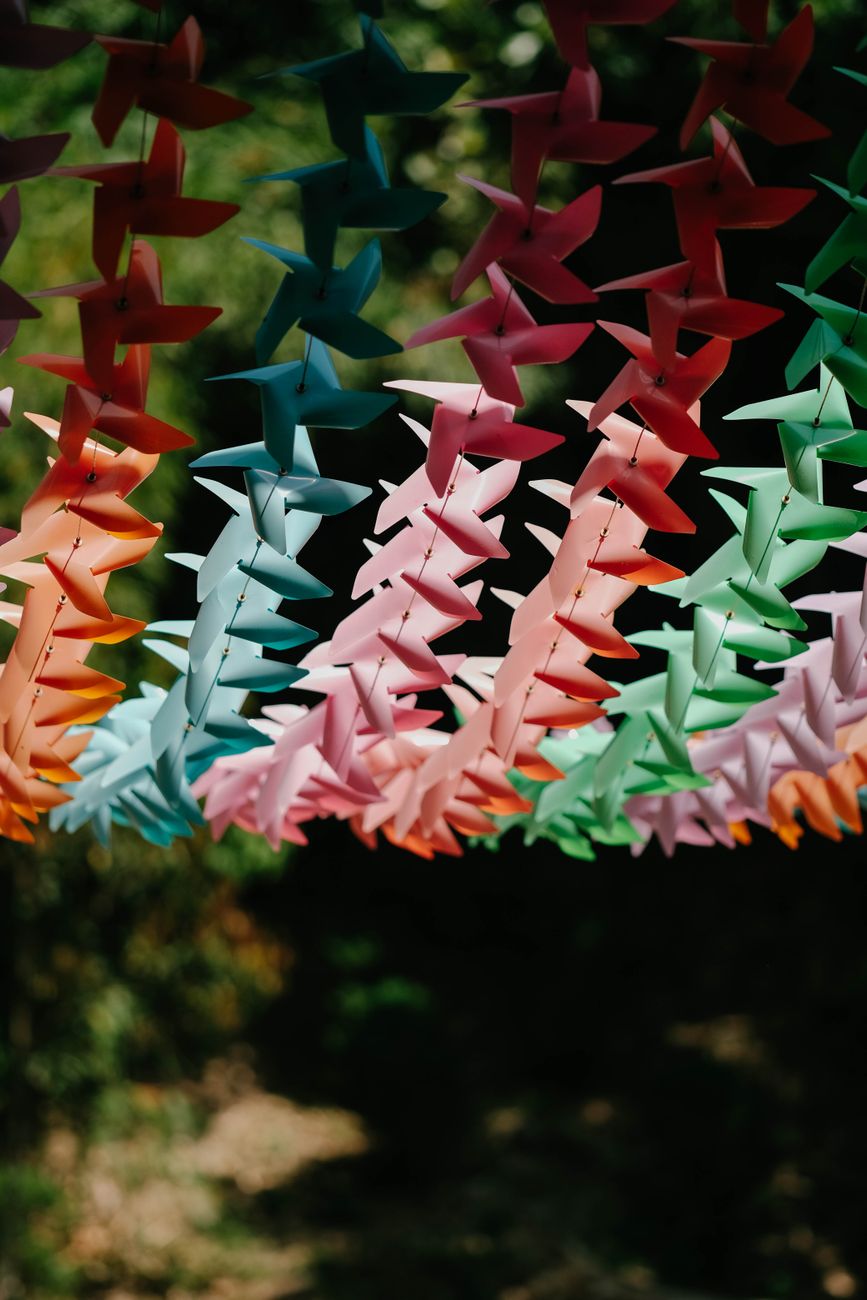
Walk through any Japanese neighborhood in early July and you'll see them: tall bamboo stalks hung with tanzaku—narrow strips of colored paper bearing wishes in careful brushstrokes. Children write hopes for good grades. Adults pen aspirations. The bamboo itself isn't arbitrary.
Its hollow chambers were believed to carry wishes skyward. Its resilience symbolized strength. And its rapid growth mirrored the urgency of the season—this narrow window when summer's energy peaked before the typhoons arrived.
The decorations tell their own story:
- Kinchaku (paper purses) for prosperity
- Kamigoromo (paper kimonos) for protection and sewing skill
- Fukinagashi (streaming ribbons) representing the weaver's threads
Each ornament connects back to Orihime's craft, to the practical skills that sustained agrarian life.
## Two calendars, two seasons
Here's where Tanabata gets complex. Officially celebrated on July 7th in most of Japan, the festival originally followed the lunar calendar—which would place it in early August, closer to the actual seasonal timing the festival was born from.
Some regions, particularly Sendai, still honor the later date. And there's logic to it: early August aligns with Obon, the season of ancestors, creating a continuum of summer ritual. It's also when Vega and Altair are most visible in the northern hemisphere sky, weather permitting.
The rainy season—tsuyu—often obscures the stars in early July. The lovers' reunion, in many years, happens behind clouds. There's a bittersweet poetry to that, very Japanese in its acceptance of impermanence.
## What remains
Tanabata has evolved. Modern festivals feature elaborate parades, electronic displays, shopping district promotions. Yet the core gesture persists: writing a wish, tying it to bamboo, looking up.
It's a festival that asks you to articulate hope in your own hand, to make it physical, to trust it to the wind and stars.
And for one night, the boundary between earth and cosmos feels as thin as rice paper.
FAQ
Chaware curates authentic Japanese crafts — straight from the makers in Japan to your table.
Explore the Chaware collection →