How Tsugaru Bidoro Glass Is Made: Inside Japan's Artisan Glassblowing Tradition
On this page
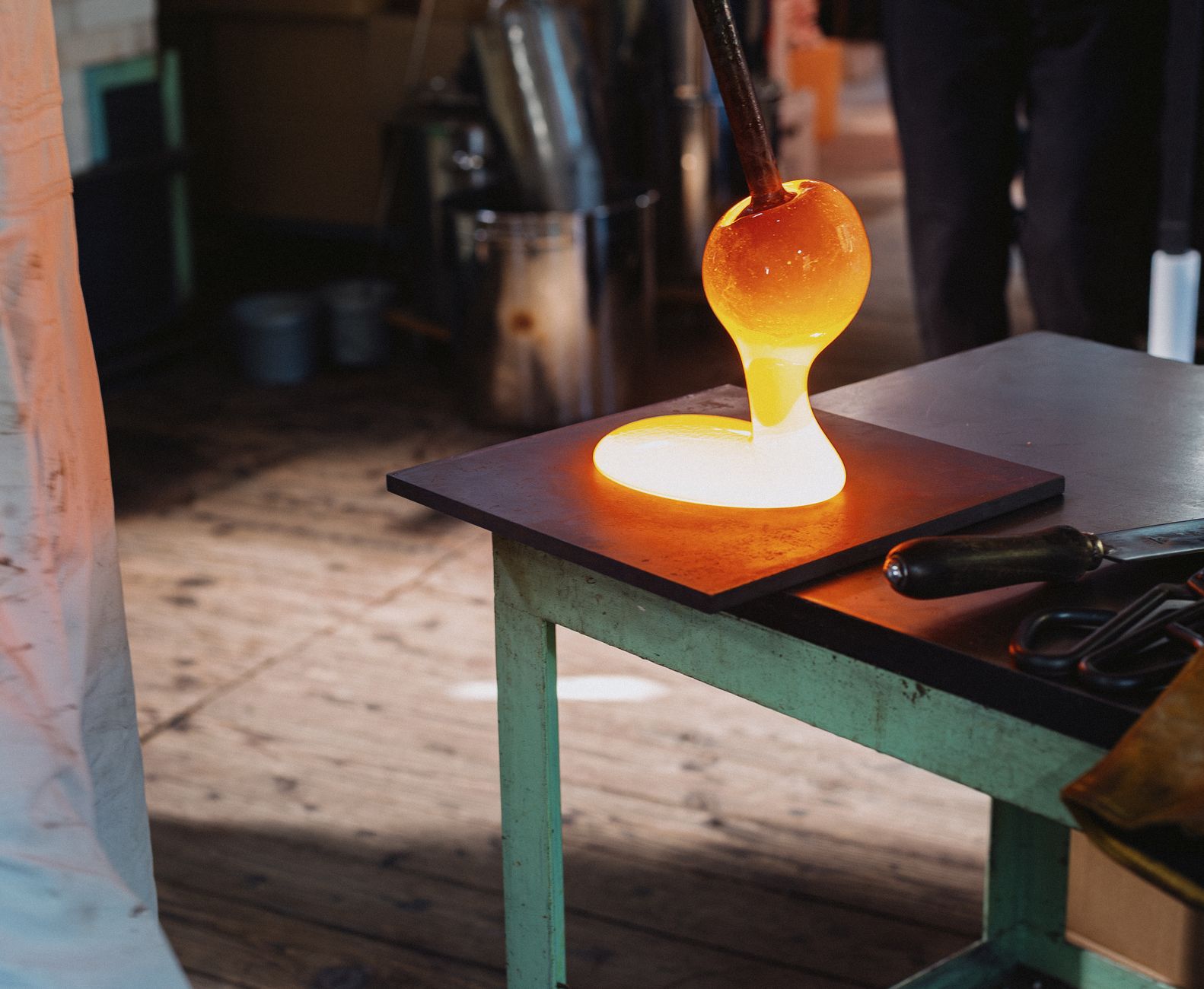
The glass glows like a sunset trapped mid-fall. Watch closely, and you'll see why Tsugaru Bidoro can't be rushed.
Five craftsmen, one breath
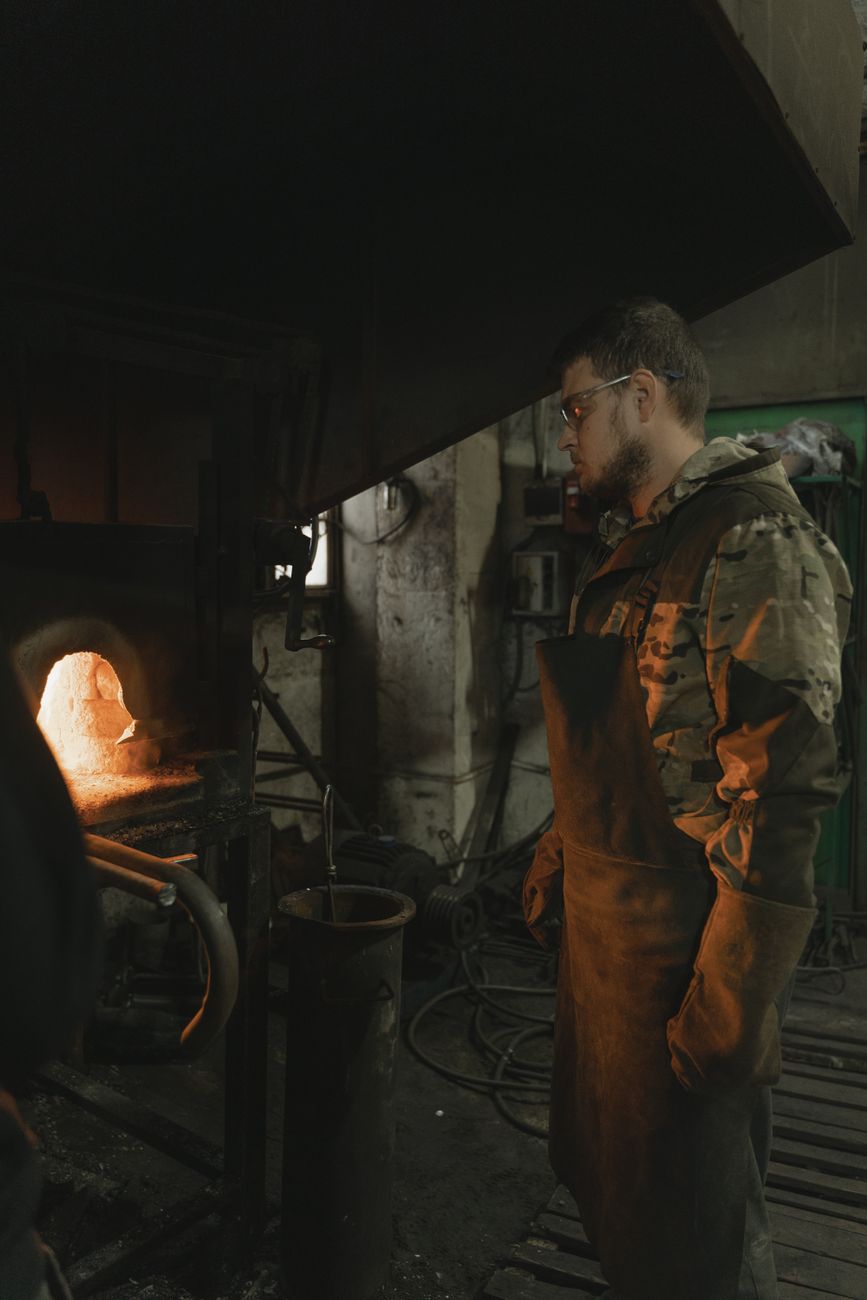
Most glassmaking relies on molds and machines. Tsugaru Bidoro (津軽びいどろ) demands something rarer: five artisans working in wordless choreography around a single furnace. One gathers molten glass on the blowpipe. Another shapes. A third cuts. The fourth transfers. The fifth finishes.
They don't speak during the critical moments. There's no time. Glass at 1,400°C doesn't wait for discussion—it moves from honey-thick to unworkable in seconds. Each craftsman reads the material's mood through color alone: cherry-red means pliable, orange means hurry, yellow means you're already late.
This is te-fuki (hand-blown) glass at its most unforgiving.
The color comes from yesterday's bottles
Here's the detail that changes how you see every Tsugaru piece: those signature layered colors—deep ocean blues bleeding into amber, moss green swirling through frost—originally came from recycled sake and fishing floats.
When the Hokuyo Glass Company began in Aomori Prefecture in 1949, post-war Japan was scrambling for materials. Craftsmen melted down discarded bottles, and discovered that impurities created unexpected beauty. What started as necessity became signature. Today's artisans still blend multiple colored glass batches in the crucible, but now it's intentional—a technique called iro-awase (color blending) where timing and temperature dictate whether you get a sunset gradient or muddy brown.
The colors don't mix—they argue, then settle into something neither planned.
Seventy-five patterns, zero guarantees
The nanako (fish roe) pattern. The hisui (jade) technique. Tsugaru-nishiki, named after the region's brocade textiles. The studio maintains seventy-five documented colorway recipes, each requiring different cooling rates, different glass viscosities, different seasonal adjustments.
But recipes aren't guarantees. Humidity changes how glass behaves. A craftsman's grip pressure affects wall thickness. Even furnace position matters—pieces near the door cool faster and crack differently than those in the furnace's heart.
This is why true Tsugaru Bidoro carries slight variations piece to piece. The "imperfection" is proof of hand.
What a decade buys you
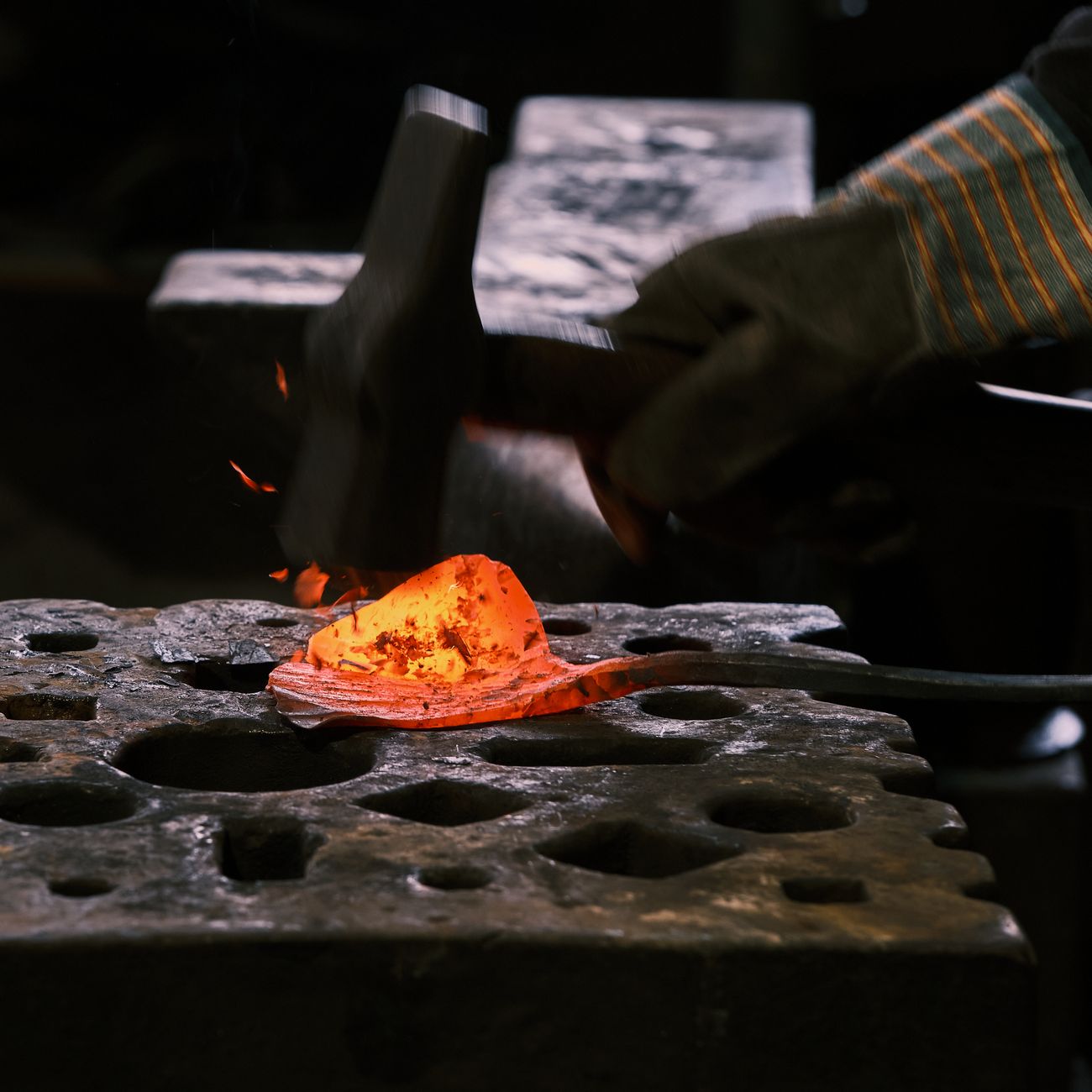
It takes roughly ten years before a glassblower is trusted with color work. The first years? You're the person who reheats pieces in the glory hole (reheating furnace) so others can keep shaping. You learn to judge temperature by eye because thermometers lag behind reality. You build calluses that can briefly tolerate glass that would blister civilian skin.
Only then do you touch the blowpipe. Only after that do you attempt the color layering that makes Tsugaru Bidoro unmistakable—those translucent veils of blue and green that seem lit from within, even in dim rooms.
The youngest certified craftsman at the Aomori studio is thirty-four. He started at twenty-four. He's still learning.
The crack you'll never see
Every finished piece spends twelve hours in an annealing oven, cooling one degree at a time. Rush this, and internal stresses create invisible fractures that only appear weeks later, mid-use, when your glass suddenly splits along a flaw that was always there.
Patience at every stage. Heat, shape, patience. Color, blend, patience. Finish, cool, patience.
It's a rhythm you can almost hear in the glass itself—if you hold it to the light and look for the seams where one color breathes into the next.
FAQ
Chaware curates authentic Japanese crafts — straight from the makers in Japan to your table.
Explore the Chaware collection →