What Happens During Obon Festival: A Guide to Japan's Ancestor Celebration
On this page
The lanterns glow along the riverbank, and for three summer days, the boundary between this world and the next grows thin.
Obon — sometimes called the Bon Festival — is Japan's annual homecoming for the dead. It's when ancestors are believed to return to visit the living, drawn back by fire, memory, and the pull of family. Streets empty as millions travel to hometowns. Graves are swept. Altars are built. And for a brief, luminous window in mid-August, the living and the dead share the same table.
When the veil lifts
Obon falls in mid-summer, typically around August 13–15, though some regions observe it in July following the old lunar calendar. The timing isn't arbitrary. It's rooted in a Buddhist story about a disciple who learned his deceased mother was suffering in the afterlife. To ease her spirit, he made offerings and performed rituals — and Obon was born from that act of filial devotion.
But Buddhist doctrine blended with something older: Japan's native reverence for ancestral spirits, the belief that the dead remain woven into the fabric of family life. Obon became the season when those threads pull taut.
Welcoming fires and dancing feet
The festival begins with mukaebi — small welcoming fires lit at doorsteps and graves to guide spirits home. Families clean ancestral graves, arrange fresh flowers, and set up temporary altars called shouryoudana stacked with offerings: rice, fruit, sweets, and sake. Cucumber horses and eggplant cows, whittled from summer vegetables, are placed on the altar — fast rides for the spirits' arrival, slow mounts for their reluctant departure.
You'll see it in the details. Incense curling. Water cups refreshed daily. Favorite foods of the deceased carefully arranged.
Obon is less about mourning than about hospitality — welcoming the dead as honored guests.
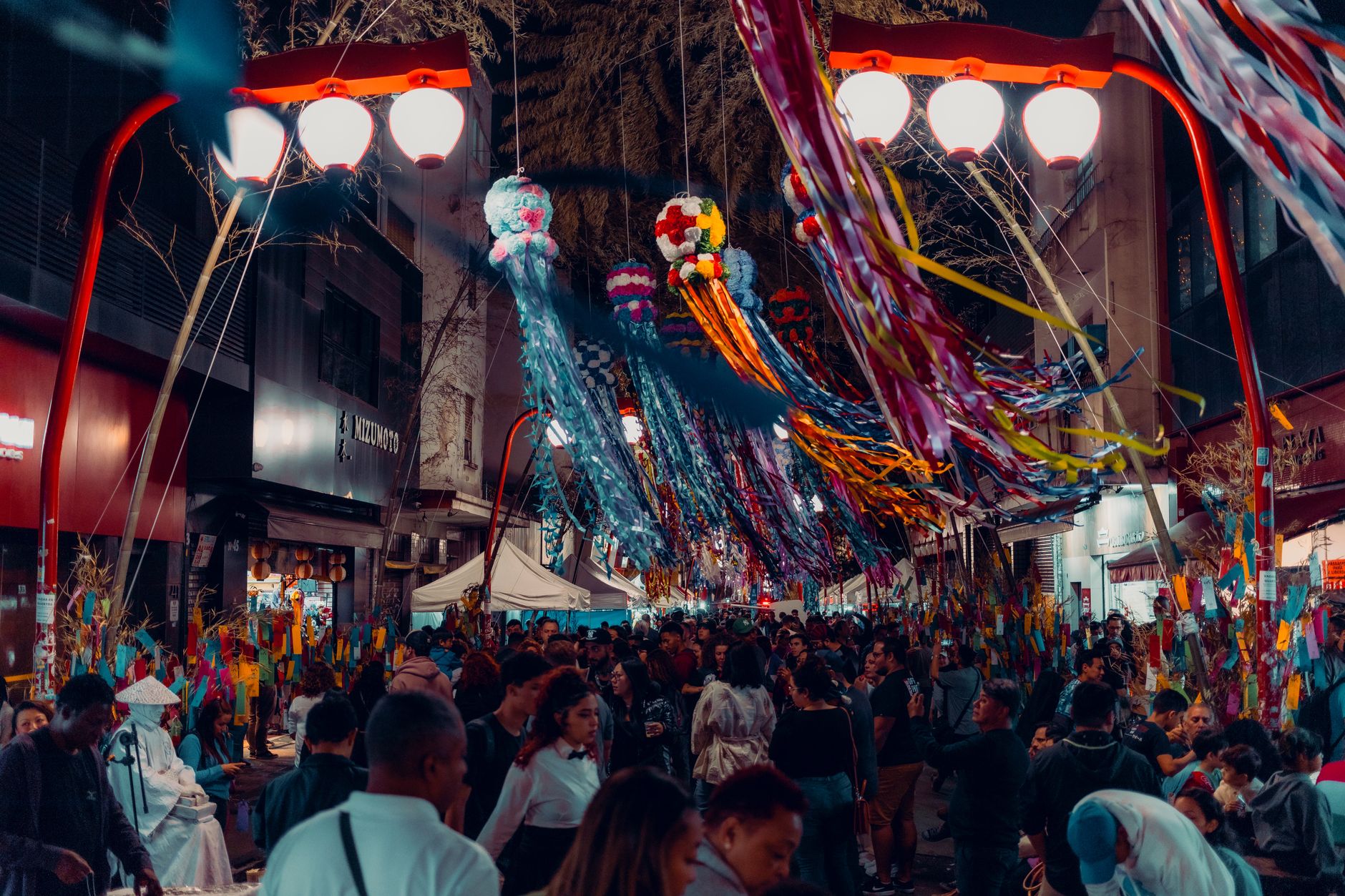
At night, communities gather for Bon Odori, folk dances performed in circles around a wooden tower. The steps are simple, repetitive, hypnotic. Originally danced to comfort wandering spirits, today it's equal parts ritual and festival — children in yukata, taiko drums pounding, the same movements passed down through generations. The dance says: you are remembered.
The floating farewell
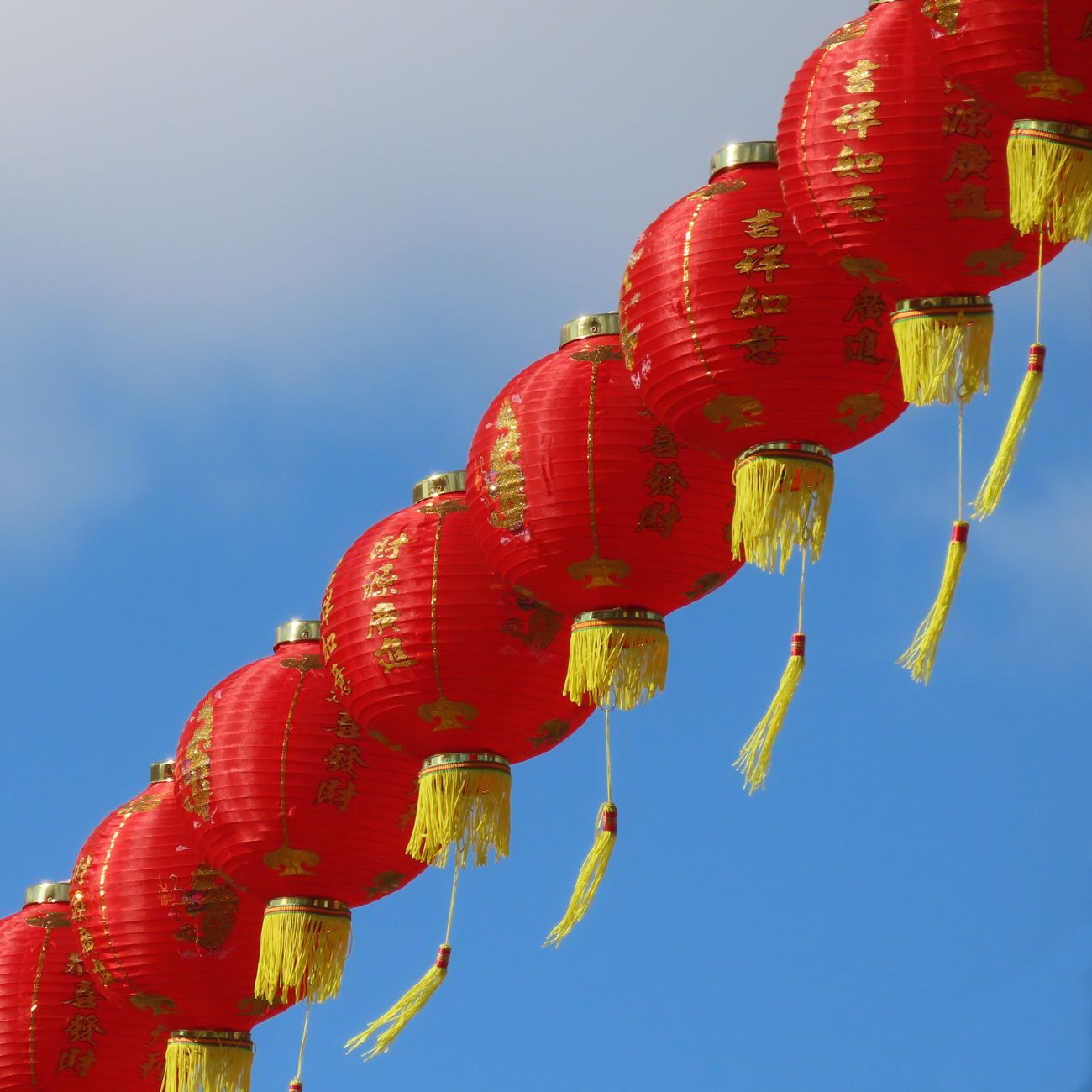
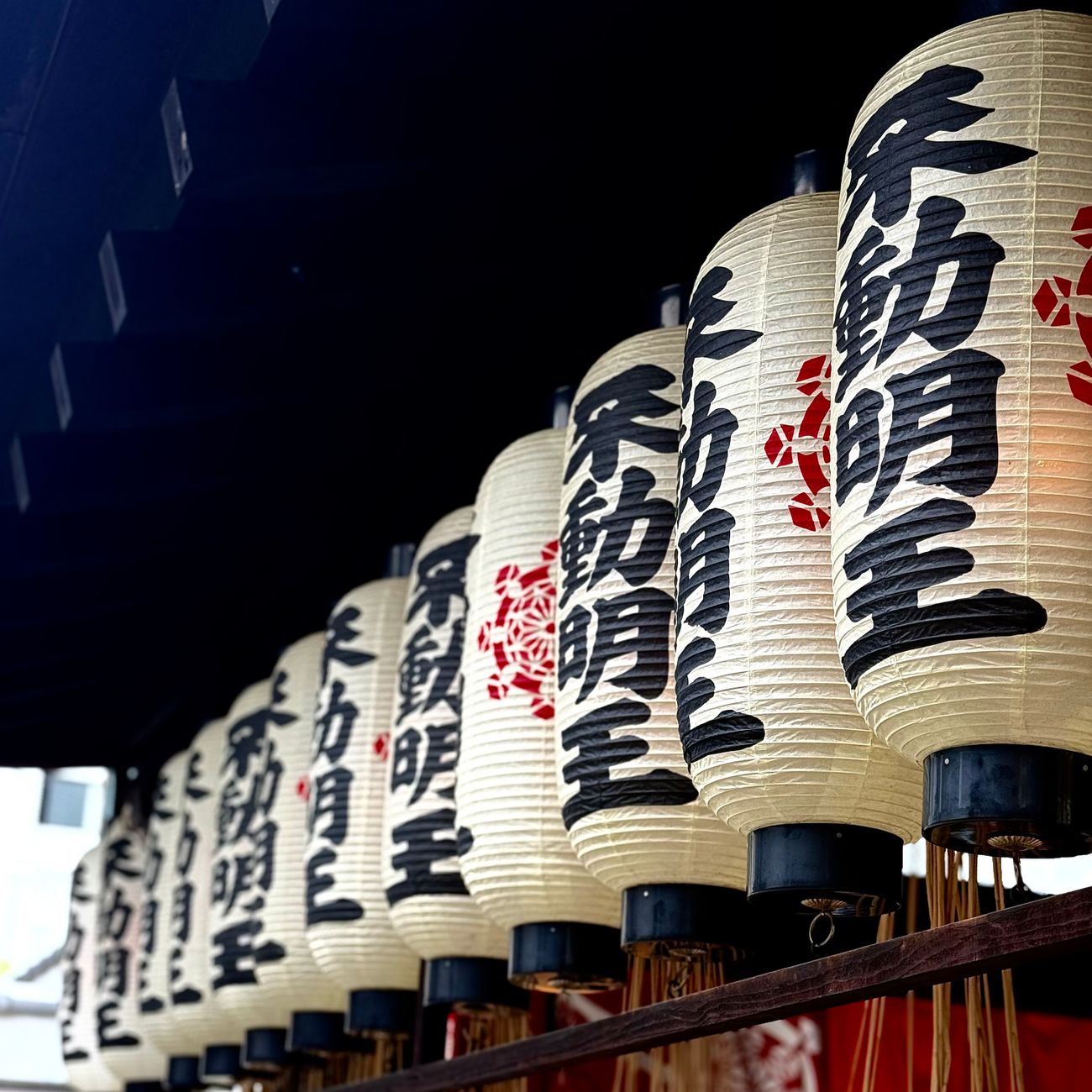
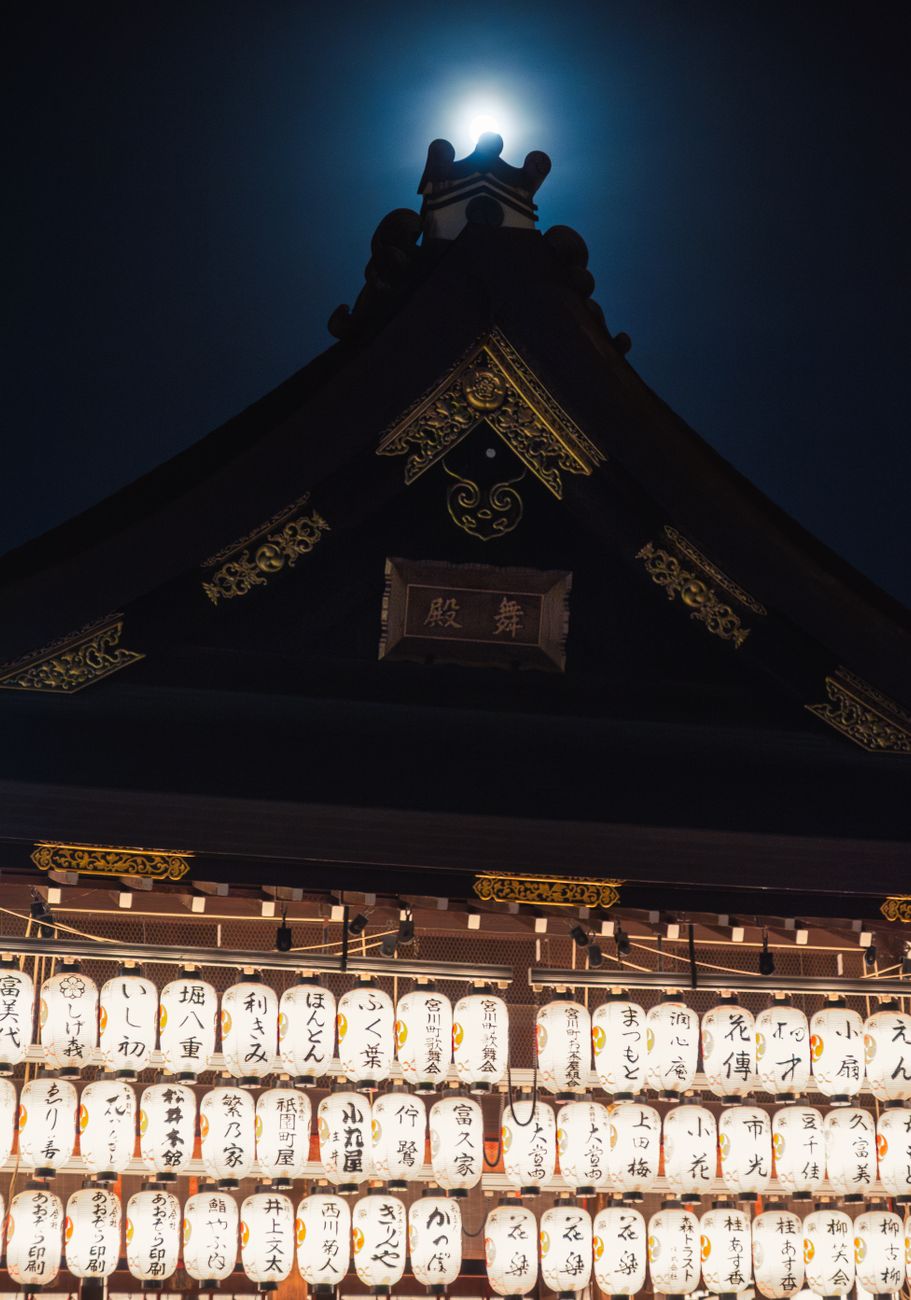
On the final night comes toro nagashi — the floating of lanterns. Paper lanterns, each inscribed with prayers or names, are set adrift on rivers and seas. They drift in glowing processions, carrying spirits back to the other side. Some regions hold massive displays; in Hiroshima, tens of thousands of lanterns float in remembrance of atomic bomb victims, Obon's meaning deepening into collective memory.
Then the fires return. Okuribi — send-off bonfires — blaze on hillsides. In Kyoto, enormous kanji characters burn on five mountains surrounding the city, visible for miles. The most famous reads 大 (dai — "great"). It's a farewell written in flame.
What lingers after
When Obon ends, the altars are dismantled. The vegetables composted. The lanterns dissolve downstream. But the essence remains: a culture that makes room for the dead, that doesn't exile grief to silence but folds it into the seasons.
Obon teaches that memory is a practice, not a feeling. That the dead are not gone but waiting — just across a short distance, close enough to be called home by fire and welcomed with rice still warm from the pot.
The lanterns fade, but the light they cast doesn't.
FAQ
Chaware curates authentic Japanese crafts — straight from the makers in Japan to your table.
Explore the Chaware collection →