Why Japanese Indigo Became the Soul of a Nation's Color Palette
On this page
Walk into a traditional Japanese home and you'll see it everywhere: in the noren curtain at the doorway, the folded furoshiki cloth, the ceramic patterns on the shelf. That signature deep blue isn't just decoration—it's a color that shaped an entire nation's visual identity.
The dye that built a visual language
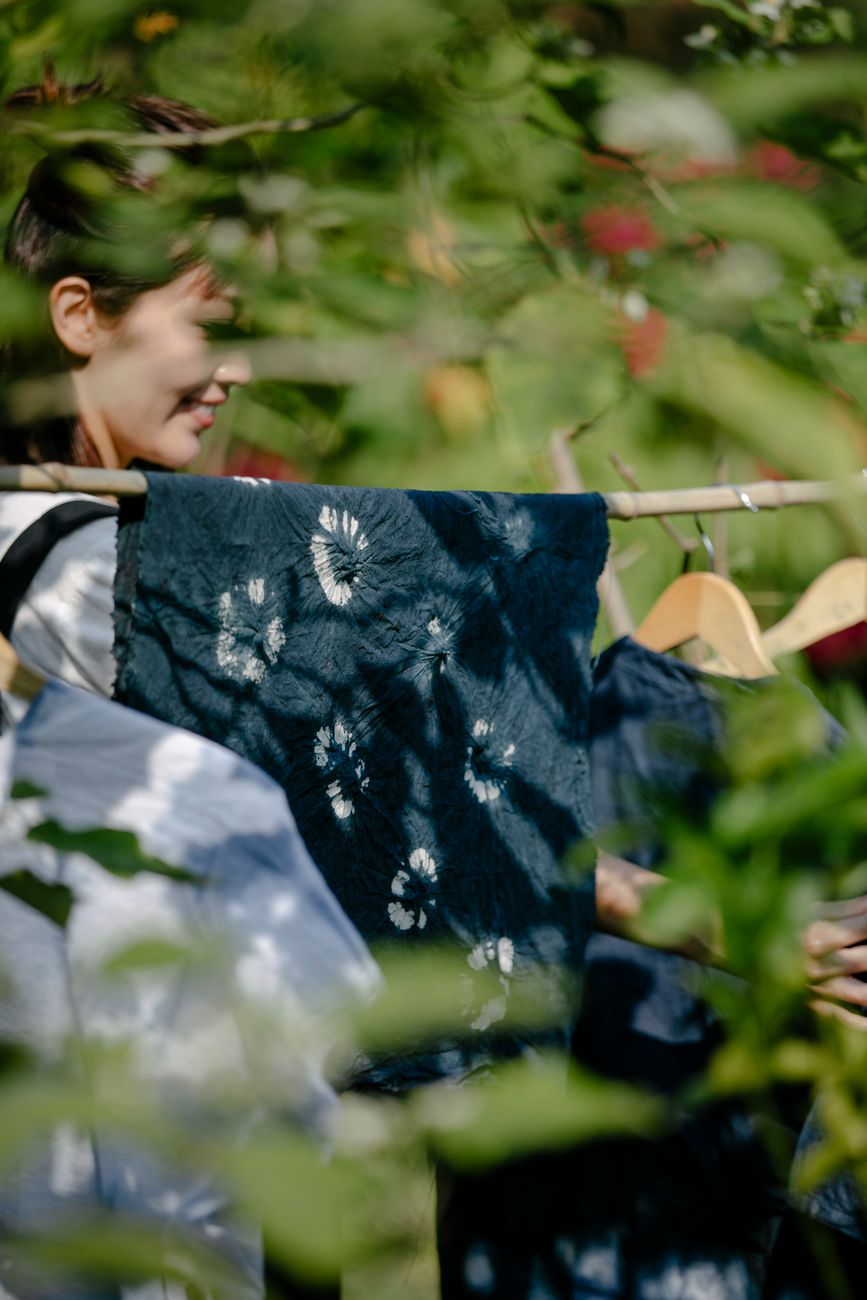
Aizome, the art of indigo dyeing, arrived in Japan from China sometime before the 8th century. But what began as an imported technique became something distinctly Japanese through centuries of refinement and necessity.
The color's dominance wasn't purely aesthetic. Indigo proved practical in ways that made it indispensable to everyday life. The dye acted as a natural insect repellent and flame retardant—crucial properties for a nation of wooden architecture. Farmers, firefighters, and merchants all wore indigo-dyed cotton because it protected them while they worked.
By the Edo period, sumptuary laws restricted commoners from wearing bright, expensive colors. Indigo became the color of the people by default and, eventually, by choice.
Why Japan called it "Japan Blue"
When Western visitors arrived in the late 19th century, they were struck by how thoroughly blue saturated Japanese visual culture. The British chemist Robert Atkinson reportedly described Tokyo as "a city draped in blue"—a phrase that helped cement indigo's association with Japanese identity.
The deepest indigo required dyeing the same cloth dozens of times, each immersion building layers of blue that would last generations.
The Japanese developed an entire vocabulary around indigo's depths. Kachi-iro (victory color), kon (navy), ai-nezumi (indigo-gray)—each shade carried its own cultural weight and associations. This wasn't just color naming; it was a way of seeing.
The living dye
Unlike many synthetic alternatives, true aizome is a living process. The dye comes from fermenting the leaves of the tadeai plant (Persicaria tinctoria) in large vats. The liquid itself looks greenish and murky—nothing like the brilliant blue it produces.
The magic happens when you lift the cloth from the vat. Exposed to oxygen, the fabric transforms from yellow-green to blue before your eyes. It's chemistry as theater, and every dyer learns to read the subtle signs of a healthy fermentation.
This living quality meant indigo workshops developed their own rituals and superstitions. Some dyers spoke to their vats, treated them as temperamental beings that required respect and patience.
The blue that touches everything
Indigo's influence extends far beyond textiles. You'll find its echo in Edo Kiriko cut glass patterns, in the blue-and-white motifs of Hasami ware and Arita ware porcelain, in woodblock prints and contemporary graphic design.
The color became a foundation—a neutral that paradoxically carries deep cultural meaning. It's simultaneously bold and understated, traditional and modern. This duality is precisely why indigo continues to define Japanese aesthetics.
Even as synthetic dyes made production easier and cheaper, artisans continue practicing traditional aizome. They understand that the slight variations, the way natural indigo fades and ages, the labor embedded in each piece—these qualities can't be replicated.
Stand close to a piece of vintage indigo textile and you'll see it: not one flat blue, but dozens of shades layered like memories, each telling the story of hands that dipped and lifted, again and again, until the color held fast.
FAQ
Chaware curates authentic Japanese crafts — straight from the makers in Japan to your table.
Explore the Chaware collection →