Why Matcha Is Whisked Into Foam, Not Stirred: The Art of the Chasen
On this page
You can't stir matcha. Not really. Try it with a spoon and you'll end up with a gritty, bitter puddle that clings to the bottom of your bowl like wet sand.
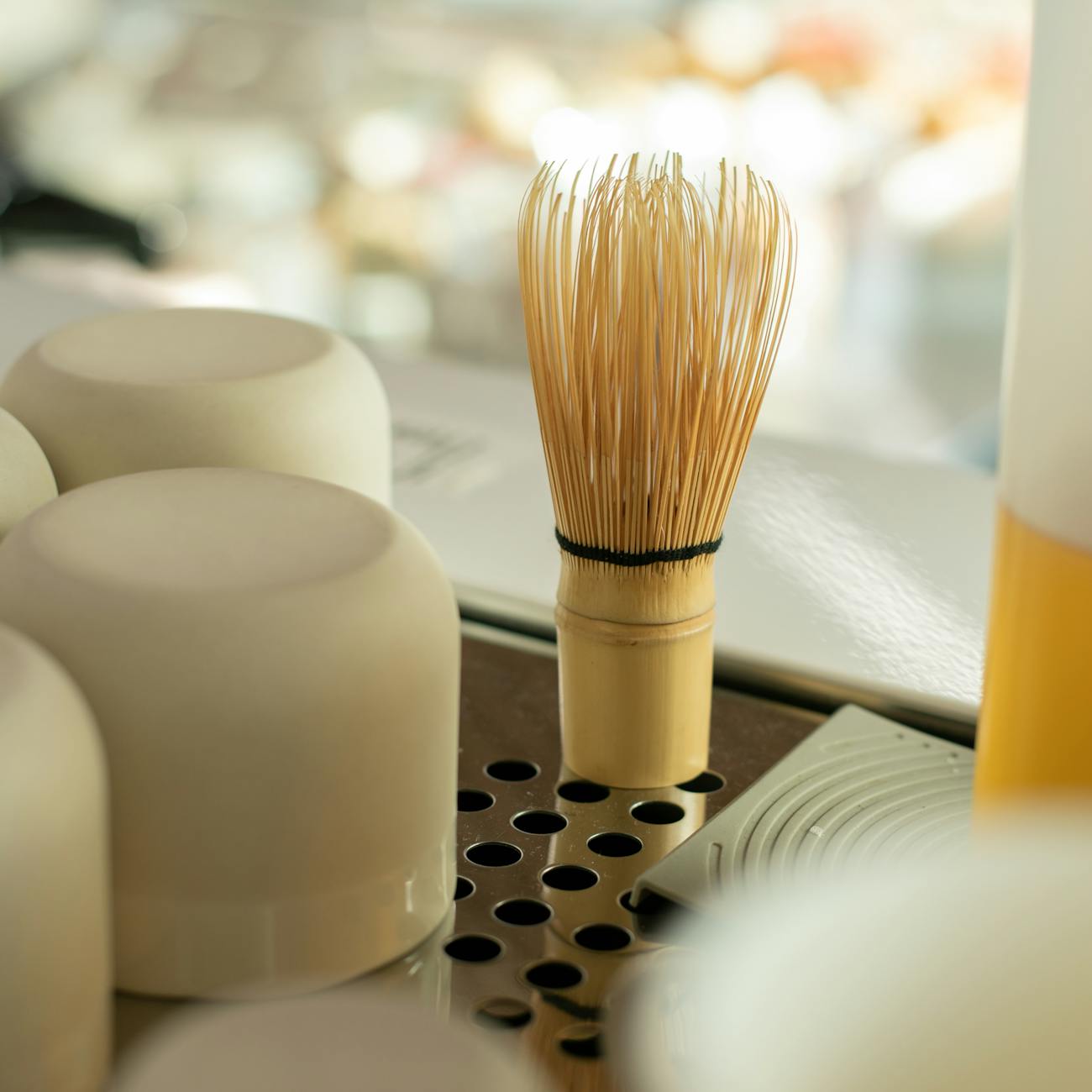
There's a reason the Japanese spent centuries perfecting a tool made from a single piece of bamboo, split into dozens of hair-thin tines. The chasen—the matcha whisk—isn't just tradition for tradition's sake. It's physics, it's chemistry, and it's the difference between drinking powdered tea and experiencing it.
The problem with powder
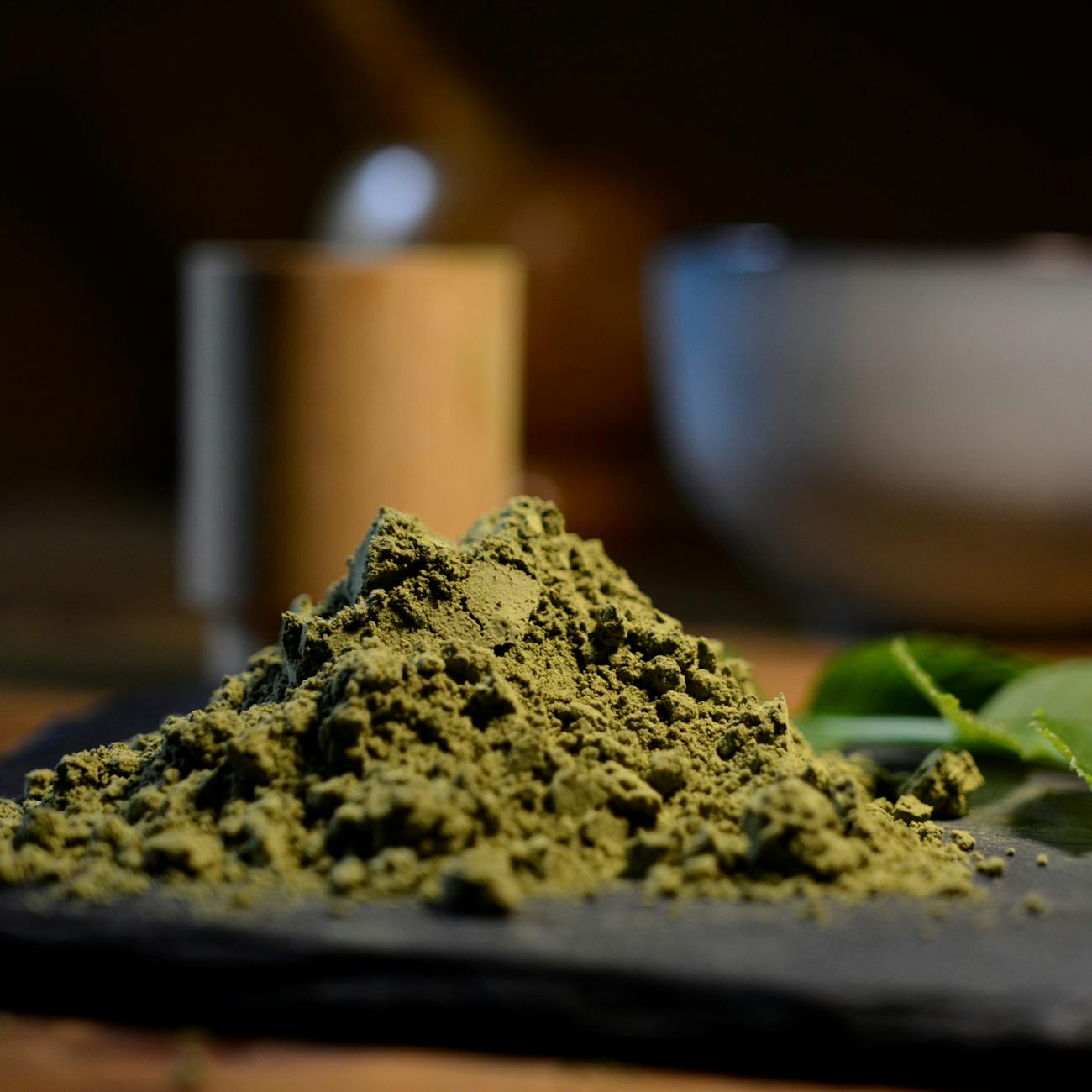
Matcha is stone-ground whole tea leaves. No infusion, no steeping—you're consuming the entire leaf, pulverized into particles so fine they measure in microns. This gives matcha its intensity, its vibrant color, its concentrated nutrients. It also makes it stubbornly hydrophobic.
Tea leaves contain natural oils and waxy compounds. When ground this fine, those particles don't want to dissolve in water—they want to clump together and sink. A spoon can push them around, but it can't create the suspension you need. You're fighting surface tension with the wrong tool.
What whisking actually does
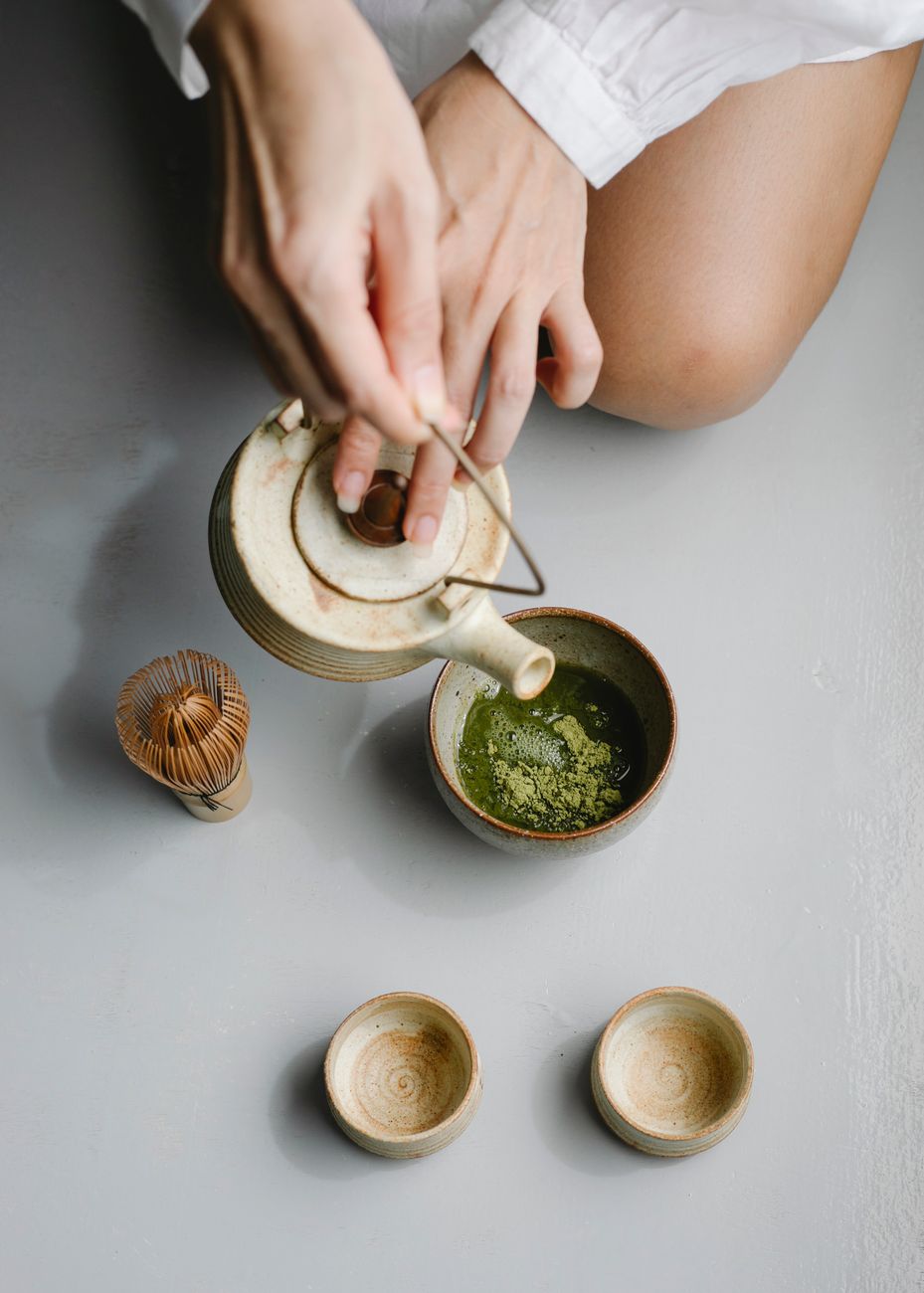
The chasen's hundred prongs aren't decorative. Each thin tine acts like a tiny blade, cutting through the water in rapid zigzag motions—the traditional "M" or "W" pattern you'll see in tea ceremonies. This creates thousands of micro-collisions per second.
The whisking motion does three things simultaneously: it breaks apart clumps, suspends particles evenly throughout the liquid, and introduces air. That foam—usucha when thin and frothy, koicha when thick and paste-like—isn't just aesthetic. It's structural. The tiny bubbles trap matcha particles in suspension, preventing them from settling. The result is a stable emulsion that coats your palate evenly, delivering flavor without grit.
The foam holds the tea in a moment of perfect suspension—neither solid nor liquid, but something in between.
The temperature of patience
Here's what surprises most beginners: you don't whisk with boiling water. Traditional preparation calls for water around 70-80°C (160-175°F). Too hot, and you scald the delicate amino acids that give matcha its umami sweetness—particularly L-theanine, the compound responsible for that alert-calm feeling matcha drinkers know well.
The cooler temperature also affects foam formation. Slightly cooler water holds air bubbles more readily, creating that signature cloud of fine, persistent foam. It's why rushed whisking with too-hot water often produces large, unstable bubbles that pop and disappear.
The shape of the bowl matters too
The wide, shallow chawan (tea bowl) isn't random design. Its broad surface and curved walls give your wrist room to move in swift, controlled strokes without hitting the sides. The curve helps the chasen's tines flex and spring back—that elasticity is essential. A tall, narrow mug cramps the motion and breaks the rhythm.
In tea ceremony, you'll notice practitioners rotate the bowl slightly as they whisk, ensuring even contact across the entire surface. The whole system—whisk, bowl, motion, temperature—evolved together over centuries.
##
The chasen wears down with use. Its tines split, splay, eventually break. Masters replace them regularly, treating each whisk as a consumable tool rather than an heirloom. There's something honest in that—the recognition that some processes can't be optimized away or made permanent.
Every bowl of matcha is temporary by nature. The foam will settle, the suspension will break, the temperature will drop. The whisk simply gives you a few perfect minutes before entropy wins.
FAQ
Chaware curates authentic Japanese crafts — straight from the makers in Japan to your table.
Explore the Chaware collection →