Karatsu Ware and the Tea Ceremony: Where Rustic Beauty Meets Ritual
On this page
The tea master's hand hovers over three bowls. One gleams with perfect glaze. One bears the maker's signature in gold. The third—rough, earth-toned, subtly cracked—is the one he chooses.
This is the quiet rebellion of Karatsu ware.
The pottery that learned to whisper
While other Japanese ceramics announced themselves with brilliance, Karatsu ware developed a different language. Born in the kilns of northern Kyushu during the late 16th century, it absorbed techniques from Korean potters who brought their knowledge across the sea. The clay itself—iron-rich, grainy, almost stubborn—refused to cooperate with perfection.
Tea masters noticed. They saw something the porcelain makers had missed.
The rough texture, the way glaze pooled unevenly, the sandy tsuchi-aji (earth taste) that clung to the surface—these weren't flaws. They were whispers of authenticity in an increasingly refined world. When Sen no Rikyū codified wabi-sabi aesthetics in the tea ceremony, Karatsu ware was already speaking that language fluently.
Made for the weight of water
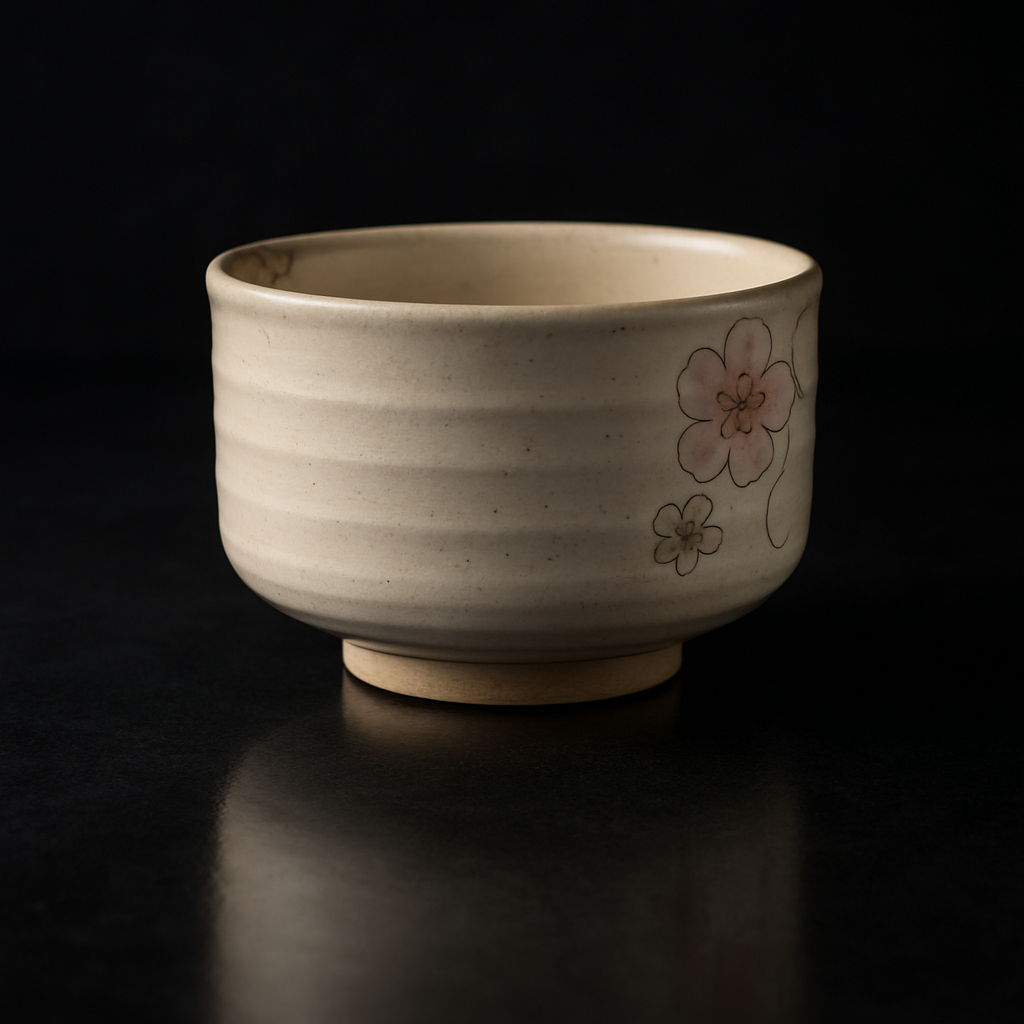
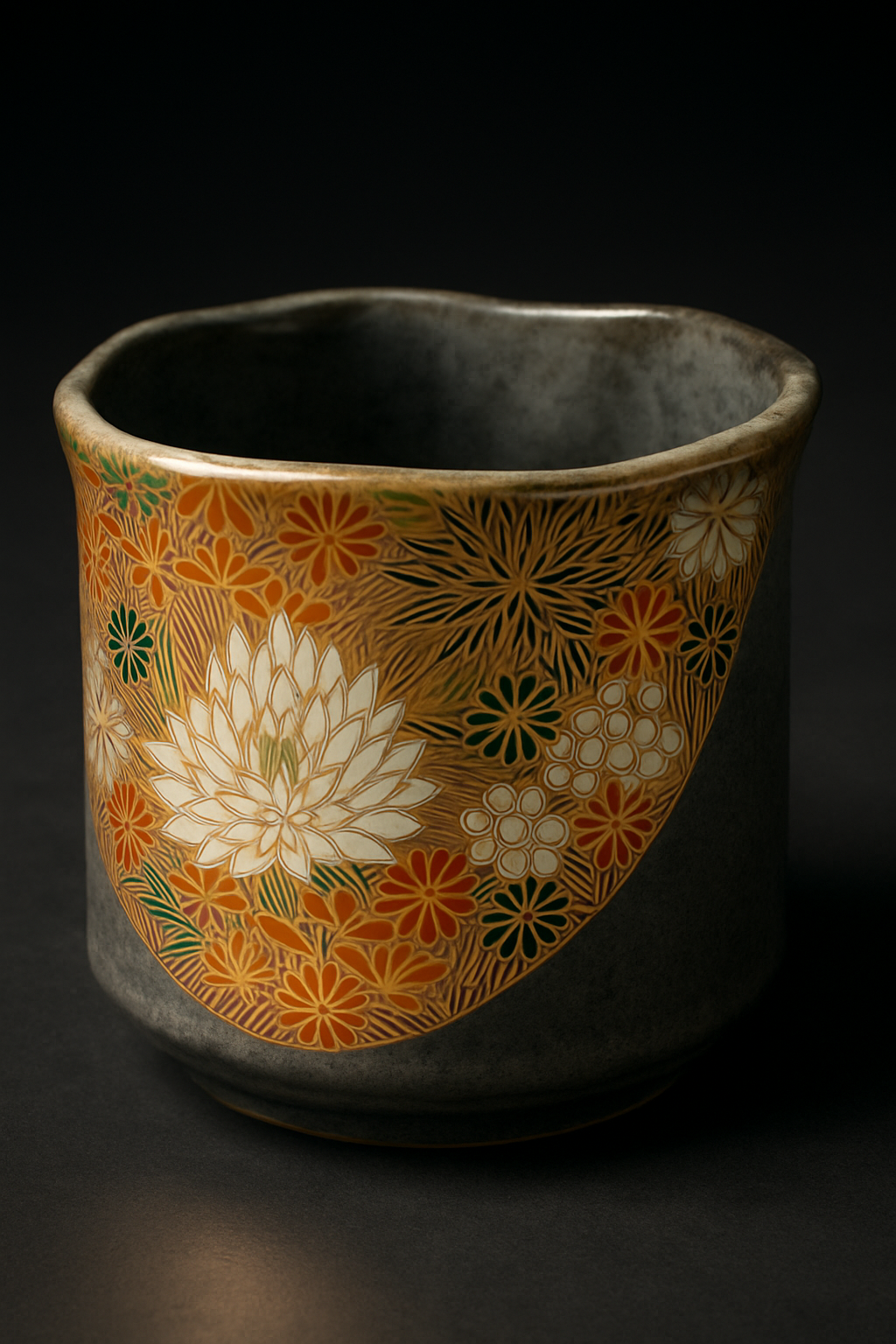
Pick up a Karatsu tea bowl and you'll understand immediately. The clay has heft. The walls taper thick at the base, thin at the rim. Your fingers find the texture instinctively—it wants to be held.
This isn't accident. Karatsu potters shaped their work for the specific choreography of chanoyu. The bowl must feel substantial when you receive it with both hands. It must turn smoothly when you rotate it—twice, clockwise—before drinking. The foot ring must sit stable on tatami, never wobbling during the careful placement that punctuates each movement.
The best tea bowl is the one that makes you forget you're holding pottery at all.
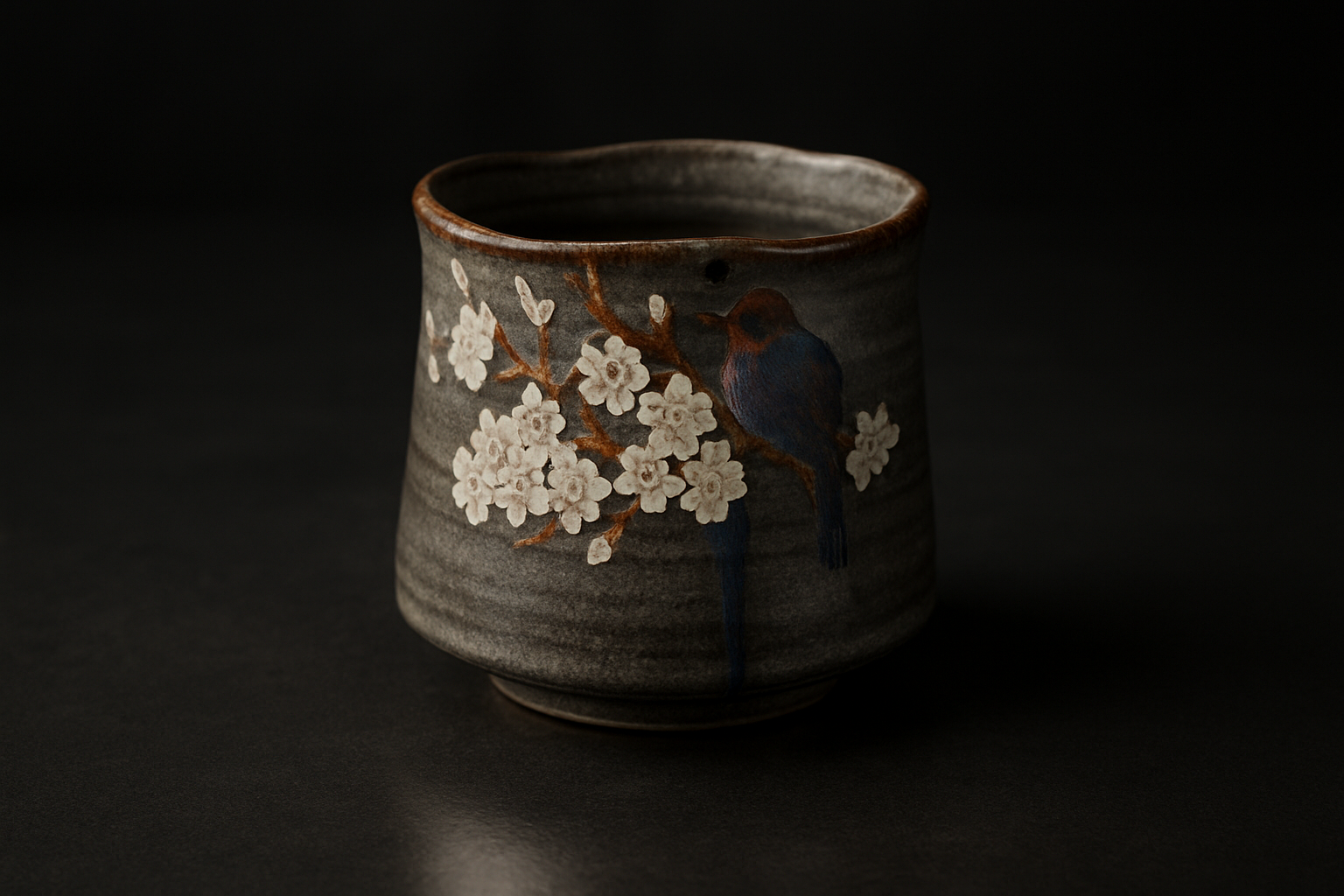
The glazes tell their own story. E-garatsu (painted Karatsu) carries swift brush strokes—often iron oxide sketches of grass, birds, or simple geometric patterns. Madara-garatsu (mottled Karatsu) swirls ash glaze with iron in unpredictable clouds. Chōsen-garatsu (Korean Karatsu) splits the surface between two contrasting glazes, a visual conversation between dark and light.
The crack that proves authenticity
Here's what confuses newcomers: Karatsu tea bowls sometimes develop fine cracks in the glaze called kannyu. In other ceramic traditions, this might signal damage. In tea ceremony culture, it's a biography.
Those hairline fissures map the bowl's life. Each time hot water meets cool clay, microscopic expansions occur. Over years, decades, the glaze records every tea gathering. The cracks darken as tannins seep in, creating a web of amber lines unique to that specific bowl's history. Tea practitioners call this aging process a bowl "ripening."
It transforms an object into a companion.
Why tea masters still choose earth over elegance
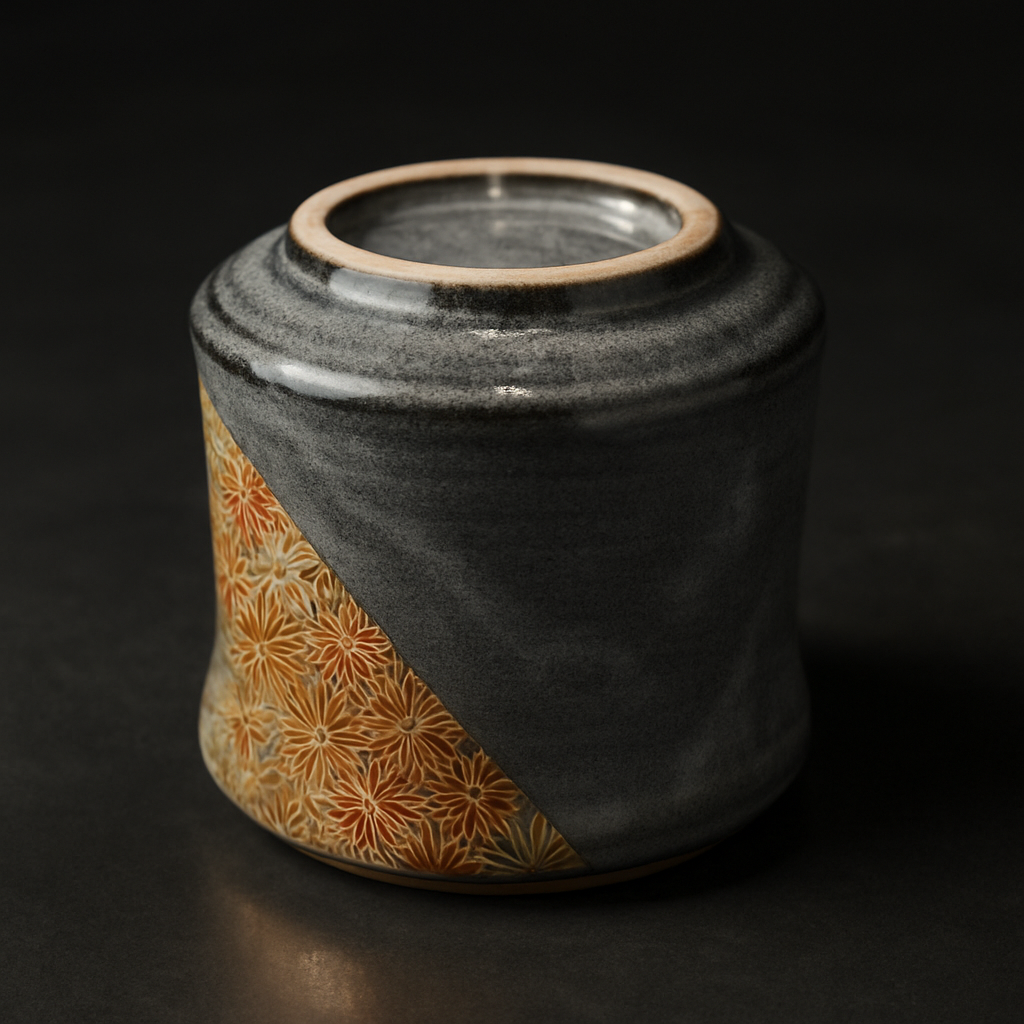
Walk into a contemporary tea gathering and you'll likely see Karatsu ware. Not as a historical artifact, but as a working tool. Modern potters in Karatsu—particularly in the Kishidake area where climbing kilns still fire—continue techniques virtually unchanged since the Momoyama period.
They're not chasing trends. The aesthetic principle remains: pottery should enhance the tea ceremony's focus on transient beauty and genuine presence. A bowl too perfect becomes a distraction. A bowl too plain disappears entirely. Karatsu ware occupies the exact middle ground—interesting enough to appreciate, humble enough to serve.
The rough warmth in your hands. The slight asymmetry that makes each sip different. The knowledge that this clay came from specific hills, was shaped by specific hands, and will carry forward the memory of this specific moment.
That's not pottery. That's philosophy you can hold.
FAQ
Chaware curates authentic Japanese crafts — straight from the makers in Japan to your table.
Explore the Chaware collection →