Rice Bowl Placement in Japanese Dining: The Cultural Rules Behind Your Table Setting
On this page
You sit down to a Japanese meal, and before you lift your chopsticks, you notice something. The rice is always on the left. The soup, always on the right.
This isn't chance.
The geography of a Japanese table
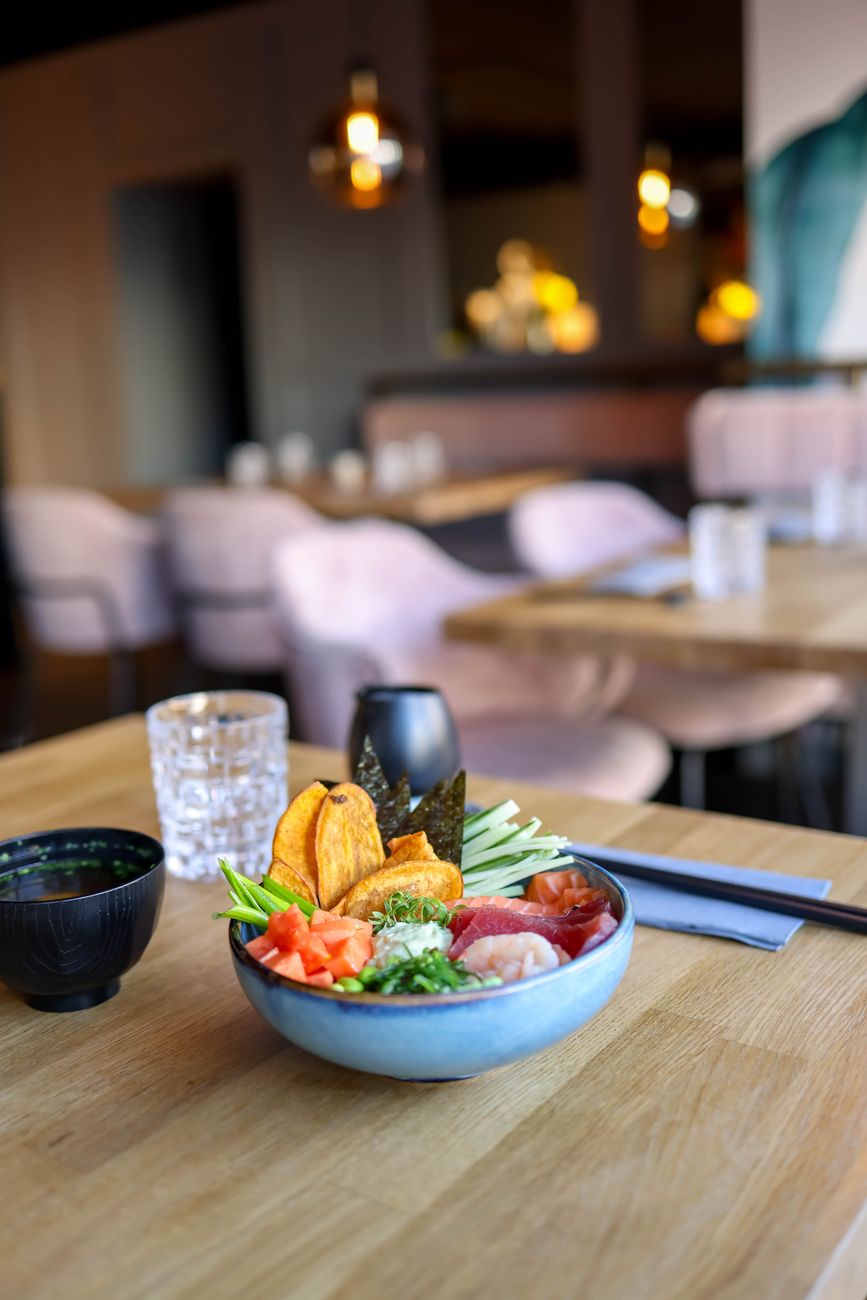
In traditional Japanese dining, every bowl has a home. Rice—gohan—sits at your lower left. Miso soup—misoshiru—rests at your lower right. Main dishes occupy the back. Pickles, tsukemono, nestle wherever space allows, usually front center.
This arrangement isn't about aesthetics alone. It's rooted in centuries of ritual, practicality, and a philosophy that says even the smallest gesture carries meaning.
The layout mirrors the structure of formal offerings made at Shinto shrines and Buddhist altars, where rice has always held the position of honor on the left. What began as sacred geometry eventually became the grammar of everyday eating.
Left hand, right hand
Here's where it gets tactile.
Most people are right-handed. In Japan, you hold your rice bowl in your left hand and eat from it with chopsticks in your right. Placing the rice on your left side creates the shortest, most natural path from table to hand to mouth. The soup bowl, also lifted and sipped directly, sits on the right—again, within easy reach.
The placement isn't decoration; it's choreography designed for your hands.
Everything flows. You don't twist. You don't reach across your body. The meal unfolds in a rhythm that feels inevitable once you understand it.
The order of the first bite
There's a sequence, too, subtle but significant.
Tradition suggests you begin with a sip of soup, then a bite of rice, then a taste of the main dish. This isn't rigid etiquette enforced by stern grandmothers—it's more like a gentle suggestion passed down through generations. Starting with soup warms the palate. Rice grounds you. The main dish completes the triangle.
The positioning supports this flow. Soup and rice, both at the front, both within immediate reach, invite you to begin there before moving to what lies beyond.
What it teaches
Walk into any home, any cafeteria, any traditional restaurant across Japan, and you'll see this same quiet consistency. Rice left, soup right. It's so ingrained that Japanese children learn it without being taught, the way you learn which side of the sidewalk to walk on.
But it's more than muscle memory.
This placement reflects ichiju-issai—the concept of "one soup, one side," the foundation of a balanced Japanese meal. Even in elaborate kaiseki feasts with a dozen courses, that fundamental pair remains: rice and soup, the anchors, always in their places. They represent sustenance and comfort, the irreducible elements of nourishment.
The consistency itself is the point. In a culture that values harmony and mindfulness, even the arrangement of bowls becomes a form of care—toward the food, toward the diner, toward the moment.
A small constancy
You might never have questioned why your rice appears on the left. Now you know it's not arbitrary.
It's the product of hands that have held bowls for generations, a spatial logic refined over centuries into something so natural it disappears. Until you notice it. And then, suddenly, the table speaks.
FAQ
Chaware curates authentic Japanese crafts — straight from the makers in Japan to your table.
Explore the Chaware collection →