How Japanese Food Color Creates Visual Harmony on Every Plate
On this page
You look at the plate and something feels right before you've taken a single bite.
It's not just the food. It's the quiet balance of red, green, yellow, white, black—colors arranged with the kind of care usually reserved for paintings. In Japan, this isn't decoration. It's philosophy made edible, a principle called goshiki (五色), and it's been shaping meals for more than a thousand years.
A palette borrowed from the cosmos
The five-color principle didn't begin in a kitchen. It emerged from ancient Chinese cosmology—the same system that gave us five elements, five directions, five seasons. Go-shiki-go-mi (五色五味), "five colors, five tastes," became a framework Buddhist temple cooks adopted during Japan's medieval period. Each hue corresponded to an element: white (metal), black (water), green (wood), red (fire), yellow (earth).
But Japanese cooks weren't interested in mysticism for its own sake. They noticed something practical: a meal that hits all five colors almost always delivers nutritional completeness. Leafy greens. Root vegetables. Protein. Grains. Seaweed. The palette became a mnemonic, a way to build balance without charts or calculations.
What your eyes eat first
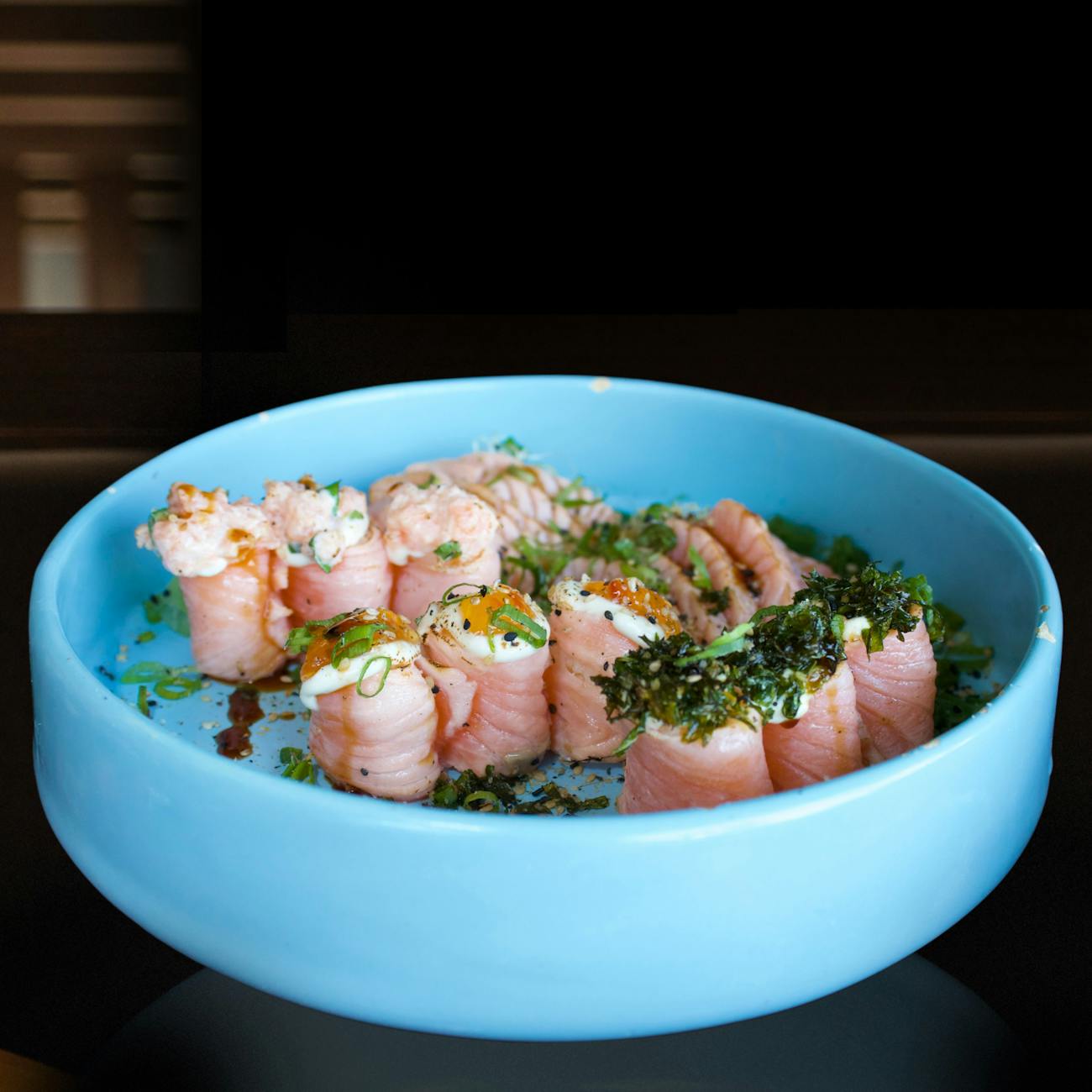
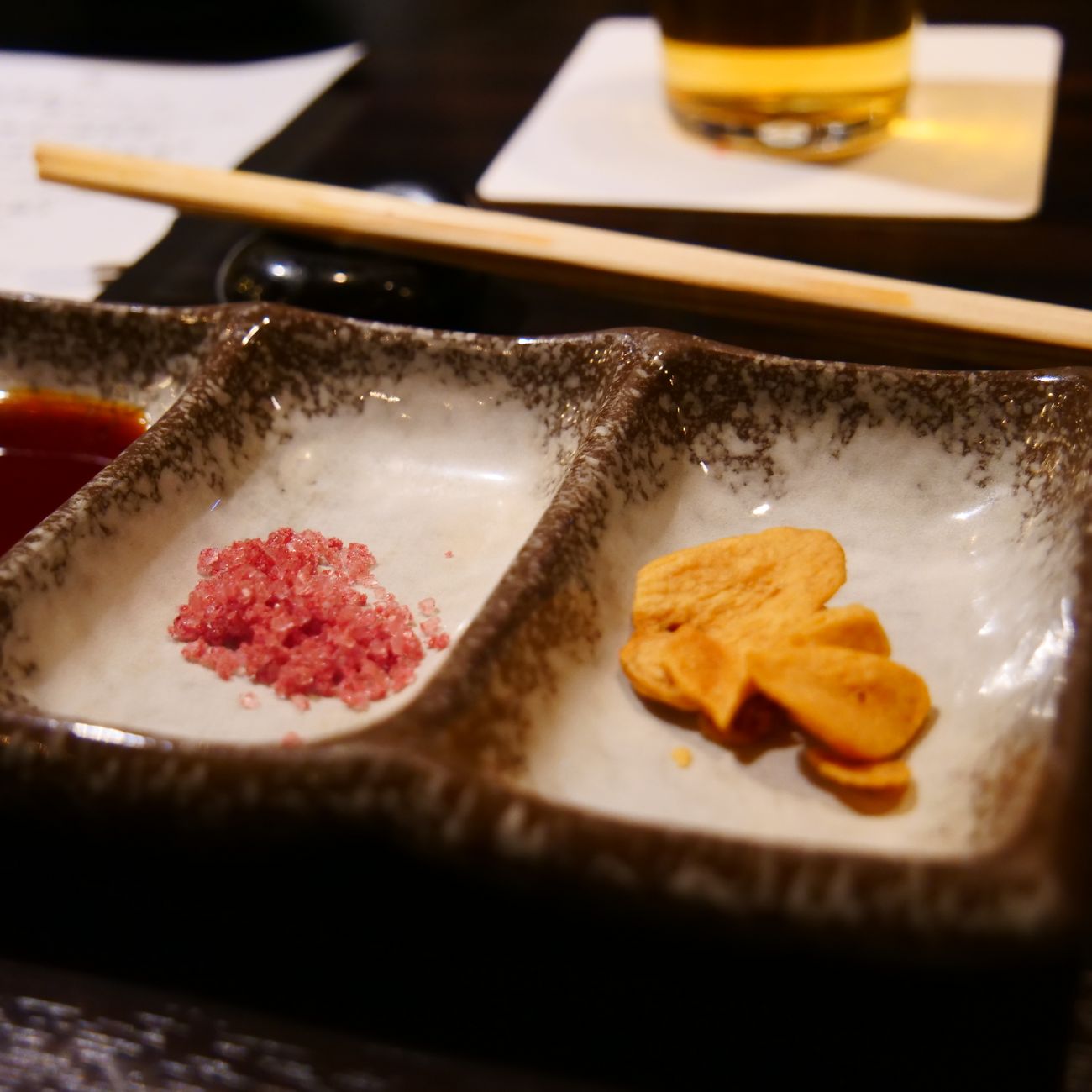
Walk into any traditional kaiseki restaurant and you'll see it immediately—a lacquered tray where every dish plays a visual role. The ivory of daikon against black sesame. The crimson of pickled ginger. The forest green of blanched spinach dressed in golden yuzu.
Color isn't ornament in Japanese cuisine—it's information, telling you the meal is whole before you taste it.
Your brain registers this harmony faster than conscious thought. Studies in food psychology confirm what Japanese cooks intuited centuries ago: we judge flavor and freshness by color first. A monochrome plate, no matter how delicious, feels incomplete. The five-color rule ensures variety registers instantly, triggering anticipation and appetite.
The everyday art of balance
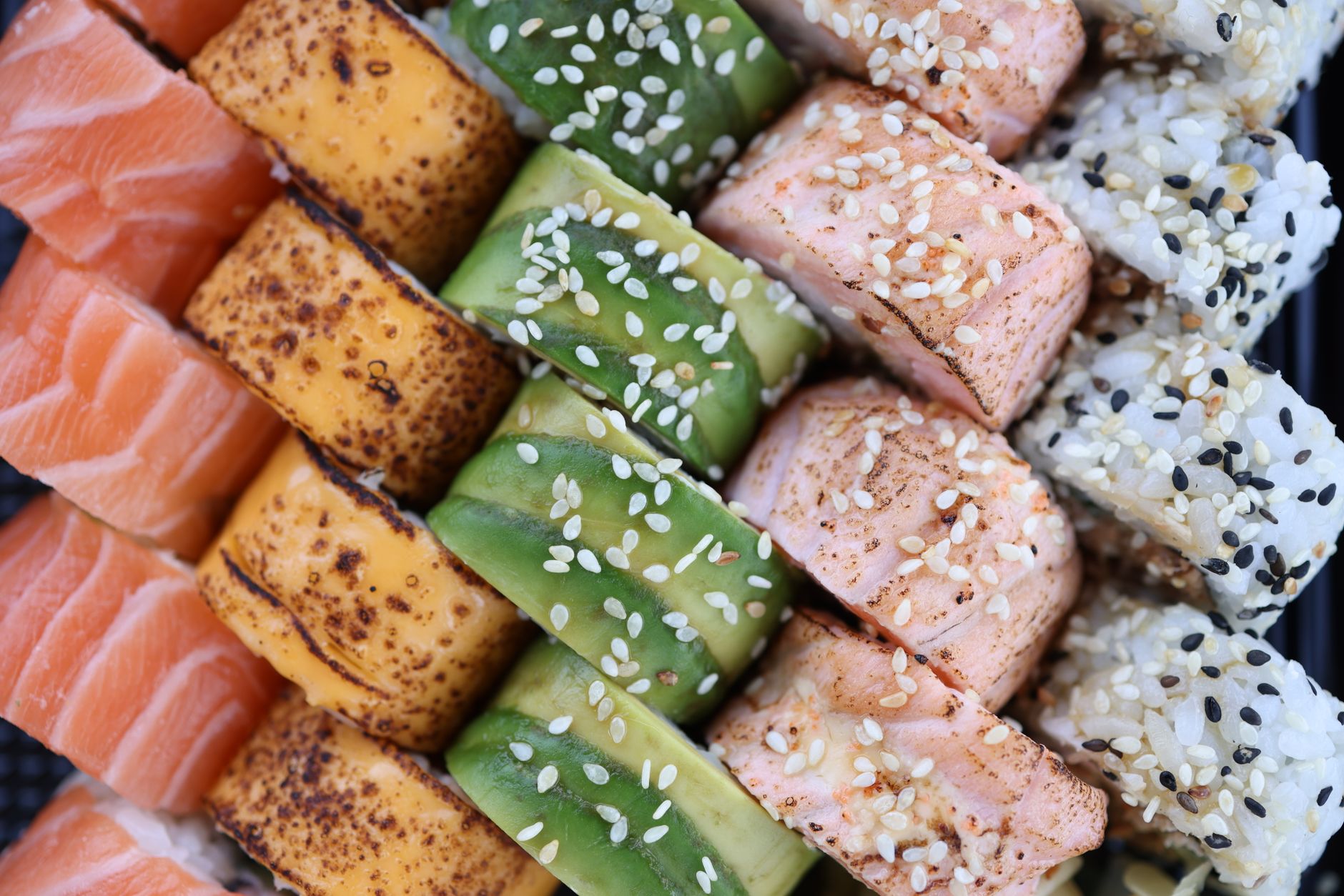
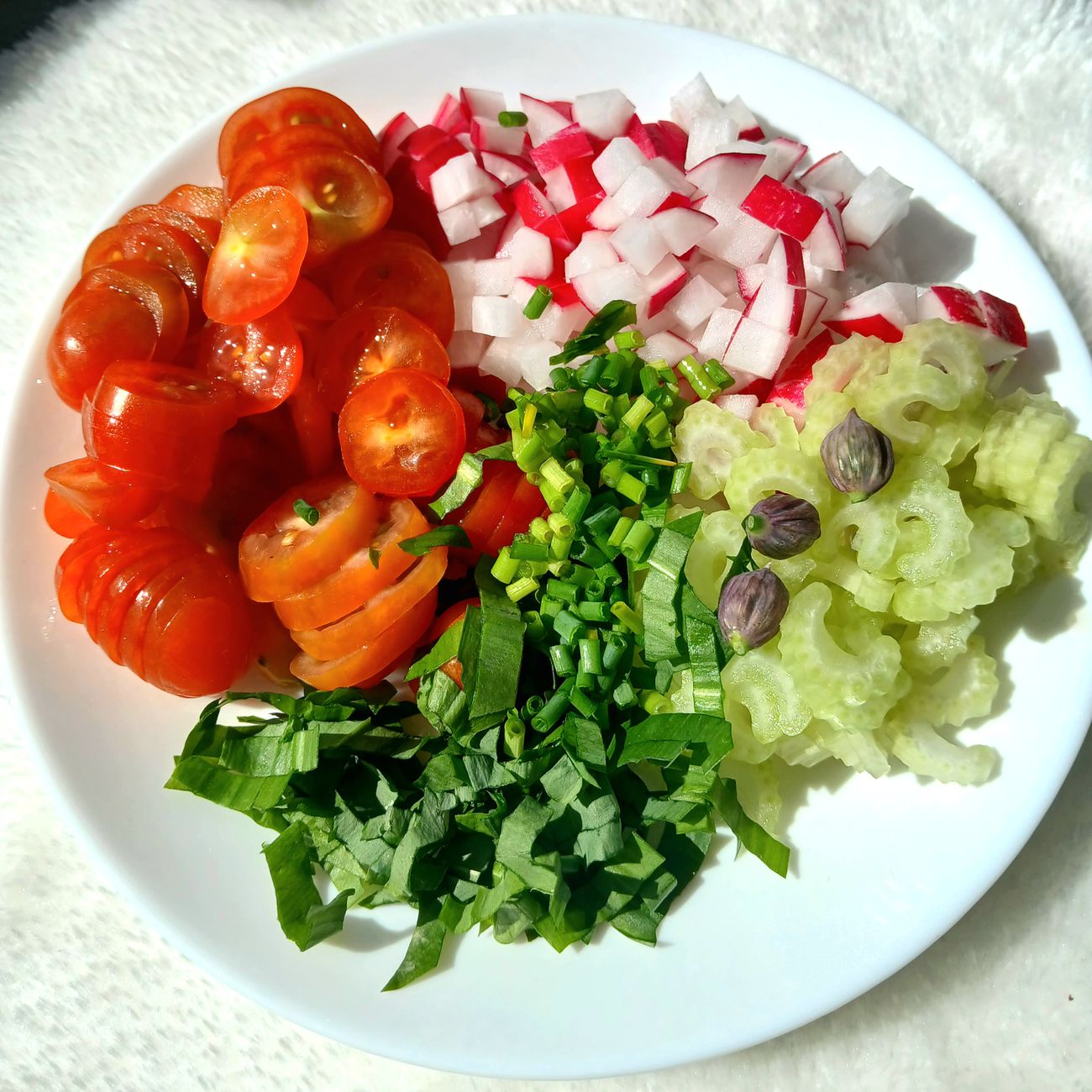
You don't need a Michelin-starred kitchen to practice goshiki. Home cooks in Japan apply it instinctively to the simplest meals. A bowl of rice (white) topped with nori (black), grilled salmon (red-orange), pickled cucumber (green), and a scatter of sesame seeds (yellow-tan). Breakfast, packed in five colors.
The principle works because it forces diversity. If you're planning dinner and realize you're missing green, you add edamame or shiso. No yellow? A strip of tamagoyaki or a wedge of kabocha squash. The result: meals that satisfy not just hunger but a deeper sense of rightness.
It also respects the seasons. Spring brings pale greens and soft pinks. Summer explodes in deep greens and purples. Autumn turns golden and rust-red. Winter goes stark—white radish, black kelp, the orange of persimmon. The palette shifts, and the table tells you what month it is.
Beyond the plate
Interestingly, the five-color philosophy extends to the vessels themselves. A rustic brown Bizen bowl. Celadon green Arita porcelain. Jet-black lacquer. Even the tableware contributes to the visual equation, creating layers of color that dialogue with the food.
This is why Japanese dining feels composed rather than crowded, even when a dozen small dishes fill the tray. Each element—food, plate, garnish—occupies its own chromatic space. Nothing fights for attention. Nothing is redundant.
The meal becomes a study in restraint and abundance at once, proof that you can have both when color does the organizing.
---
Next time you arrange a plate, pause. Count the colors. You might find you're one shade away from something that feels, inexplicably, complete.
FAQ
Chaware curates authentic Japanese crafts — straight from the makers in Japan to your table.
Explore the Chaware collection →