Rice Bowl Etiquette: The Quiet Language of Japanese Dining Manners
On this page
You lift the bowl. And in that small gesture, centuries of intention flow through your fingers.
In Japan, a rice bowl isn't just a vessel — it's meant to be held. While Western dining culture keeps dishes firmly planted on the table, Japanese etiquette asks you to cradle your gohan-jawan (rice bowl) in your non-dominant hand, bringing it closer to your mouth as you eat. This isn't about convenience. It's about respect, posture, and a particular understanding of what it means to receive food.
The hand becomes a bridge
When you hold your rice bowl, you create a small, private space between the vessel and your lips. Your left hand (for right-handed eaters) cups the base gently, fingers wrapped around the foot of the bowl, thumb resting on the rim. This elevation serves a practical purpose — it shortens the distance your chopsticks must travel, preventing rice grains from tumbling onto the table or your lap.
But there's more happening here than spill prevention.
By lifting the bowl, you're acknowledging the effort behind the meal. The rice didn't arrive by accident. Someone grew it, harvested it, cooked it, served it. Holding it close is a quiet form of gratitude — you're literally bringing sustenance toward yourself rather than hunching down toward the table like an animal at a trough.
To hold the bowl is to complete the circle between giver and receiver.
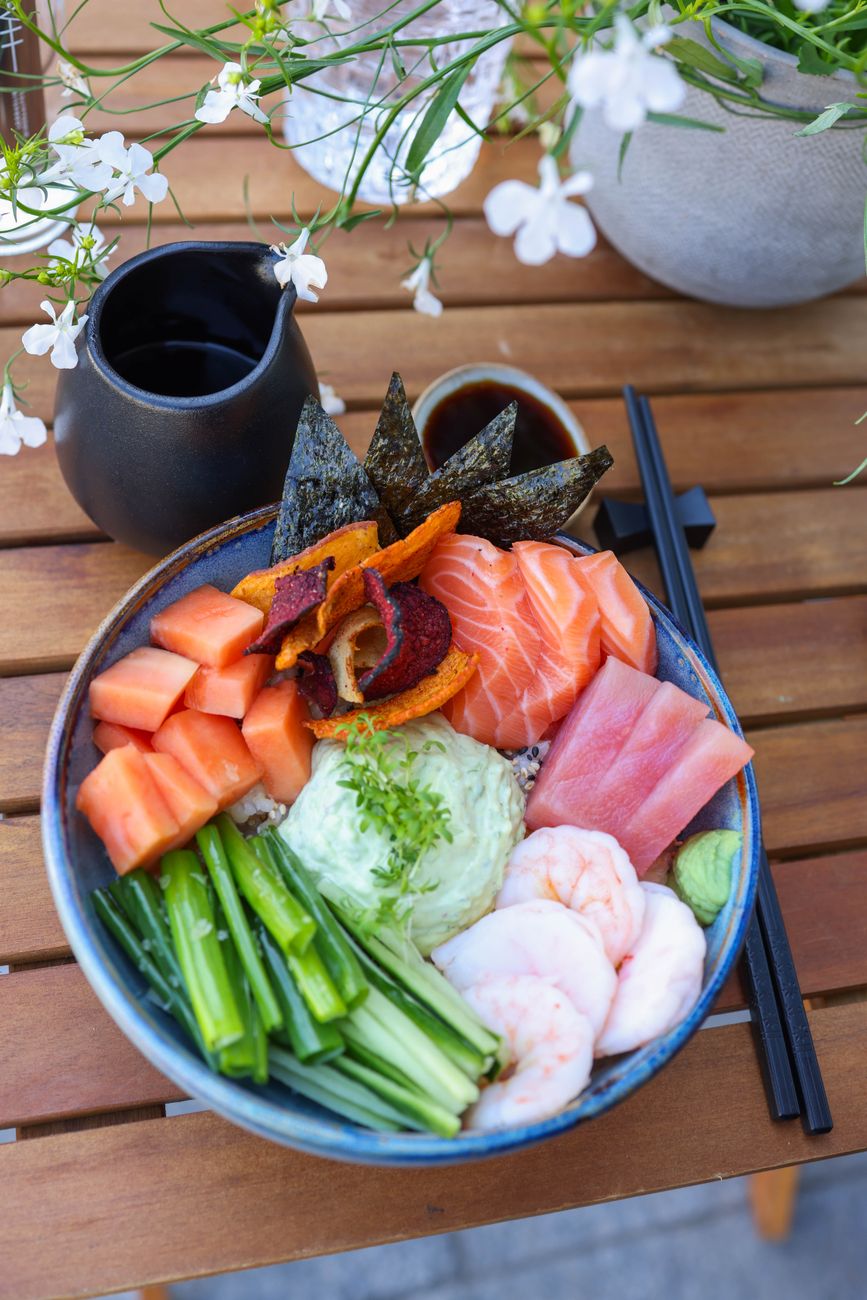
What your posture says
Japanese dining etiquette prizes upright posture. Leaning over your food, face hovering above the table, reads as inuguii — "dog eating" — and carries an undertone of desperation or poor upbringing. The lifted bowl allows you to sit straight, maintaining dignity while you eat.
This matters in a culture where meals have long been communal, visible, social. How you hold yourself at the table communicates self-respect and respect for others. Even alone, the form remains. It's internalized, automatic, part of the body's vocabulary.
The bowl itself conspires in this. Traditional Japanese rice bowls are sized and weighted for one hand — smaller than Western soup bowls, with a stable foot and a slight curve that nestles into your palm. The ceramic warms as you hold it, especially in winter. You feel the texture, the glaze, the subtle weight of the clay.
The exceptions that prove the rule
Not every vessel gets lifted. Large donburi bowls — the wide, deep bowls used for rice topped with katsu, tempura, or beef — stay on the table. They're simply too large and heavy to hold comfortably. Soup bowls, paradoxically, do get lifted, brought to the lips to sip the broth after you've eaten the solid ingredients.
Plates, always, remain down. Only bowls rise.
And there's a wrong way to lift: pinching the rim with your fingertips, or clutching the bowl with your whole palm pressed against the bottom. Both suggest unfamiliarity, a lack of ease. The correct hold looks effortless because it is — once learned, your hand finds the position without thought.
An invitation, not a rule
If you're new to Japanese dining, no one expects perfection. But understanding the intention behind the gesture changes how it feels. You're not performing etiquette for its own sake. You're participating in a choreography designed around gratitude, efficiency, and the simple fact that a bowl of rice, properly acknowledged, tastes different than one ignored.
The bowl rises. Your spine straightens. And the meal, already prepared with care, receives the attention it was always meant to have.
FAQ
Chaware curates authentic Japanese crafts — straight from the makers in Japan to your table.
Explore the Chaware collection →