The Art of Plating Height: How Japanese Chefs Use Vertical Space and Layering
On this page
A sprig of shiso sits on top of sliced sashimi, lifted just enough that it doesn't touch. In kaiseki, this small gesture speaks volumes.
While Western plating often arranges food flat across the plate—a canvas to be painted—Japanese cuisine builds upward and inward, using height and layering to create what chefs call tatemae, or "standing beauty." It's architecture you can eat.
The grammar of vertical space
Height in Japanese plating isn't decoration. It's information.
When a chef places a grilled ayu fish propped at an angle, tail lifted as if still swimming upstream, they're telling you the season (summer), the cooking method (salt-grilled over binchōtan charcoal), and the ideal order of eating (start at the head). The elevation creates shadows, reveals the char marks, allows steam to escape without sogginess. A flat fish is a dead fish. A lifted one still has ikizukuri—the energy of life.
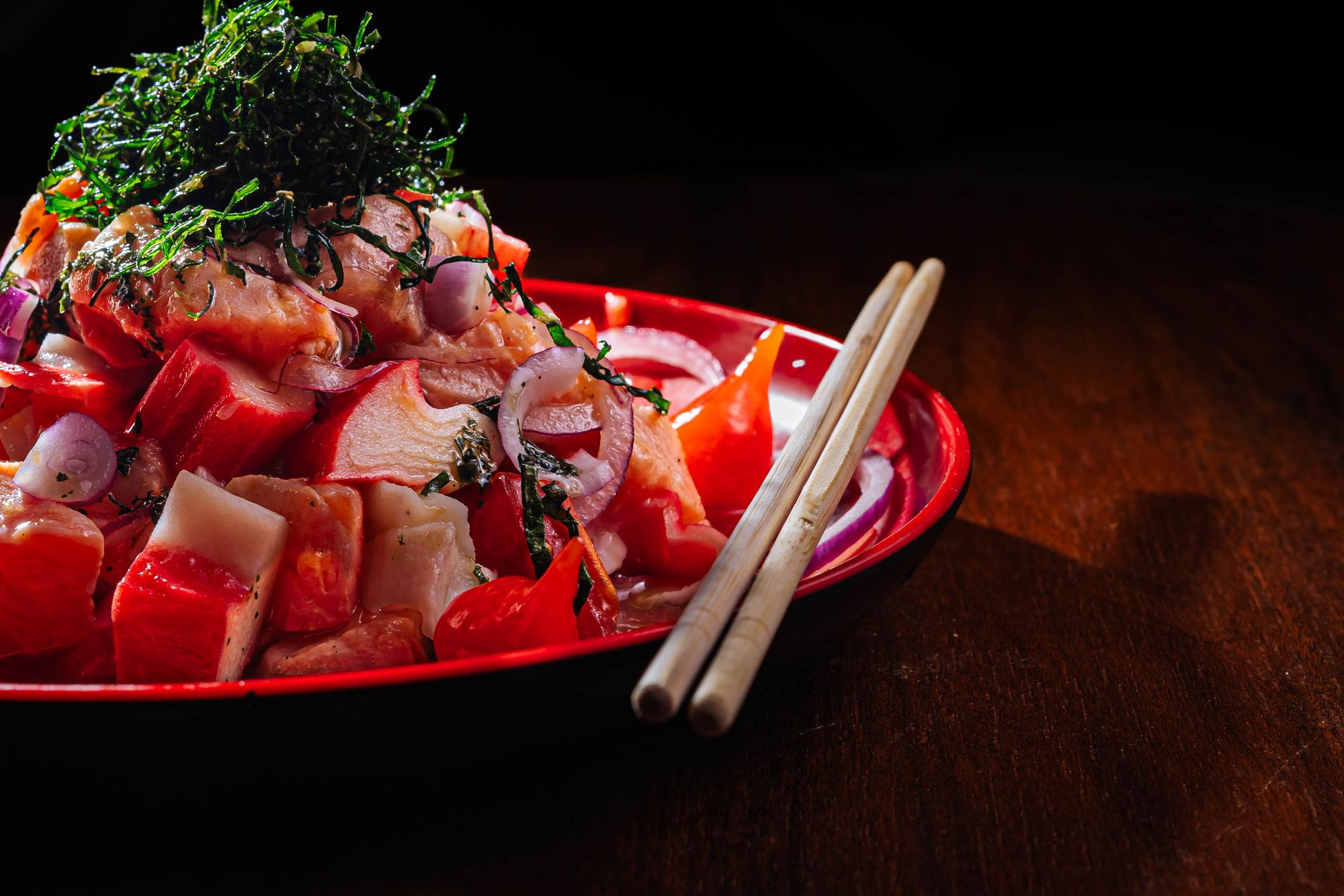
This vertical language extends to every element. Tempura arrives on raised wire racks so oil drips away and crispness remains. Simmered vegetables stack in small peaks within their bowl, the tallest piece—often a turned carrot or taro—acting as the yakuwari, the focal point that draws your eye and establishes hierarchy.
Layering as narrative
In Japanese plating, you don't see everything at once—you discover it.
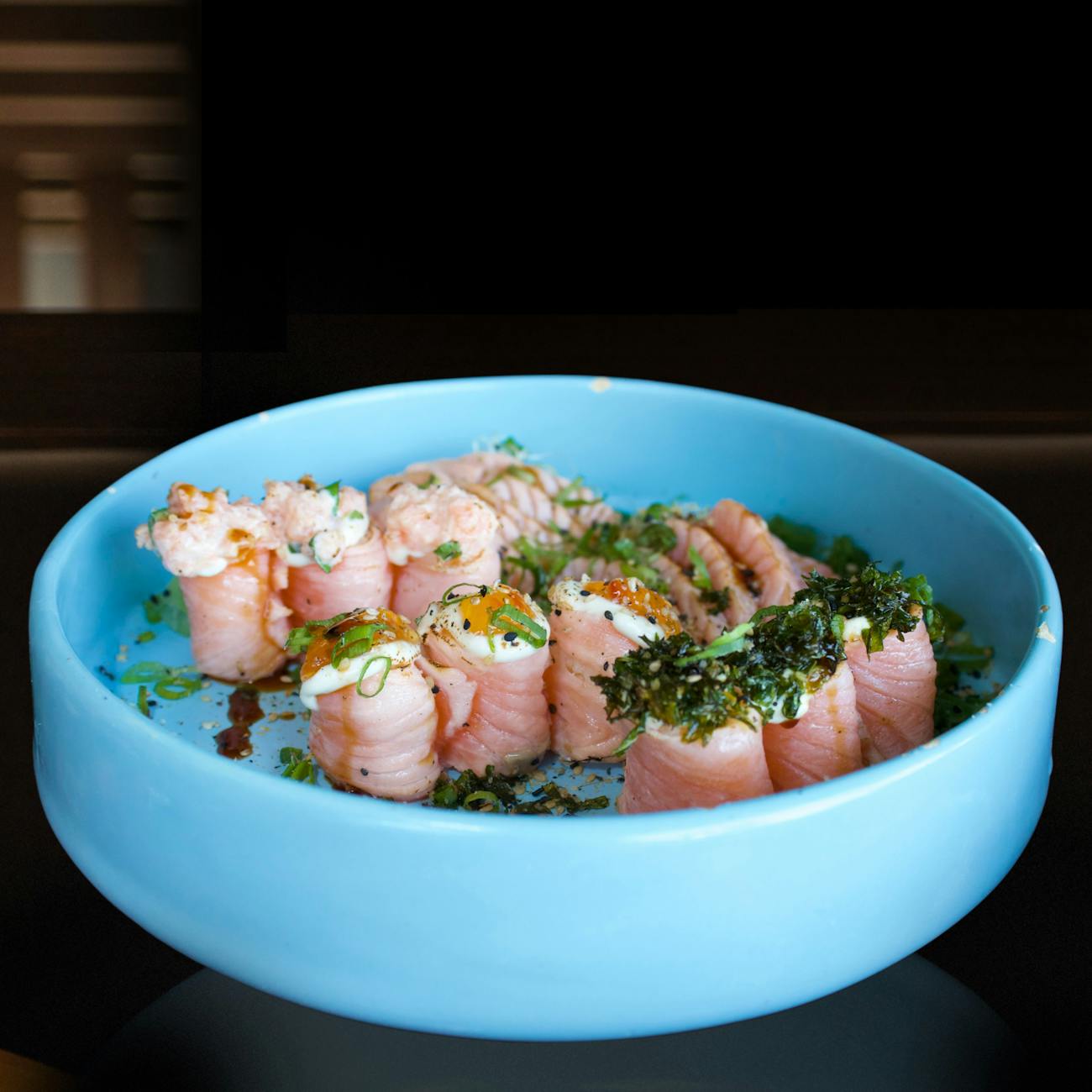
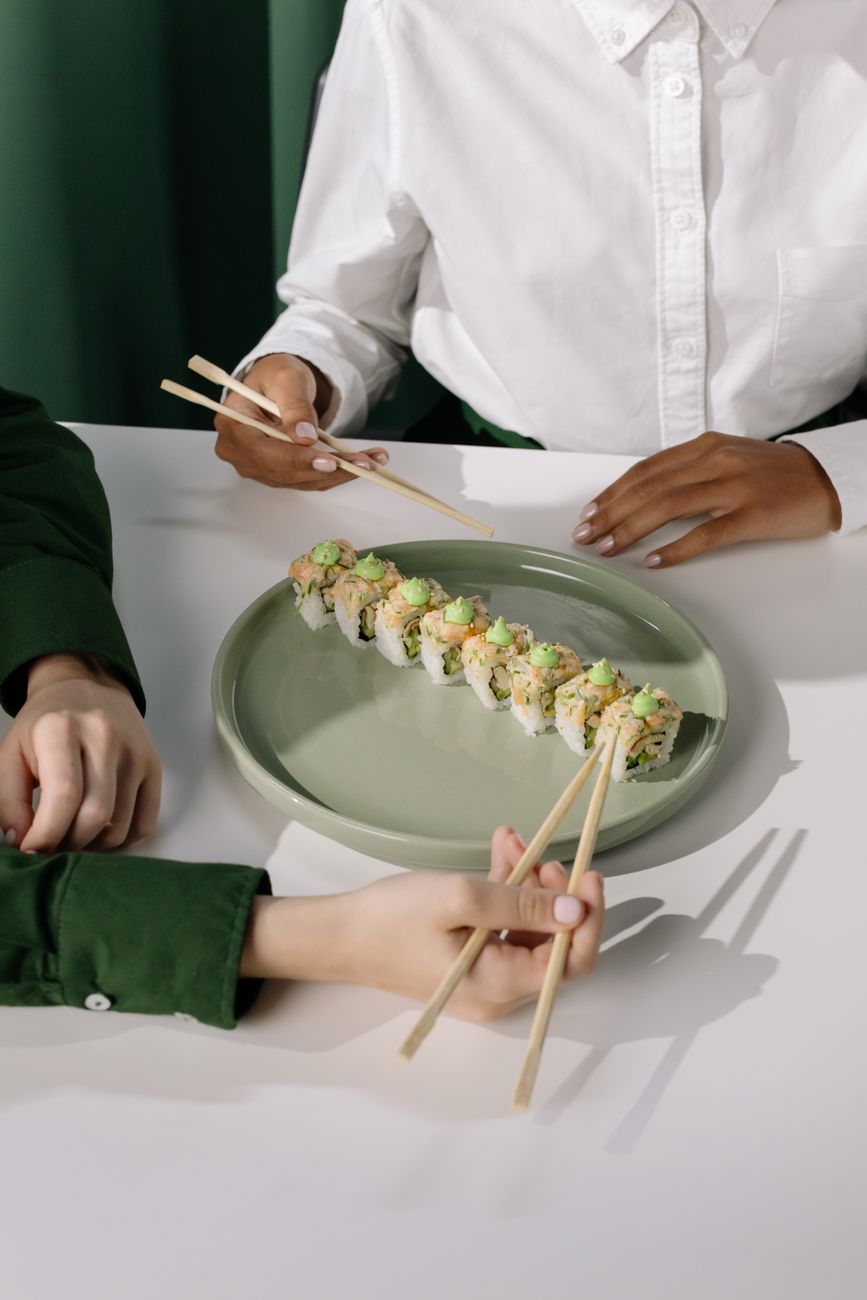
The rice hidden beneath sashimi in chirashi-zushi. The soft yolk waiting under a mound of grated daikon. The slice of yuzu peel tucked between layers of pressed mackerel in battera. This is kasane, the art of meaningful layering, borrowed from the way kimono collars stack to reveal flashes of inner silk.
Each layer holds a moment. You lift the shiso, you taste the fish, you encounter the bed of daikon threads beneath—each textured differently, each temperature slightly shifted. The meal becomes sequential, a story told in chapters rather than a single paragraph shouted all at once.
Even in a simple bowl of zaru soba, the noodles arrive in a loose, airy mound—never pressed flat—so that sauce clings to some strands but not others, so that air moves between them, so that your chopsticks can lift just a few at a time. The height is functional, yes, but it's also generous. It gives you room to participate.
The shadow and the space
Walk through the preparation area of a traditional ryotei and you'll notice chefs discussing ma—negative space—as carefully as they discuss the food itself.
The height of a garnish creates shadow. Shadow creates depth. Depth creates the illusion that a small ceramic dish contains a landscape. This is why a single shrimp tempura leans against a small mound of grated daikon rather than lying flat: the angle creates a diagonal line, the daikon becomes a mountain, and suddenly you're looking at a scene rather than a plate.
It's also practical. Elevated ingredients stay distinct. The crunch doesn't touch the sauce until you want it to. The cool element doesn't warm the hot. The crisp stays crisp. In a cuisine that prizes texture as much as flavor, height is a form of respect—for the ingredient, for the cooking technique, for the person about to eat.
What the eye climbs
Western plating often asks you to admire the whole composition before disrupting it. Japanese plating invites you to dismantle it, to move through it, to discover that the most delicate piece was protected underneath all along.
The height isn't showing off. It's guiding you home, one layer at a time.
FAQ
Chaware curates authentic Japanese crafts — straight from the makers in Japan to your table.
Explore the Chaware collection →