How to Whisk Matcha Properly: A Step-by-Step Guide to the Traditional Technique

On this page
The difference between a bowl of bitter green foam and a moment of actual calm? It's all in the wrist.
The dance, not the chore
Whisking matcha isn't about brute force. It's a controlled flick—a rapid zigzag that feels almost like drawing the letter "M" or "W" across the bottom of your bowl, over and over, at speed. Your wrist does the work. Your arm stays still.
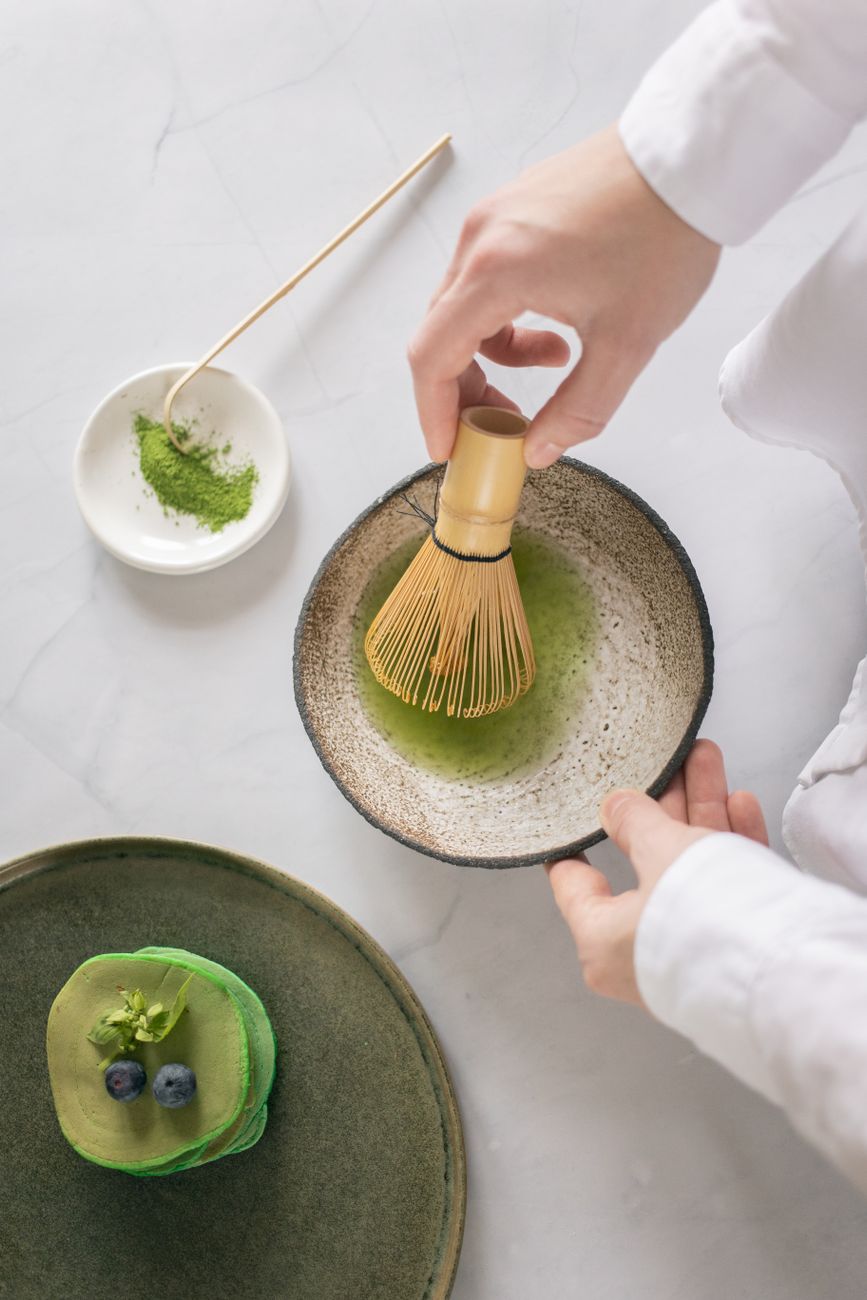
The traditional bamboo whisk, or chasen, isn't built like a Western kitchen tool. Its dozens of fine tines are designed to suspend powder in water, not beat it into submission. Hold it lightly between your fingers—never clenched in your fist—and let the bristles just graze the curve of the bowl. You're coaxing the tea, not attacking it.
Start with the right setup
Before you whisk anything, sift your matcha. Even the finest powder clumps. A small sieve or furui will save you from grainy lumps no amount of whisking can fix.
Use about 70ml of water at roughly 80°C—hot, but not boiling. Too cool and the matcha won't dissolve. Too hot and you'll scorch the delicate flavor into bitterness. If you don't have a thermometer, let boiled water rest for two minutes.
Add your sifted matcha to the bowl first. Then pour the water directly over it. This gives you a head start on breaking up the powder before you even pick up the whisk.
The motion that matters
Now: wrist up, wrist down. Fast. The motion is horizontal, not circular. You're not stirring soup.
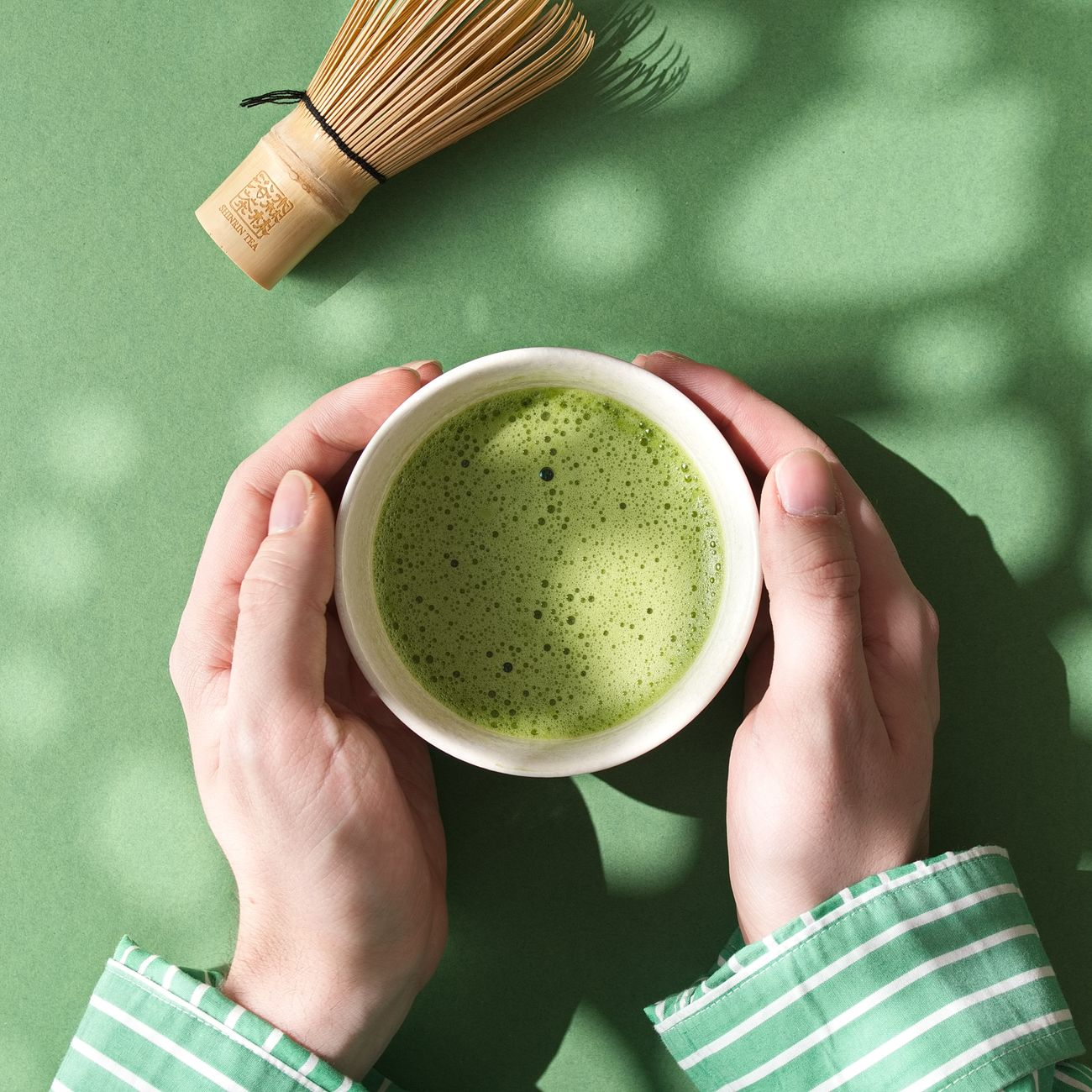
Start slow to incorporate the powder, then accelerate into a brisk back-and-forth. Aim for about two flicks per second. The surface will begin to foam—hundreds of tiny bubbles forming a pale green froth. When the bubbles are fine and uniform, not large and soapy, you're there.
The whisk should sound like a quiet flutter, not a aggressive slap against ceramic.
Lift the chasen gently at the end, tracing a small circle on the surface to pop any larger bubbles. The result should be smooth, creamy, almost mousse-like.
What goes wrong (and why)
Weak foam usually means you whisked too slowly or too gently. Matcha needs energy to emulsify. But if your tea tastes harsh or the bubbles are huge and unstable, you likely went too hard or used water that was too hot.
A damaged whisk won't help either. If the tines are splayed or broken, they can't create the fine aeration you're after. After each use, rinse your chasen in warm water and set it on a kusenaoshi—a small ceramic holder that helps the prongs keep their shape as they dry.
The texture you're after
Proper matcha should coat your tongue lightly, with a gentle sweetness emerging after the initial grassy bitterness fades. The foam shouldn't disappear the moment you tilt the bowl. It should linger, soft and cloud-like, all the way to the last sip.
It takes a few tries to find your rhythm. But once your wrist learns the motion, it becomes automatic—a small, focused ritual that doesn't require thought, only presence.
FAQ
Chaware curates authentic Japanese crafts — straight from the makers in Japan to your table.
Explore the Chaware collection →