How Jomon Pottery Shaped the Foundation of Japanese Craft
On this page
Flame marks on clay from fifteen thousand years ago still whisper the beginning of something unmistakably Japanese.
When fire met earth in the forest
Long before rice paddies, before samurai, before the idea of "Japan" even existed, hunter-gatherers along the archipelago's coasts and mountains were doing something radical with mud. They coiled wet clay into vessels, pressed cord into the surface, and hardened them in open fires. This was Jomon pottery—the world's oldest known ceramic tradition, appearing as early as 14,000 BCE during a period when much of humanity still carried their belongings in baskets and animal skins.
The name itself tells you what to look for. Jomon means "cord-marked," referring to the rope patterns these ancient makers pressed, rolled, and twisted into clay while it was still soft. But calling it decoration misses the point. Those impressions were a language of texture, a way of giving anonymous earth a voice.
Wildness baked into form
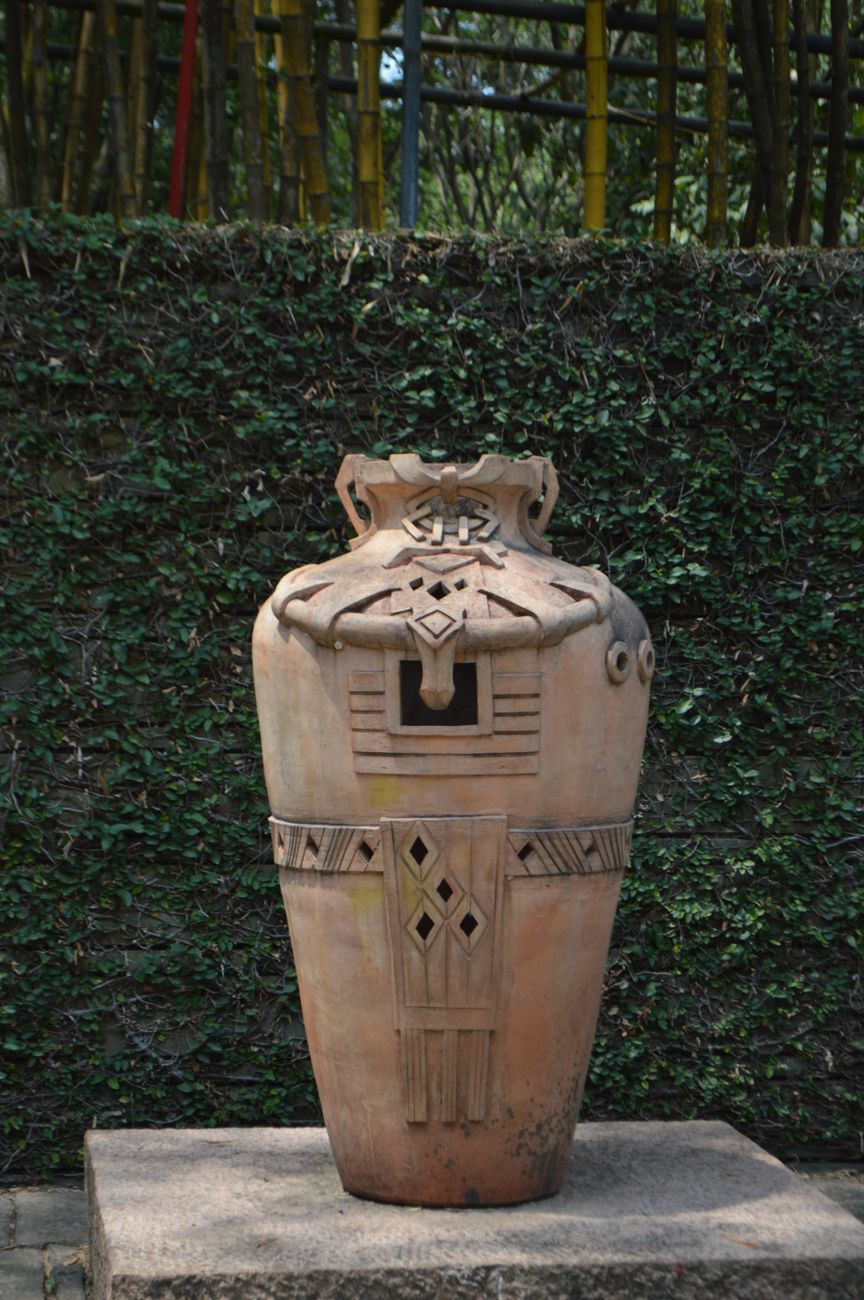
Hold a photograph of Jomon pottery next to later Japanese ceramics and you'll see the difference immediately. Where tea bowls whisper restraint, Jomon vessels shout. Flame-like rims explode upward. Surfaces writhe with applied coils, carved spirals, shell impressions. Some pieces look less like containers and more like frozen gestures—as if the maker was trying to capture movement itself in mud.
This wasn't clumsiness. It was intention.
Ancient japanese ceramics began not with simplicity, but with wild, unrestrained expression that would echo through millennia.
The Jomon people lived in a landscape of abundance—chestnut forests, salmon runs, shellfish beds. They were settled enough to make heavy pottery, mobile enough not to need it refined. So they made it alive. Vessels for cooking, for storage, perhaps for ritual. The most elaborate pieces, with their spiraling excesses, might have held nothing at all except meaning.
The thread that never broke
When wet rice agriculture arrived from the continent around 300 BCE, it brought new pottery too—smooth, wheel-thrown, practical. The Yayoi period vessels that replaced Jomon ware looked like they came from a different planet. Clean. Efficient. Forgettable.
Yet something survived the transition.
Japanese potters never fully abandoned the idea that clay could be more than a container. That asymmetry could be beautiful. That a maker's hand should be felt, not erased. When you see a 16th-century tea bowl with a deliberately rough foot or an uneven glaze, you're seeing Jomon's ghost. When contemporary ceramic artists like those working in Bizen or Shigaraki let flame and ash mark their pieces randomly, they're having a conversation with those cord-marked pots from the forest.
The through-line isn't literal—it's philosophical. An acceptance of irregularity. A comfort with wildness barely contained. The understanding that the most honest objects carry the traces of their making.
What mud remembers
Walk into any museum with a Jomon collection and you'll notice people lean in close. Not because the pieces are small, but because they demand it. You need to see where the maker's thumb smoothed a coil. Where the cord bit deep. Where the fire left its shadow.
These weren't the first pots ever made, but they were among the first to insist that utility and expression could be the same thing. That's the gift Jomon pottery gave to every Japanese craft that followed: permission to let the material speak, to let the process show, to value the trace of human presence over mechanical perfection.
Fifteen thousand years later, we're still learning to listen.
FAQ
Chaware curates authentic Japanese crafts — straight from the makers in Japan to your table.
Explore the Chaware collection →