The Thirty-Six Views of Mount Fuji Explained: Hokusai's Revolutionary Series
On this page
You've seen it a thousand times—that iconic wave, frozen mid-curl, with a snow-capped mountain peeking through the spray. But what if I told you that image is just one frame in a visual symphony that changed art forever?
When a Mountain Became an Obsession
In the early 1830s, Katsushika Hokusai was already in his seventies. Most artists would be winding down. Instead, he embarked on what would become his masterwork: Fugaku Sanjūrokkei, or Thirty-Six Views of Mount Fuji. The series eventually grew to forty-six prints, because Hokusai—ever the perfectionist—couldn't stop himself from adding ten more.
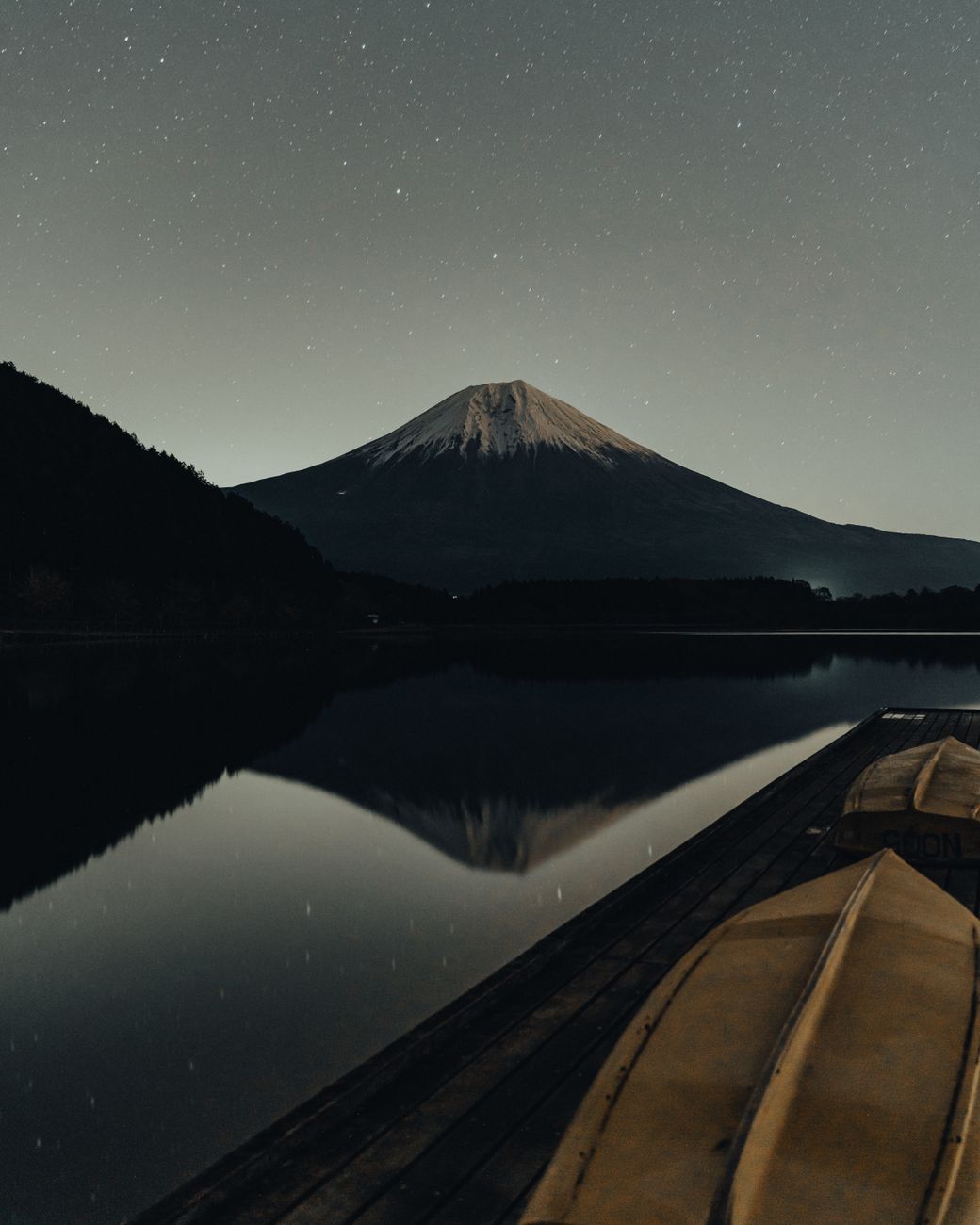
This wasn't just a landscape project. It was a meditation on perspective, an exploration of how a single sacred mountain could anchor an entire nation's identity while appearing utterly different depending on where you stood.
The Blue That Changed Everything
Look closely at these prints and you'll notice something revolutionary: the saturated, almost electric blue that dominates many compositions. This was Prussian blue, or bero-ai in Japanese—a synthetic pigment that had recently arrived from Europe and was far more vibrant and stable than traditional indigo.
Hokusai seized on it. That blue became his signature, flooding skies and waves with an intensity that made viewers stop in their tracks. It was expensive, bold, and utterly modern for its time.
The mountain doesn't move, but everything around it breathes with life.
Ordinary Life, Extraordinary Frames
What makes this series endure isn't just technical brilliance—it's humanity. Hokusai placed Fuji in the background of everyday scenes: barrel-makers at work, travelers caught in wind, fishermen hauling nets, lightning splitting the sky above a rice paddy. The mountain watches over sake brewers, timber workers, pilgrims.
In The Great Wave off Kanagawa, boats full of rowers battle a monstrous wall of water while Fuji sits calm and tiny in the distance. The contrast is breathtaking: human fragility against natural permanence, chaos framing stillness.
A Radical Shift in Seeing
Before Hokusai, Japanese landscape prints typically followed Chinese conventions—idealized, atmospheric, safely traditional. Hokusai shattered that mold. He incorporated Western perspective techniques he'd studied in Dutch books, playing with diagonal compositions and dramatic viewpoints that felt almost cinematic.
He showed Fuji from behind, from underneath, reflected in water, glimpsed between buildings. Sometimes it dominated. Sometimes it barely appeared. The point was never the mountain itself—it was the infinite ways of seeing.
The Artist Who Signed His Name 30 Times
Hokusai changed his artist name roughly thirty times throughout his life, a practice that reflected his belief in constant reinvention. When he created the Fuji series, he was using the name Iitsu (roughly "one again" or "anew at one").
He once wrote that nothing he'd created before age seventy was worth noticing, and that if he lived to 110, every line would be alive. The Thirty-Six Views arrived at this threshold—not the work of a young artist finding his voice, but a master finally saying exactly what he meant.
---
These prints traveled to Paris in the late 1800s and detonated in the studios of Impressionists and Post-Impressionists. Monet, Degas, Van Gogh—they all studied Hokusai's compositions, his flattened space, his bold cropping. A mountain in Japan taught Europe how to see differently.
And it still does.
FAQ
Chaware curates authentic Japanese crafts — straight from the makers in Japan to your table.
Explore the Chaware collection →