Understanding Seigaiha: The Timeless Blue Sea Wave Pattern in Japanese Design
On this page
Look closely at the curves repeating across a ceramic bowl, a silk kimono, or a modern tote bag. Those concentric arcs—layered like ripples frozen mid-motion—aren't just decoration. They're seigaiha, and they've been telling the same story for over a thousand years.
Waves that never break
Seigaiha (青海波) translates literally to "blue sea waves," though the pattern appears in every color imaginable. The design is deceptively simple: overlapping semi-circles stacked in neat rows, each arc echoing the one before it. The effect mimics the endless, rhythmic motion of ocean swells—calm, persistent, hypnotic.
It's geometry made poetic. And it's everywhere in Japanese design.
Born on a stage, not a shore
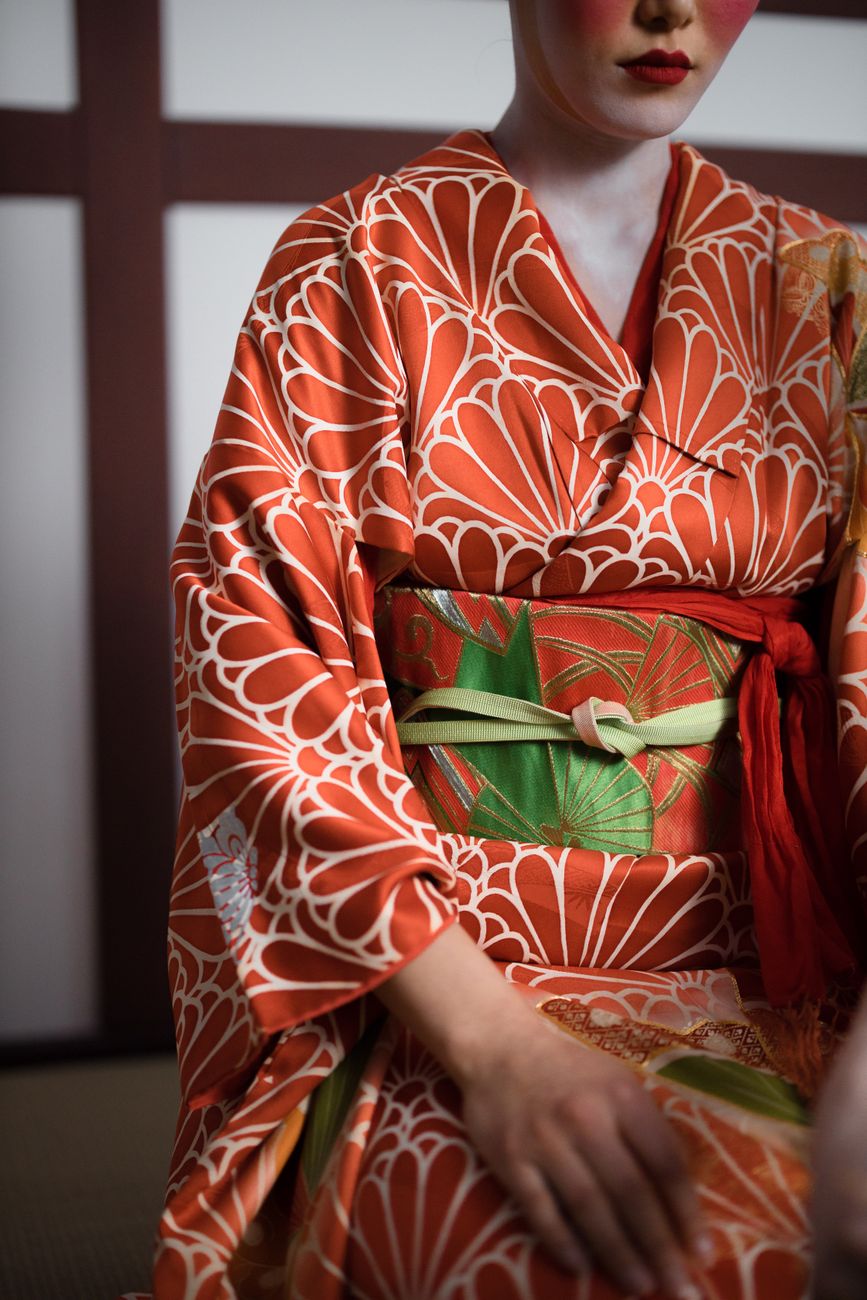
The pattern's origin story begins not with the sea itself, but with a court dance. During the Heian period (794–1185), a performance called Seigaiha featured dancers wearing robes decorated with these wave motifs. The dance depicted the eternal ebb and flow of water, and the costume's pattern became so iconic it eventually borrowed the performance's name.
Before that, similar wave designs had traveled along the Silk Road from Persia and China. But Japan refined it, formalized it, and wove it into the visual language of good fortune.
The seigaiha pattern doesn't depict a single wave—it captures the idea that waves never stop coming.
What the waves actually mean
In Japanese symbolism, endless waves represent continuity, resilience, and the peaceful passage of time. There's no dramatic crash, no storm—just the steady, infinite rhythm of water meeting shore. It's a wish for calm persistence, for things to keep flowing smoothly.
You'll find seigaiha on:
- Ceramics and porcelain, where the curves follow the contours of bowls and plates
- Textiles, from formal kimono to everyday tenugui hand towels
- Architecture and interiors, carved into wooden transoms or printed on wallpaper
The pattern adapts without losing its identity. On Arita ware, it might be painted in delicate cobalt blue. On a lacquered box, it could shimmer in gold. The medium changes; the meaning holds.
Why it still works today
Part of seigaiha's enduring appeal is its versatility. It reads as traditional without feeling dated. Minimal without being cold. It scales up, scales down, layers with other patterns, and never fights for attention.
Modern designers return to it again and again—not as nostalgia, but because the pattern does something rare: it adds visual interest while creating calm. In a world obsessed with noise and newness, there's something quietly radical about a motif that's content to simply repeat, endlessly, like the sea itself.
The next time you see those interlocking arcs, pause for a moment. You're looking at more than decoration. You're seeing a wish made visible—that good things might continue, steady and unbroken, like waves that never stop reaching the shore.
FAQ
Chaware curates authentic Japanese crafts — straight from the makers in Japan to your table.
Explore the Chaware collection →