Why Every Shinto Shrine Has a Purification Fountain at the Entrance
On this page
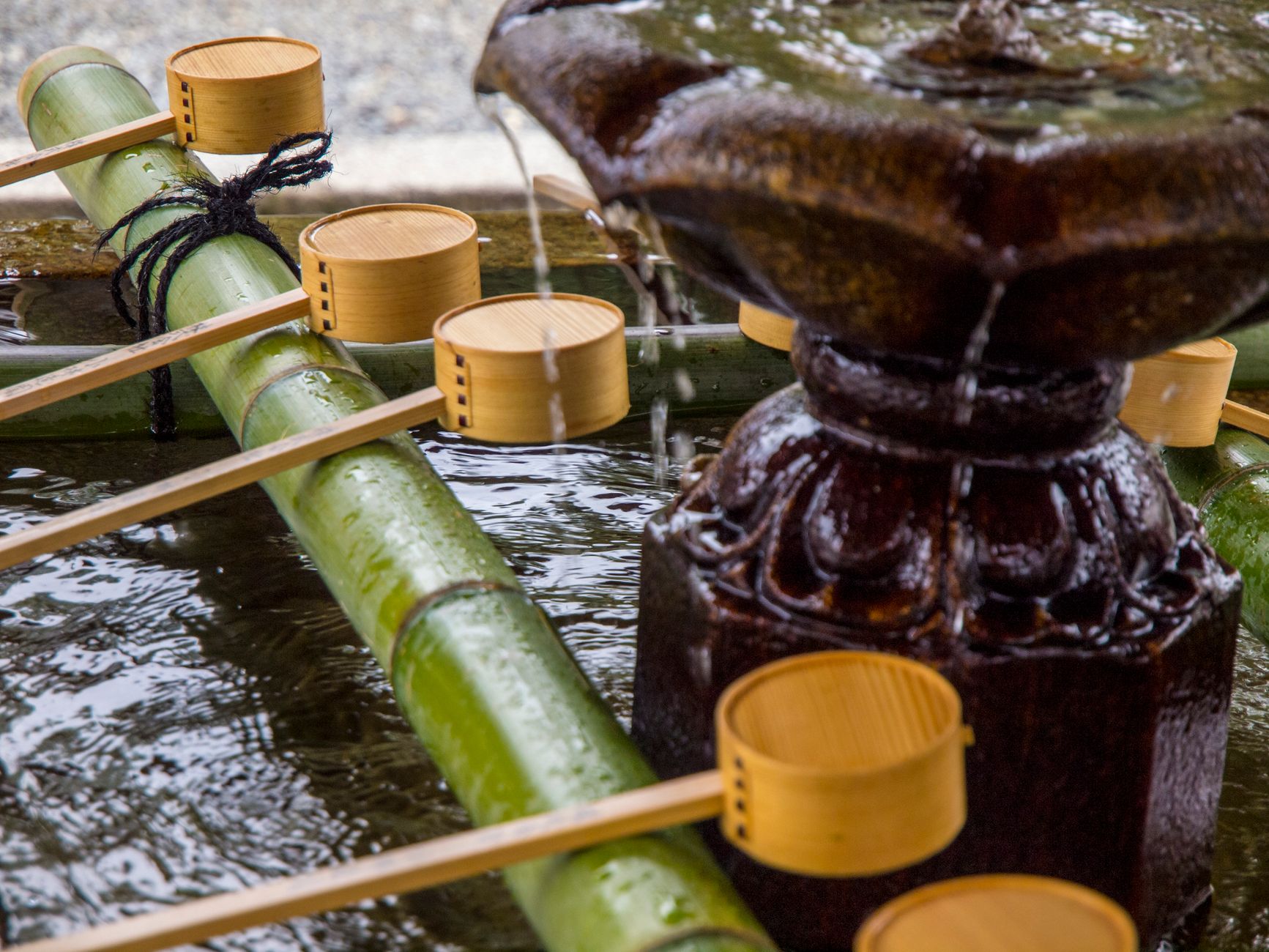
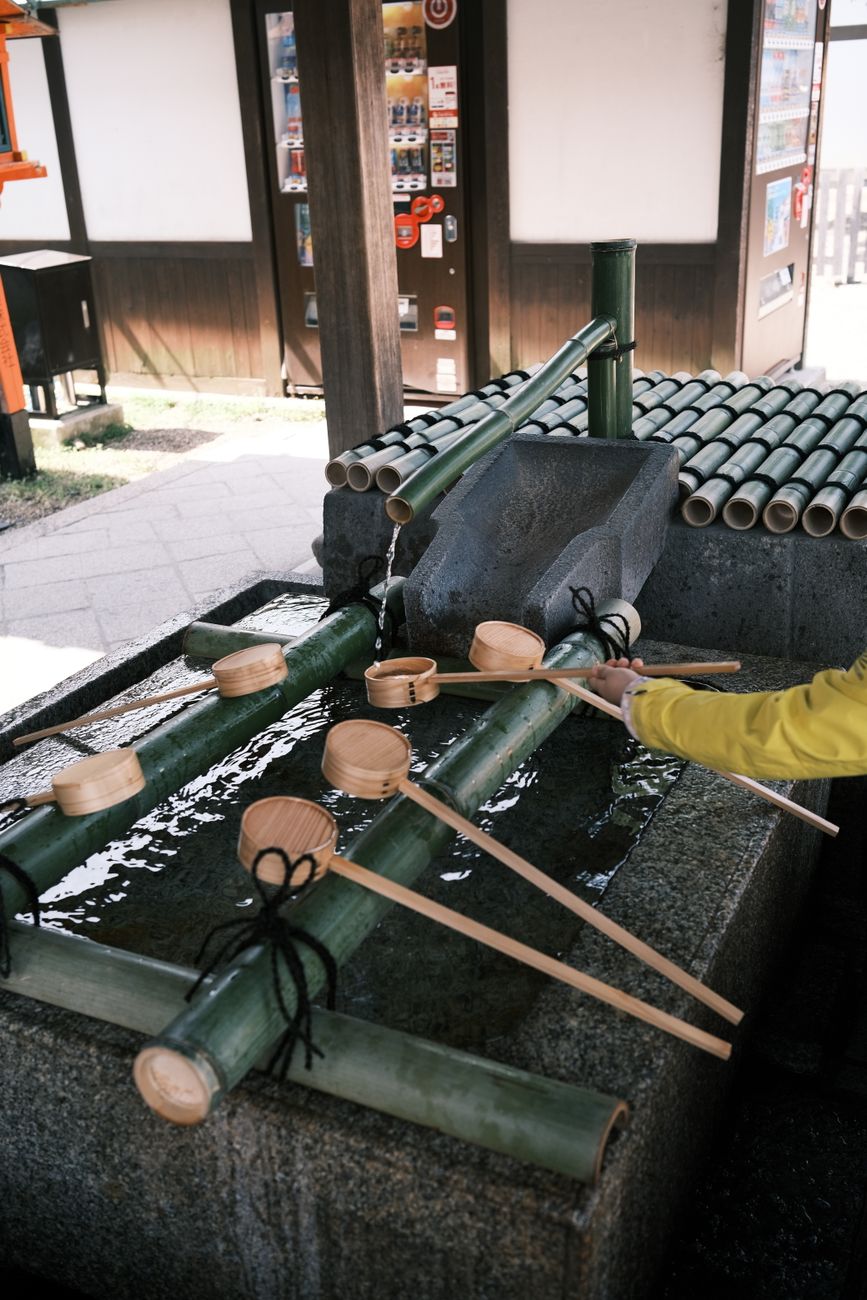
You step through the torii gate, and there it is: a stone basin, a bamboo ladle, cool water trickling. Most visitors walk past. But you're about to pause—and understand why.
The basin has a name, and a job
It's called a chōzuya (手水舎) or temizuya—literally "hand-water pavilion." Sometimes you'll hear it called chōzubachi when referring to just the basin itself. Its purpose is singular: ritual purification before you approach the sacred space beyond.
This isn't about hygiene, though that's a happy side effect. It's about transition. You're crossing from the everyday world into a space where the divine resides, and you need to shed the dust of the ordinary first.
Water is the threshold between worlds
In Shinto belief, kegare (穢れ)—impurity or pollution—accumulates through daily life. Not sin, exactly, but a kind of spiritual static. Death, illness, conflict, even the mundane wear of existence all contribute to it. Water, especially flowing water, has the power to wash it away.
The chōzuya sits at the boundary. It marks the moment you stop being just a passerby and begin becoming a visitor to the gods. The act is small, physical, deliberate. Scoop. Rinse left hand. Rinse right. Sip, swish, spit quietly. Pour the remaining water down the handle to cleanse the ladle itself.
The ritual isn't complicated—it's a reminder that approaching the sacred requires intention, not just footsteps.
Dragons, turtles, and the question of taste
Look closely at the basin. Many are carved from stone—granite, often—and aged to a soft gray-green patina. The water often flows from a carved dragon's mouth, sometimes a turtle or bamboo spout. Dragons are water deities in East Asian tradition; their presence here is no accident.
The water itself? It's usually clean municipal supply today, though historically it would have been spring or well water, chosen for its purity. Some shrines still use natural sources. You're not meant to drink deeply—just enough to rinse your mouth. The taste is secondary to the gesture.
And yes, there's a correct sequence. Left hand first (most people are right-handed; you cleanse the "weaker" side first). Then right. Then pour water into your cupped left hand to rinse your mouth—never put the ladle directly to your lips. Finally, tip the ladle vertical so the remaining water cleanses the handle for the next person.
What happens if you skip it
Nothing dramatic. No shrine police will stop you. But you'll have missed the point of the architecture itself—the way the path slows you down, the way the cold water on your hands shifts your awareness, the way a 30-second ritual becomes a threshold between the noise of the street and the stillness of the shrine grounds.
Some shrines have stopped offering the ladles during flu season or pandemic precautions, and visitors simply bow at the chōzuya instead. The water remains. The intention remains.
The fountain isn't decoration. It's the doorway—the moment the visit actually begins.
FAQ
Chaware curates authentic Japanese crafts — straight from the makers in Japan to your table.
Explore the Chaware collection →