The History of Arita Ware: How Japan Mastered Porcelain
The first true porcelain made in Japan didn't emerge from Kyoto's imperial kilns or the pottery villages of central Honshu. It came from a small town in Kyushu, sparked by a Korean potter's discovery in a remote mountain.
The potter who changed everything
In the early 1600s, a Korean ceramicist named Ri Sampei was brought to Japan during the tumultuous invasions of Korea. While most of his fellow potters settled into making everyday stoneware, Ri Sampei kept searching. He was hunting for something specific: kaolin, the white clay essential for true porcelain.
Around 1616, in the mountains near Arita, he found it.
The discovery transformed Japanese ceramics overnight. For the first time, Japanese kilns could produce the translucent, white-bodied porcelain that had been imported at great expense from China and Korea for centuries. The town of Arita, until then unremarkable, became the birthplace of Japanese porcelain.
When Europe came calling
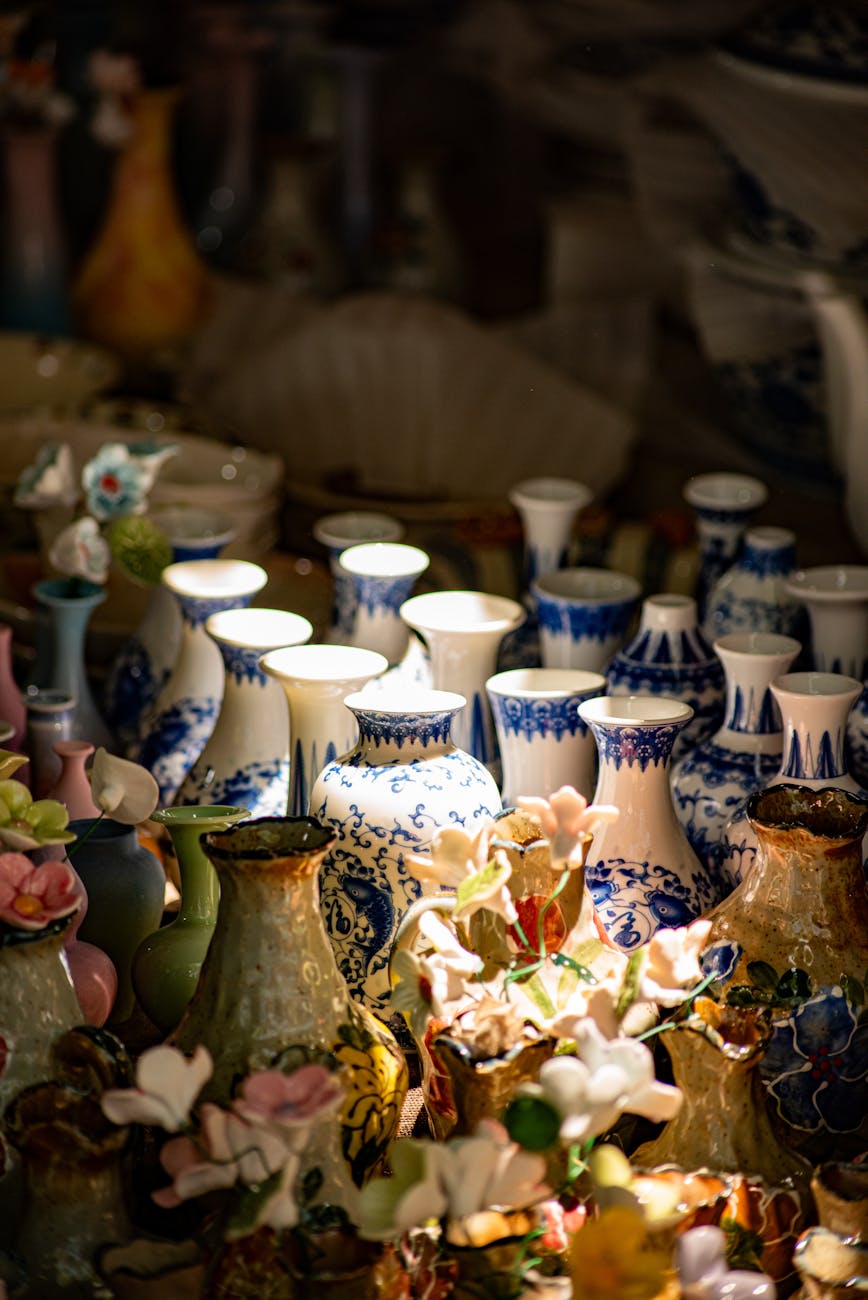
By the mid-1600s, Arita's kilns were producing porcelain at scale—delicate bowls, plates, and vessels painted with cobalt blue under the glaze. But the global breakthrough came from an unexpected source: the Dutch East India Company.
When Chinese porcelain exports collapsed during the Ming-Qing transition, European traders turned to Arita to fill the void.
Suddenly, Imari ware—Arita porcelain shipped through the port of Imari—was being loaded onto ships bound for Amsterdam, London, and beyond. European aristocrats displayed these pieces in their cabinets alongside Chinese treasures, often unable to tell the difference. Some Arita potters began making pieces specifically for Western tastes: larger platters, brighter enamels, elaborate gilding.
The irony wasn't lost on anyone. Japan, closed to most of the world during the Edo period, was exporting its porcelain across continents.
The aesthetic splits in two
As demand grew, Arita's kilns developed distinct styles. Kakiemon ware emerged with its asymmetric compositions and restrained use of color—soft reds, blues, yellows floating on expanses of white. It felt Japanese in a way the dense Chinese-inspired patterns didn't: space as part of the design, not something to fill.
Meanwhile, Nabeshima ware became the official porcelain of the local lord, never sold commercially, made exclusively as diplomatic gifts. Every piece was perfect. Potters discarded anything with the slightest flaw.
These weren't just stylistic choices. They represented different philosophies about what porcelain could be: export commodity, artistic statement, political tool.
After the glory
By the late 1700s, European factories had learned to make their own porcelain. Meissen, Sèvres, Worcester—they'd cracked the formula. Arita's export boom faded.
But the kilns didn't stop. They turned inward, refining techniques, making pieces for the domestic market. When Japan reopened to the world in the Meiji era, Arita potters adapted again, this time blending traditional methods with modern production.
The town that accidentally became Japan's porcelain capital kept evolving, kept firing kilns, kept shaping clay into something that holds both water and four centuries of history.
Today, Arita ware isn't frozen in the past—it's a living tradition, still made in the same hills where Ri Sampei first found his white stone.
FAQ
Chaware curates authentic Japanese crafts — straight from the makers in Japan to your table.
Explore the Chaware collection →