What Is Tsugaru Bidoro? The Colorful Glass Art of Northern Japan
Glass shouldn't feel cold. Not when it's born from snow country and made by hands that understand winter light.
Frozen colors from the north
Tsugaru Bidoro is handblown glass from Aomori Prefecture, the northernmost tip of Japan's main island — a place where winter arrives early and stays late. The craft emerged in the mid-20th century, but its soul is older: glassmakers there learned to trap the region's seasonal moods inside molten silica. Spring cherry blossoms suspended mid-fall. The dense blue of pack ice on Mutsu Bay. Autumn leaves moments before they bruise.
The name itself tells you where to look. Tsugaru is the western region of Aomori, and bidoro is the Japanese adaptation of the Portuguese word vidro, meaning glass — a linguistic fossil from when Venetian techniques first arrived on trading ships centuries ago.
The float that started everything
Tsugaru Bidoro didn't begin with art. It began with fishing.
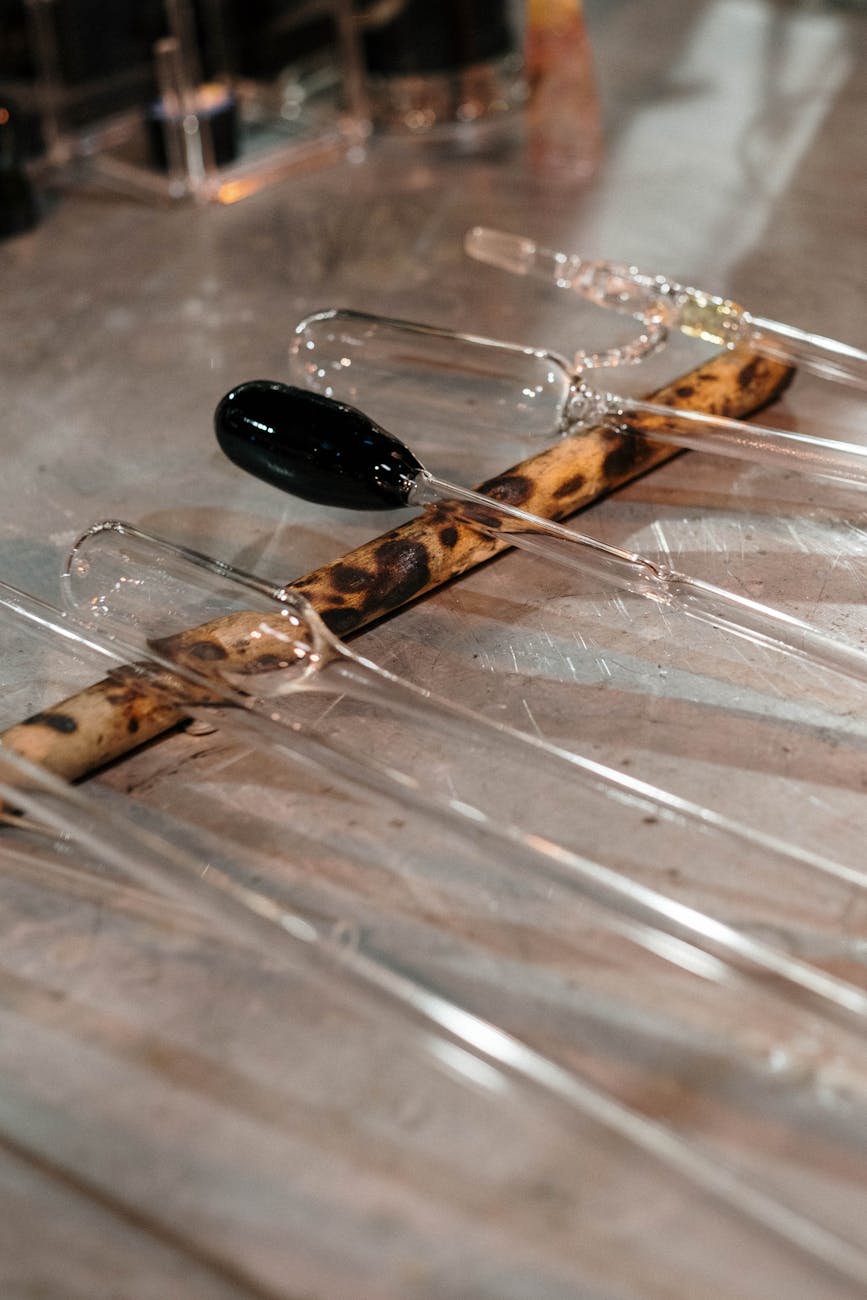
In the 1970s, the Kitaichi Glass Company in Aomori was manufacturing ukidama — glass fishing floats for the region's coastal fleets. Hollow spheres, functional and plain. But glassblowers, in the quiet moments between production runs, started experimenting. They swirled leftover batches of colored glass together, layered transparency with opacity, let accidents become techniques.
What fishermen needed for survival became what the rest of us need for beauty.
The region's craft history helped. Aomori artisans already understood mottainai — the idea that nothing should be wasted, that scraps and remnants hold potential. Those experimental floats, with their unplanned galaxies of color, caught attention beyond the docks.
How winter gets inside glass
Stand a Tsugaru Bidoro piece against natural light and you'll see why it doesn't photograph well. The colors shift. They're deliberately uneven, grainy, alive — a technique called neriage, where multiple colors of molten glass are folded and stretched while still liquid, never fully blending.
Each piece is mouth-blown using a blowpipe, shaped entirely by breath and gravity and the glassmaker's rhythm. The temperature of the furnace, the humidity in the air, even the maker's mood that morning — all of it enters the glass. You'll never find two identical pieces, even from the same mold.
The color palette mirrors Aomori itself:
- Deep indigo and cobalt from the Japan Sea in winter
- Pale greens and whites like spring snow melting off Mount Iwaki
- Amber and persimmon from autumn in the Shirakami mountains
The glass is thicker than you expect. Substantial. It holds temperature — keeps cold drinks cold, but warms quickly in your hands with tea.
A craft still being written
Tsugaru Bidoro remains a living tradition, not a museum piece. The Hokuyo Glass Company continues production in Aomori, training new artisans in techniques that can't be written down — only passed through repetition, correction, watching the glass move.
Contemporary makers push the vocabulary. Some incorporate kinpaku (gold leaf). Others reference sashiko stitching patterns in their surface textures. But the core philosophy holds: let the material speak, let the region's light and color memory guide your hands, waste nothing.
The glass you hold was made in a place where winter is not a season but a fact of life, where beauty has always been something you create because of harshness, not despite it.
FAQ
Chaware curates authentic Japanese crafts — straight from the makers in Japan to your table.
Explore the Chaware collection →