Why Sushi Presentation Matters: The Art of Bare Wood and Stone
On this page
You set down your chopsticks and notice: no plate. Just a smooth wooden plank, cool stone, a bamboo leaf beneath pristine slices of fish. Why?
The stage is part of the performance
Sushi chefs don't just arrange fish—they compose scenes. The geta, a simple wooden board resembling traditional Japanese sandals, isn't décor. It's deliberate architecture. The grain of hinoki cypress or bamboo provides texture that porcelain erases. Your eye travels across the wood's natural lines, guiding you from one piece to the next like a path through a garden.
Stone slabs—slate, granite, river rock—anchor the experience differently. They hold cold. They make the fish glisten. The contrast isn't accidental: warm rice against cool stone creates a physical dialogue your senses read before you taste anything.
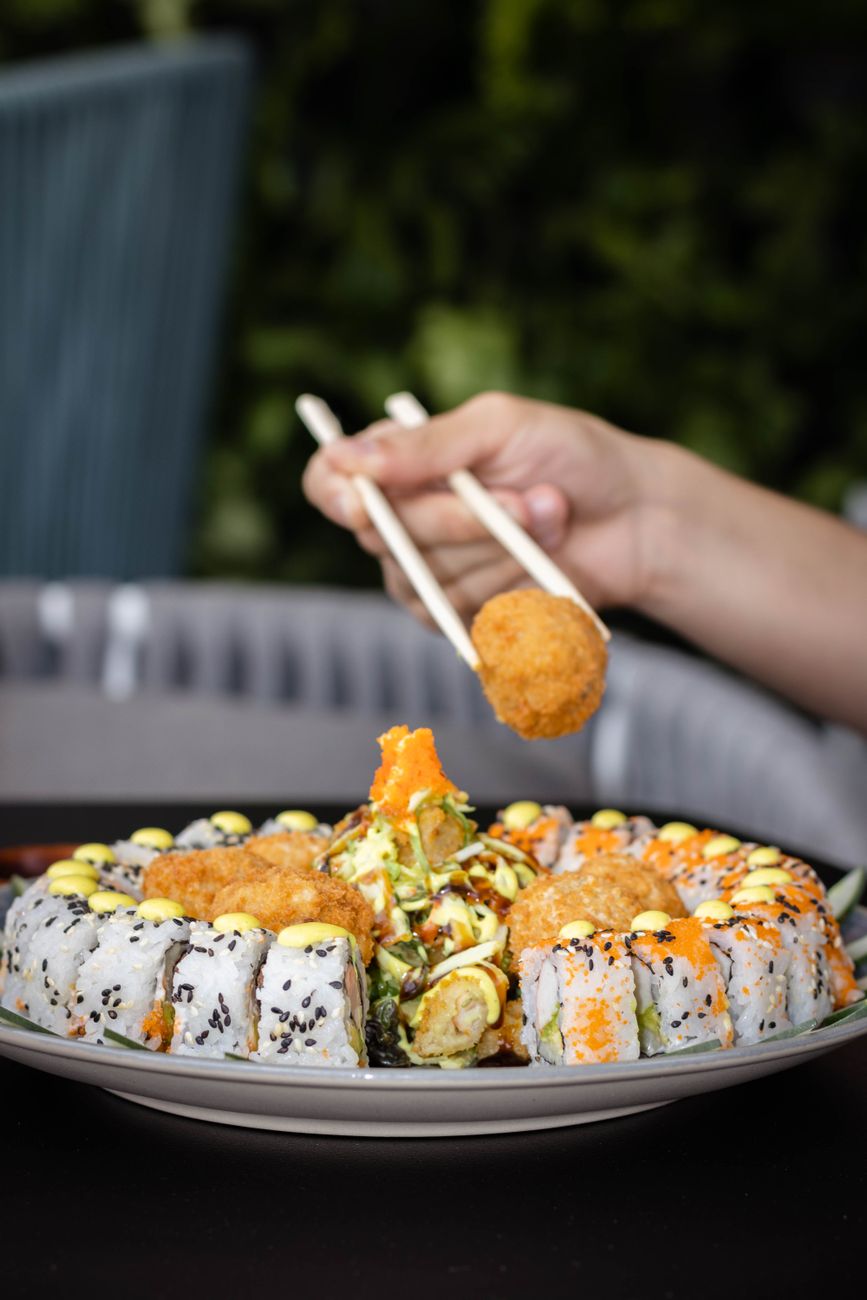
What skin and wood share
Traditional sushi culture resists barriers between food and diner. In Edo-period street stalls, nigiri was finger food, sold standing, eaten immediately. The fishmonger's hand to yours to your mouth—that directness mattered.
Wood and stone preserve that intimacy in a way glazed ceramic never could.
A bare wooden board feels alive under your fingers when you lift a piece. It breathes. It absorbs nothing from the fish, but it doesn't create distance either. Porcelain, for all its beauty, insulates. It announces "this is plated food." Wood whispers "this was just made for you."
Temperature, texture, and the space between
Here's what most people miss: negative space is an ingredient.
The Japanese aesthetic principle of ma—the meaningful void—governs sushi presentation as much as ikebana or tea ceremony. A white plate crowds the eye with its own presence. Wood grain or stone texture provides visual rest. The empty space around each piece isn't wasted; it's where your anticipation builds.
And there's physics at play. Wood doesn't conduct heat. Stone can be chilled. Both regulate temperature more honestly than ceramic, which often sits at room temp, creating a lukewarm mediocrity that mutes the fish's cold snap and the rice's gentle warmth.

When the vessel speaks too loudly
Kaiseki cuisine uses exquisite ceramics—Oribe bowls, Bizen plates, Kutani porcelain—because the meal is a narrative told through vessels. Each course arrives on pottery chosen for season, color, symbolic meaning.
Sushi is the opposite. It strips away. The fish is the art. The rice is the canvas. Everything else should vanish.
A painted plate competes. A wooden geta defers. That's not simplicity for its own sake—it's confidence. When your ingredient is ocean-fresh toro or wild-caught aji, you don't frame it. You let it breathe.
The sound of silence
Next time you're served sushi on bare wood, notice what you don't hear. No clink of chopsticks on ceramic. No scrape. Just the soft click of bamboo on bamboo, the whisper of wood on wood.
That quiet is intentional. It lets you hear the chef's knife, the rustle of nori, your own breath slowing as you focus. The meal becomes a meditation, and the humble board beneath it—unglazed, unadorned—is exactly present enough to hold the moment without stealing it.
The wood remembers the forest. The stone remembers the river. And the fish, for one perfect moment, is neither served nor plated—just there.
FAQ
Chaware curates authentic Japanese crafts — straight from the makers in Japan to your table.
Explore the Chaware collection →