This 13th-Century Discovery Is Six Tea Bowls Fused Into One
On this page
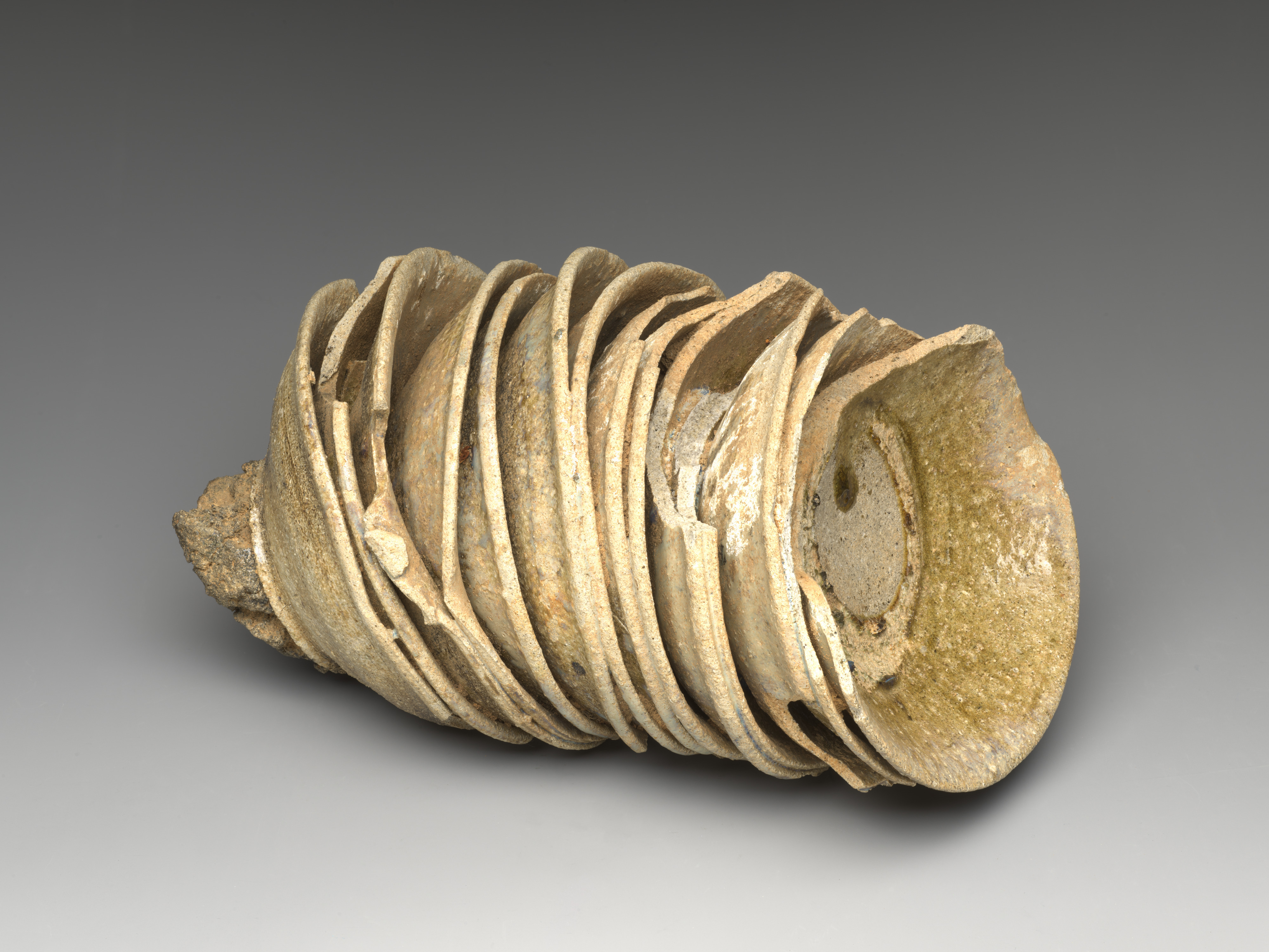
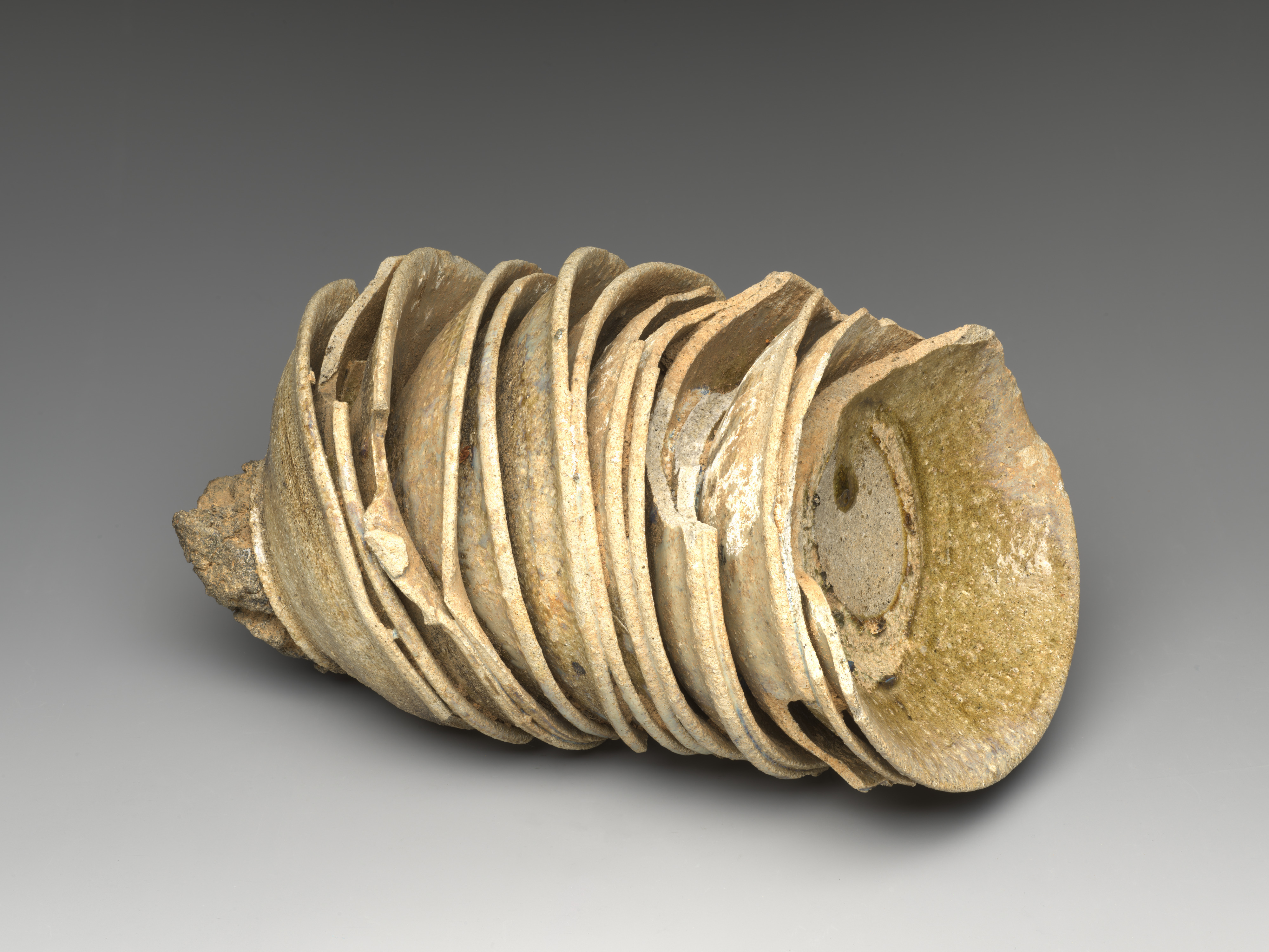
At first glance it could be a single strange object — ridged, stacked, vaguely shell-like. Look closer and the ridges resolve into something else: several separate tea bowls, fused together, frozen mid-accident inside a 13th-century kiln.
What yama-chawan actually were
These are yama-chawan, literally "mountain tea bowls" — not refined vessels made for tea masters, but plain, fast, everyday stoneware produced at small kilns scattered across the hills of medieval Japan. They were made in enormous quantities for ordinary households, with speed and volume prioritized over precision or decoration.
To fit as many pieces as possible into a single firing, potters commonly stacked bowls rim to rim or base to base inside the kiln. Done correctly, the bowls separated cleanly once cooled. This batch didn't.
An accident, preserved
Glaze drip, slight warping, or simply too tight a stack caused several of these bowls to fuse permanently during firing. Instead of becoming six usable bowls, the kiln produced one unusable cluster — almost certainly discarded on the spot by the potters who made it, centuries before anyone would call it interesting.
What survived wasn't the bowl that worked. It was the batch that didn't.
Why archaeologists value the failures
Museums hold plenty of polished, intact ceramics made for the wealthy or for ceremony — pieces that were cared for precisely because they were valuable. Everyday ware like yama-chawan rarely survived in good condition, because nobody treated it preciously; it was used hard and discarded.
A fused kiln accident like this one is, paradoxically, better evidence of ordinary life than a pristine bowl would be. It shows exactly how these pieces were made, fired, and sometimes ruined — a level of production detail a single finished bowl can't offer.
Six centuries of sitting wrong
Buried and excavated, this cluster has existed in its fused, "failed" state for roughly 800 years — longer than most of the successful bowls from the same kilns survived in one piece. Sometimes the mistake outlasts the product.
Chaware curates authentic Japanese crafts — straight from the makers in Japan to your table.
Explore the Chaware collection →
Keep exploring


