Why a Single Branch Needs Only a Thumbnail of Glass
On this page
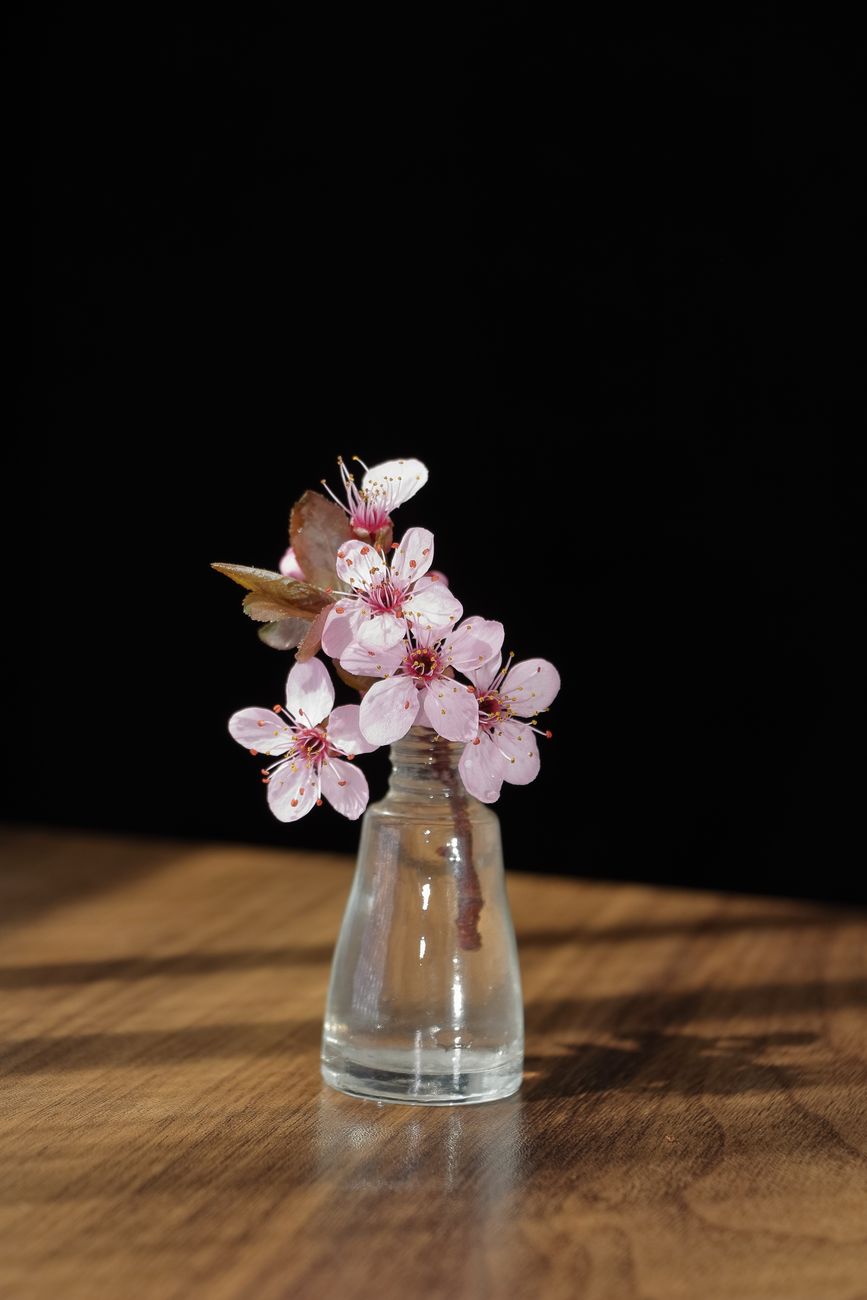
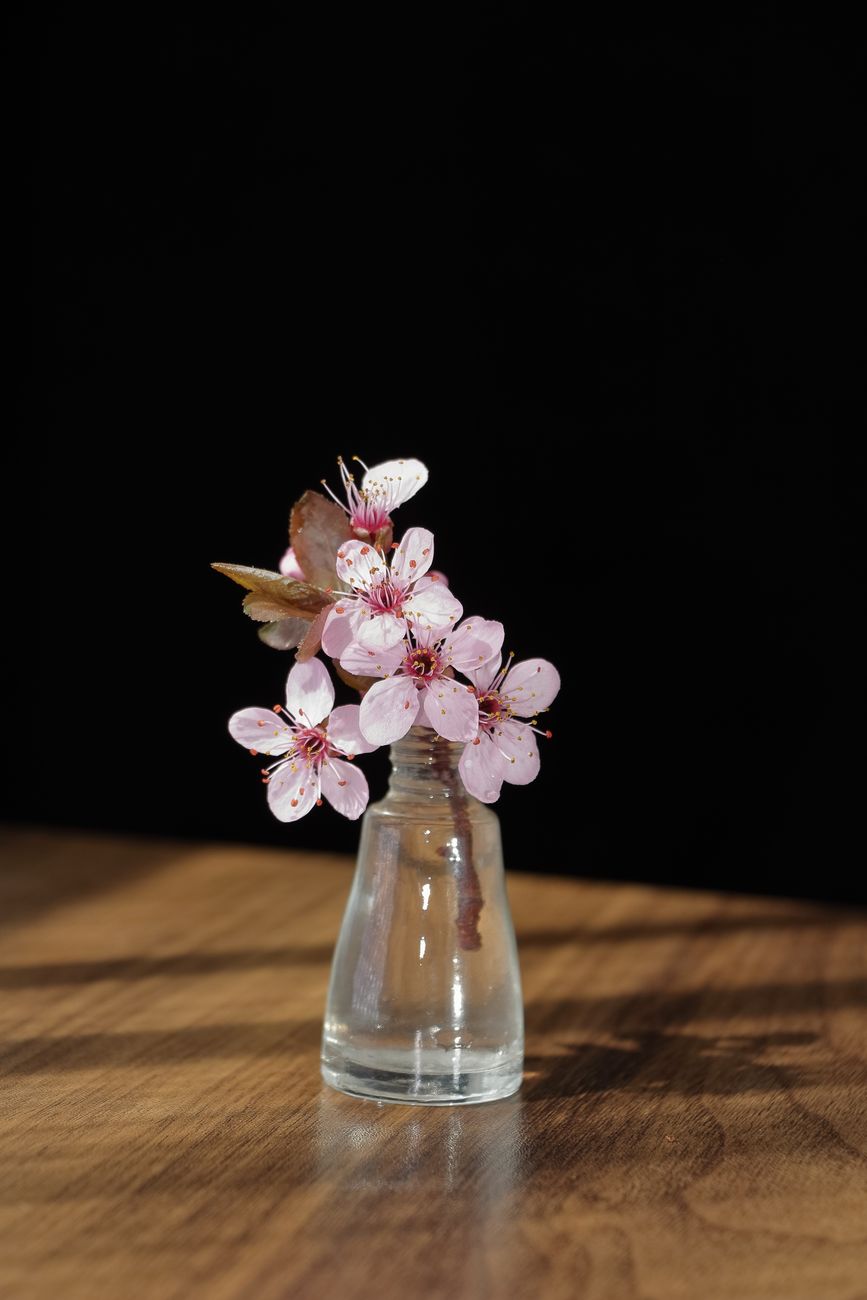
This vase could fit in the palm of a hand, and it was never meant to hold more than one stem. A single flowering branch rises from a plain glass bottle barely wider than the branch itself.
A container built to disappear
Most vases are designed to be noticed — shaped, colored, patterned enough to hold their own next to an arrangement. This one does the opposite. Clear, unpatterned glass has no color or texture to compete with the flower it holds. Its entire design goal is to be overlooked in favor of what's inside it.
That's a deliberate choice, not a lack of one. A vase with a bold pattern or strong color would pull attention away from a single delicate stem. Plain glass lets the branch be the only thing your eye settles on.
One stem, not a bouquet
Arranging a single branch rather than a full bouquet is its own discipline, closely tied to Japanese approaches to flower arranging that favor restraint over abundance. A single stem, given enough empty space around it, draws attention to details a crowded arrangement would bury: the curve of a branch, the angle of a few blossoms, the gaps between them.
A bouquet fills a room with flowers. A single stem asks the room to make space for one.
Why size matters as much as clarity
A vase this small physically limits what it can hold — which is exactly the constraint that keeps the arrangement to one branch instead of several. The size isn't a limitation worked around. It's the mechanism that enforces the restraint in the first place.
What's left when you take away the vase
Strip away color, pattern, and scale, and what's left is water, glass, and a branch. That minimal list is the entire arrangement. Nothing here was added to impress on its own; everything present is in service of the one stem it was built to hold.
Part of the Chaware Library — practical guides and terms, not just stories. Visit the Library →
Chaware curates authentic Japanese crafts — straight from the makers in Japan to your table.
Explore the Chaware collection →
Keep exploring