What Is Kumiko Woodwork? The Intricate Art of Japanese Lattice
On this page
You can't use a single nail. That's the first rule—and the last.
Kumiko is the Japanese art of assembling intricate wooden lattice patterns using nothing but tiny, precisely cut pieces of wood slotted together like a three-dimensional puzzle. No glue. No nails. No shortcuts. Just grain meeting grain in geometries so fine they seem to hover between solid and shadow.
It's a discipline that measures success in fractions of a millimeter—and patience in decades.
The geometry of silence
Walk into a traditional Japanese tearoom and you might notice the ranma, the transom panel above a sliding door. Light filters through it in delicate, repeating shapes: hexagons, stars, interlocking diamonds. That's kumiko at work, turning structural necessity into visual poetry.
The craft emerged centuries ago, refined by temple carpenters and furniture makers who understood that wood, when respected, could hold itself together. Each piece is hand-planed to create a slight wedge—imperceptible to the eye but essential to the fit. When slotted into place, the wood compresses just enough to lock. The lattice becomes a single, breathing organism.
Kumiko doesn't announce itself; it whispers in patterns older than the buildings that frame them.

Sixty cuts for a single joint
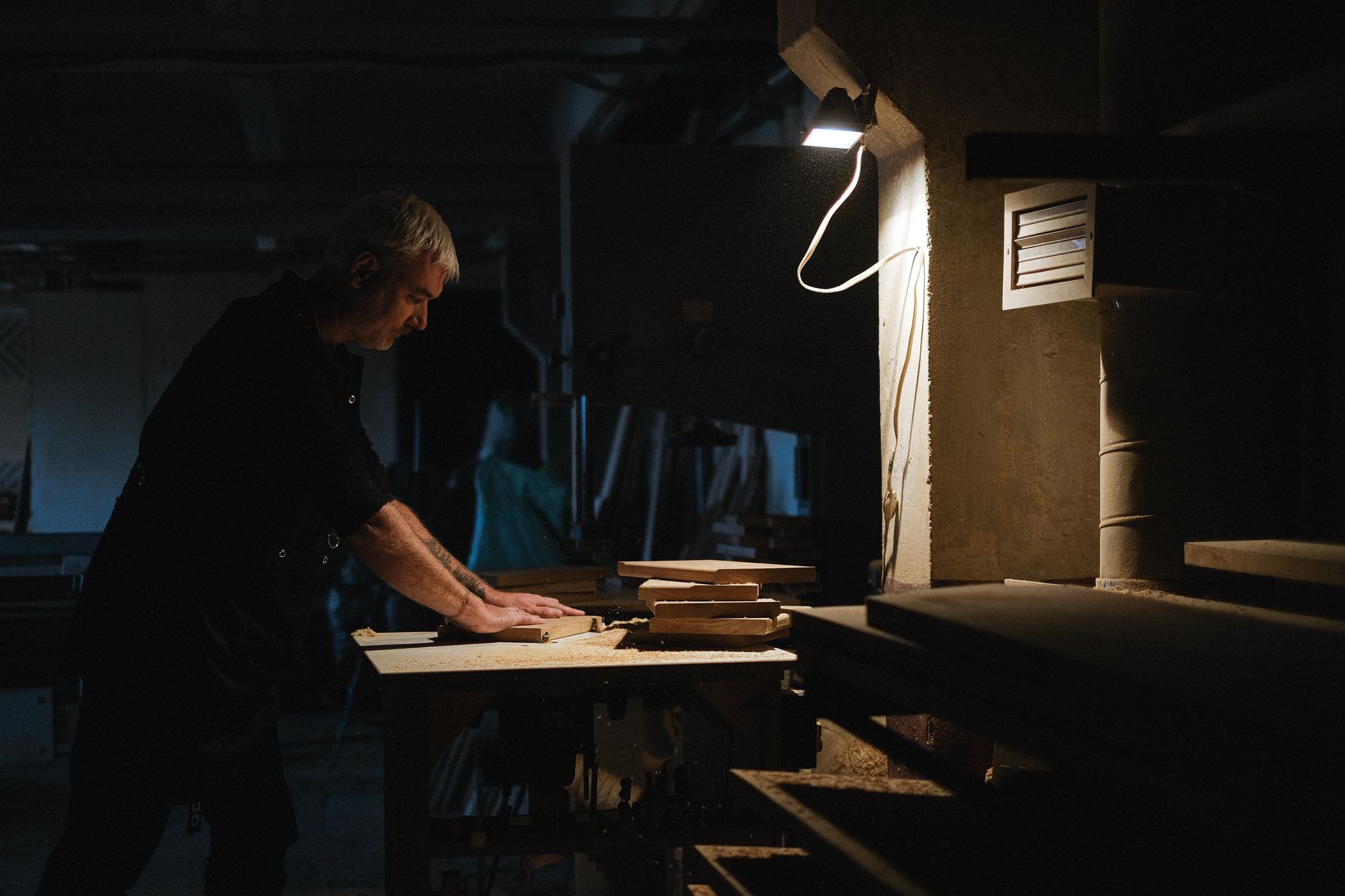
To make even a simple kumiko pattern, you're working with pieces thinner than a chopstick. The wood—usually cedar, cypress, or hinoki—is planed until it's uniform, then cut at precise angles using a small saw and a steady hand. The joints, called kumi-te, are where the magic happens.
There are more than sixty traditional joint types. Some interlock at right angles. Others spiral. Still others create the illusion of weaving, though no piece actually passes over another. Every angle matters. A deviation of half a degree and the whole panel refuses to align.
It takes years to train your eye to see what's wrong before your hands feel it.
Patterns with names like prayers
Kumiko designs aren't arbitrary. Many carry symbolic weight, borrowed from nature and spirituality. The asanoha (hemp leaf) pattern radiates outward in six-pointed stars—a motif believed to promote healthy growth, often used in objects for children. The goma-gara (sesame) scatters tiny diamonds like seeds across a field. The shippō (seven treasures) interlocks circles in endless harmony, a Buddhist symbol of prosperity and connection.
Each pattern requires a different sequence of cuts, a different rhythm of assembly. Master craftsmen can read a kumiko panel the way a musician reads a score—seeing not just the shape, but the hands that made it, the decisions embedded in each joint.
What survives the nail
In an age of power tools and industrial adhesives, kumiko remains defiantly manual. CNC machines can mimic the patterns, but they can't replicate the micro-adjustments a craftsman makes as the wood swells with humidity or contracts in dry air. Kumiko lives because it responds.
You'll find it now in shoji screens, lamp shades, coasters, even modern furniture that borrows its language of light and shadow. But the essence hasn't changed: wood holding wood, geometry made tender, silence given shape.
The kumiko master doesn't build a lattice. They negotiate with hundreds of small wooden agreements, one joint at a time, until the whole becomes inevitable.
FAQ
Chaware curates authentic Japanese crafts — straight from the makers in Japan to your table.
Explore the Chaware collection →