What Is Kintsugi? The Japanese Art of Repairing Broken Pottery with Gold
A ceramic bowl slips from your hands and shatters on the floor. In most cultures, that's the end of the story. In Japan, it might be the beginning.
The art of precious scars
Kintsugi — literally "golden joinery" — is the centuries-old Japanese practice of repairing broken pottery with lacquer mixed with powdered gold, silver, or platinum. But calling it simply "repair" misses the point entirely. The golden seams don't hide the damage. They illuminate it.
The technique emerged sometime during the late 15th century, though the exact origins remain hazy. What's certain is this: Japanese craftsmen looked at a broken tea bowl and saw not waste, but potential. They developed a meticulous process using urushi (natural lacquer from tree sap) as an adhesive, carefully joining the fragments, then dusting the still-wet seams with precious metal powder.
The result? Fracture lines that gleam like rivers of light.
Breaking to become whole
Kintsugi rests on a philosophical foundation that feels almost radical to modern sensibilities. The practice embodies mottainai — regret over waste — and finds beauty in impermanence, a concept central to Japanese aesthetics. A repaired bowl carries its history visibly. The gold seams map where it broke, when, perhaps even why.
This isn't about making something "good as new." It's about making something truer.
The break becomes part of the object's story, not something to erase.
Tea masters in particular prized kintsugi-repaired bowls. The golden scars added wabi-sabi — that uniquely Japanese appreciation for things imperfect, impermanent, and incomplete. A pristine mass-produced cup tells no story. A bowl repaired with gold seams whispers of fragility, care, and the passage of time.
The painstaking process
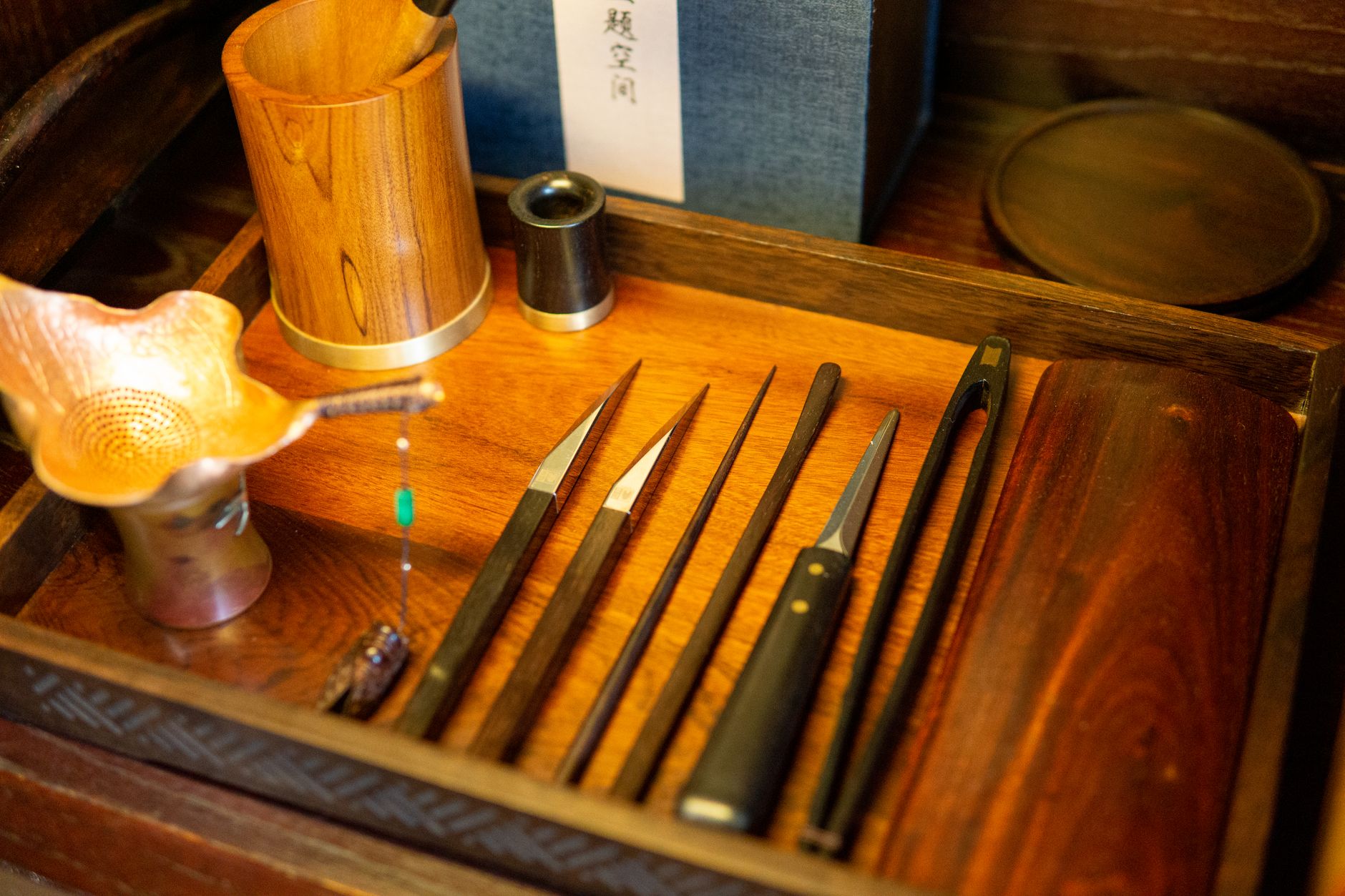
Traditional kintsugi demands patience that borders on meditation. The lacquer must cure between each layer, sometimes taking weeks. Craftsmen apply multiple coats, sanding between applications, building up the seam until it sits flush with the ceramic surface. Only then comes the final dusting of gold powder, burnished to a soft gleam.
Some repairs require dozens of tiny fragments to be puzzled back together. Others involve filling gaps where pieces went missing entirely, sculpting new sections from lacquer-and-clay mixtures before gilding. The most skilled practitioners can make these additions nearly invisible — or deliberately dramatic, depending on the desired effect.
Modern shortcuts exist: synthetic adhesives, gold paint, even kintsugi-effect kits. But they miss the ritual slowness that makes authentic kintsugi what it is. The waiting. The attention. The commitment to an object that society says should be discarded.
Why it matters now
In an era of planned obsolescence and instant replacement, kintsugi offers a different philosophy. Your grandmother's chipped teacup. The bowl you bought on your first trip abroad. The plate that survived the move but not the unpacking.
These objects hold memory. Kintsugi says they're worth the effort of repair — not despite their damage, but enriched by it. The practice has inspired everything from psychological frameworks for processing trauma to contemporary art movements exploring imperfection.
But at its heart, kintsugi remains what it always was: a way of seeing broken things not as failures, but as opportunities for transformation.
The golden seams catch the light differently than unmarked ceramic ever could.
FAQ
Chaware curates authentic Japanese crafts — straight from the makers in Japan to your table.
Explore the Chaware collection →