How Shoji Doors Are Constructed: The Art of Japanese Paper Sliding Screens

On this page
You slide open the door and it whispers. Not wood against wood, but something softer—a controlled friction that feels almost alive.
That whisper is the sound of shoji, Japan's translucent paper sliding screens, and it's been part of the country's domestic soundscape for centuries. But what you're hearing isn't just a door. It's the culmination of joinery so precise it needs no nails, paper strong enough to last decades, and a design philosophy that treats light itself as a building material.
The frame that breathes without metal
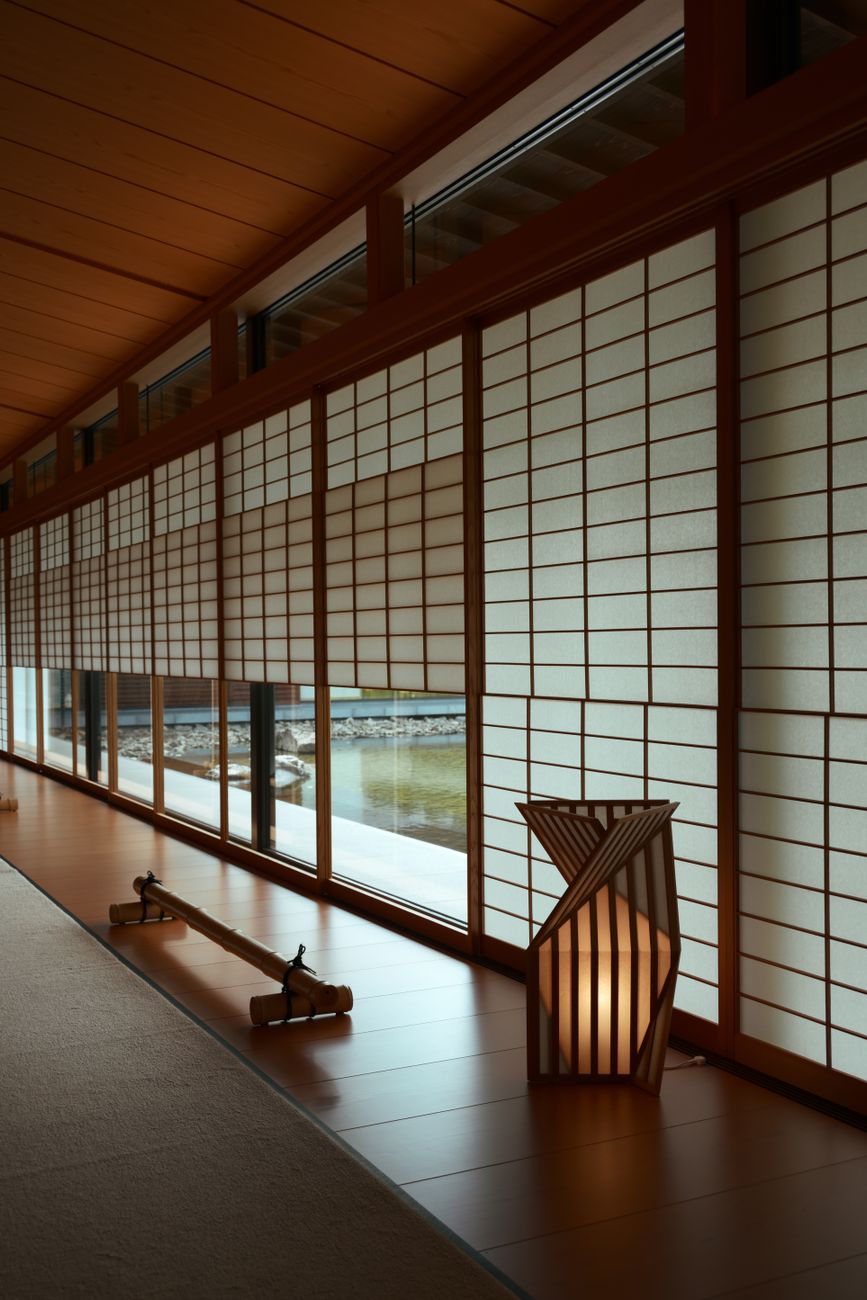
A shoji door begins with its skeleton: a lattice framework called the kumiko. Traditionally made from Japanese cypress (hinoki) or cedar (sugi), the wood is selected for its straight grain and workability. What makes kumiko remarkable isn't just the wood—it's the joinery.
Every intersection where vertical and horizontal pieces meet is cut with hand tools to form interlocking joints. No nails. No screws. The wood expands and contracts with humidity, and the joints accommodate this movement. A well-made kumiko frame can last generations precisely because it's designed to flex, not fight, the seasons.
The lattice pattern itself varies by region and craftsman. Some are simple grids. Others form geometric patterns—asanoha (hemp leaf), sayagata (interlocking swastikas), or delicate diagonal weaves that create shadow-play when backlit.
Paper that isn't fragile
The translucent panels that fill the kumiko aren't what most people think of as paper. Washi—traditional Japanese paper made from the inner bark of the kozo, mitsumata, or gampi plants—has a tensile strength that rivals some fabrics.
Washi fibers are so long and interwoven that a single sheet can be surprisingly difficult to tear.
To attach washi to the frame, craftsmen apply shōfu nori, a paste made from rice or wheat starch. The paper is stretched taut across the lattice, then trimmed. As it dries, it contracts slightly, creating a drum-tight surface that diffuses light evenly. The result isn't opacity—it's luminous privacy. Shadows move across shoji like ink spreading through water.
Some contemporary versions use stronger papers or even synthetic blends, but traditional washi remains prized for the particular quality of light it creates: soft, warm, never harsh.
The track that makes silence possible
Shoji doors don't swing. They glide along wooden tracks—an upper kamoi and lower shikii—carved with shallow grooves. The precision here is critical. If the grooves are too tight, the door binds. Too loose, and it rattles.
Traditional tracks are often made from hardwoods like keyaki (zelkova), chosen for their resistance to wear. The bottom of the shoji frame sits in the lower groove, while a small protrusion at the top slots into the upper track. This allows the door to be lifted slightly and removed entirely when needed—for cleaning, repair, or seasonal storage.
The sliding mechanism is what gives shoji its characteristic quietness. There's no latch to click, no hinge to creak. Just that soft whisper of wood on wood.

Repair as ritual
Unlike Western doors built to be permanent, shoji are designed to be maintained. Washi tears. Frames accumulate dust. But this isn't a flaw—it's an invitation.
Many Japanese households perform shoji-hari, the annual ritual of re-papering screens, often in late autumn. Old paper is peeled away, frames are cleaned, and fresh washi is applied. It's a reset, a way of marking time passing.
The door opens again, light filtering through. The room breathes.
FAQ
Chaware curates authentic Japanese crafts — straight from the makers in Japan to your table.
Explore the Chaware collection →