Understanding the Gion Matsuri of Kyoto: Japan's Most Celebrated Summer Festival
On this page
The streets of central Kyoto vanish beneath a sea of bodies each July, and the air tastes like sweat, incense, and grilled sweet fish. This is Gion Matsuri—and it doesn't feel like a festival so much as a month-long possession of an entire city.
A festival that takes over a month
Most matsuri last a weekend. Gion Matsuri consumes the better part of July.
It officially runs from the first to the twenty-ninth, though the heartbeat of the event pounds loudest during the three nights leading up to July 17th—the Yoiyama evenings—and the grand procession itself, the Yamaboko Junko. On those nights, downtown Kyoto transforms. Major streets close to traffic. Merchant families open their machiya townhouses to display heirloom treasures: folding screens, hanging scrolls, lacquerware passed down since the Edo period. You walk through neighborhoods that suddenly feel like open-air museums where people actually live.
The festival isn't a show put on for tourists. It's a communal act of devotion and civic identity, rooted so deeply in Kyoto's bones that neighborhoods organize their entire year around it.
Floats built like moving temples
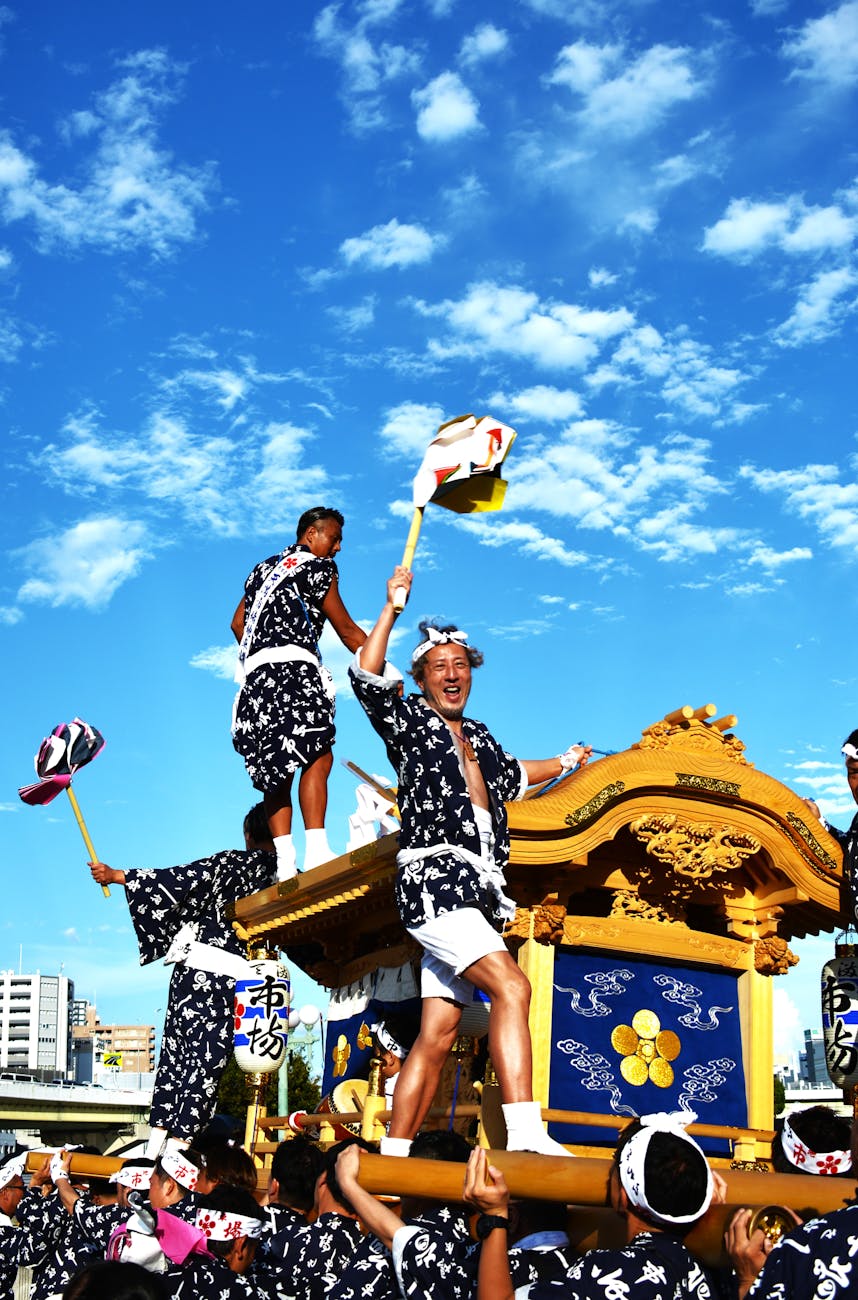
At the center of Gion Matsuri are the yama and hoko—elaborate floats that range from portable shrines carried on shoulders to towering, multi-story wooden structures weighing up to twelve tons. The hoko are the giants: some rise three stories high, their roofs crowned with gold phoenixes or sacred spears, their facades draped in centuries-old tapestries imported from Persia, Belgium, China.
These floats aren't replicas or reconstructions—many of the textiles and carvings are originals, some dating back four hundred years.
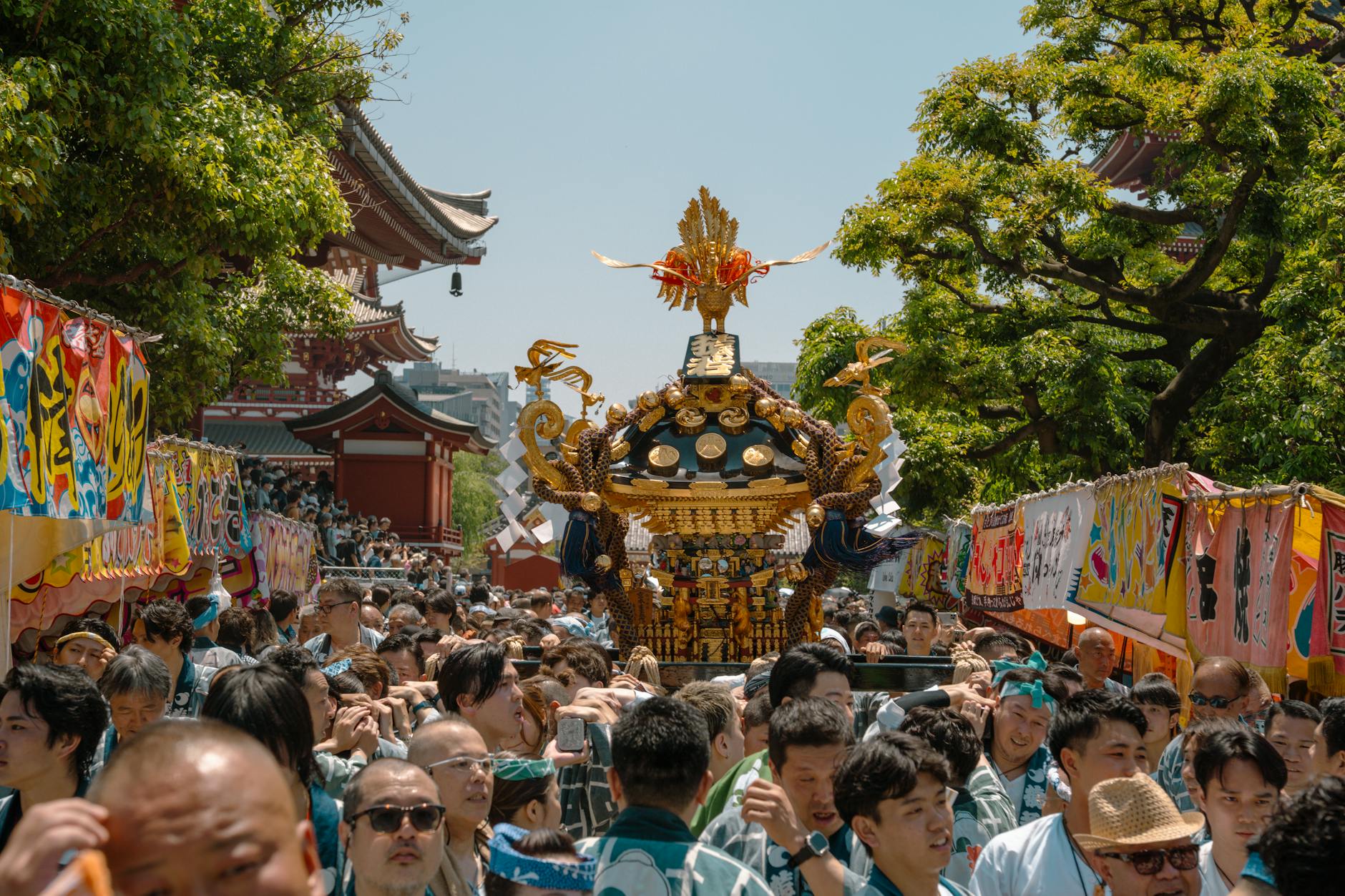
No nails hold the hoko together. They're assembled each year using only rope, wooden joints, and the kind of traditional carpentry knowledge that gets passed neighbor to neighbor, father to son. On procession day, teams of men in happi coats haul these wooden titans through the streets using only thick ropes and their own weight, chanting in rhythm as they navigate tight corners in a city never designed for such giants.
Born from plague and prayer
Gion Matsuri began in 869, during a summer when disease tore through Kyoto. The emperor ordered sixty-six halberds—one for each province of Japan—erected at Shinsen-en garden as an offering to the gods, a desperate plea to stop the dying. It worked, at least in the minds of the survivors, and the ritual became annual.
Over centuries, the event evolved. Merchant guilds took over organization of the floats, competing to craft the most spectacular displays. What started as desperate supplication became civic theater, then cultural inheritance. Even today, the procession route winds through streets once lined with the workshops and warehouses of Kyoto's medieval commercial elite, a living map of the city's mercantile past.
The sound of summer itself
If you close your eyes during Yoiyama, you'd still know exactly where you are. The soundtrack is unmistakable: the Gion Matsuri bayashi, the festival music played on flute, drums, and gong. It's hypnotic, repetitive, almost trance-inducing—the same phrases cycling endlessly, drifting from different floats, layering over street vendor calls and the shuffle of thousands of feet on pavement.
People wear yukata even in the suffocating heat. They buy chimaki—sacred straw amulets, not the rice dumpling—from each float to hang above their doorways for protection through the coming year. Children eat shaved ice. The smell of grilled squid mixes with sandalwood.
The festival doesn't build to a climax and end. It simply continues, night after night, until the calendar says it's over and Kyoto slowly returns to itself, already counting down to next July.
FAQ
Chaware curates authentic Japanese crafts — straight from the makers in Japan to your table.
Explore the Chaware collection →