What Is a Machiya Townhouse? Exploring Kyoto's Traditional Wooden Architecture
You step through a narrow wooden door off a Kyoto side street, and suddenly the noise falls away. The world compresses into shadow, lattice, and light.
This is a machiya — and it's been shaping how people live, work, and breathe in Japan's old merchant quarters for centuries.
Built Long and Narrow, Like the Lots Themselves
Machiya townhouses earned their nickname: unagi no nedoko, or "eel's bed." Walk through one and you'll see why. These timber-framed homes stretch deep into their plots — sometimes 20 meters or more — but their street-facing facades rarely exceed five or six meters wide.
The reason? Taxes. In Edo-period Kyoto, property levies were calculated by street frontage, not total area. Merchants built slim and deep to dodge the burden. What began as financial pragmatism became an architectural signature.
The layout unfolds in a rhythm: shopfront at the street, then living quarters, courtyard gardens tucked between sections, and storage or workshops at the rear. You move through layers, each one breathing a little differently.
Lattice, Earth, and the Art of Staying Cool
Step inside on a summer afternoon and you'll feel it immediately — machiya are cool. Not metaphorically. Literally.
The slatted wooden facade, called kōshi, filters harsh sunlight into soft, shifting patterns. Earthen walls breathe. Tsuboniwa courtyard gardens punctuate the interior, pulling air through the house in a natural convection current. There's no air conditioning here, just centuries of observation about how shade, breeze, and moisture work together.
The machiya doesn't fight the climate — it choreographs it.
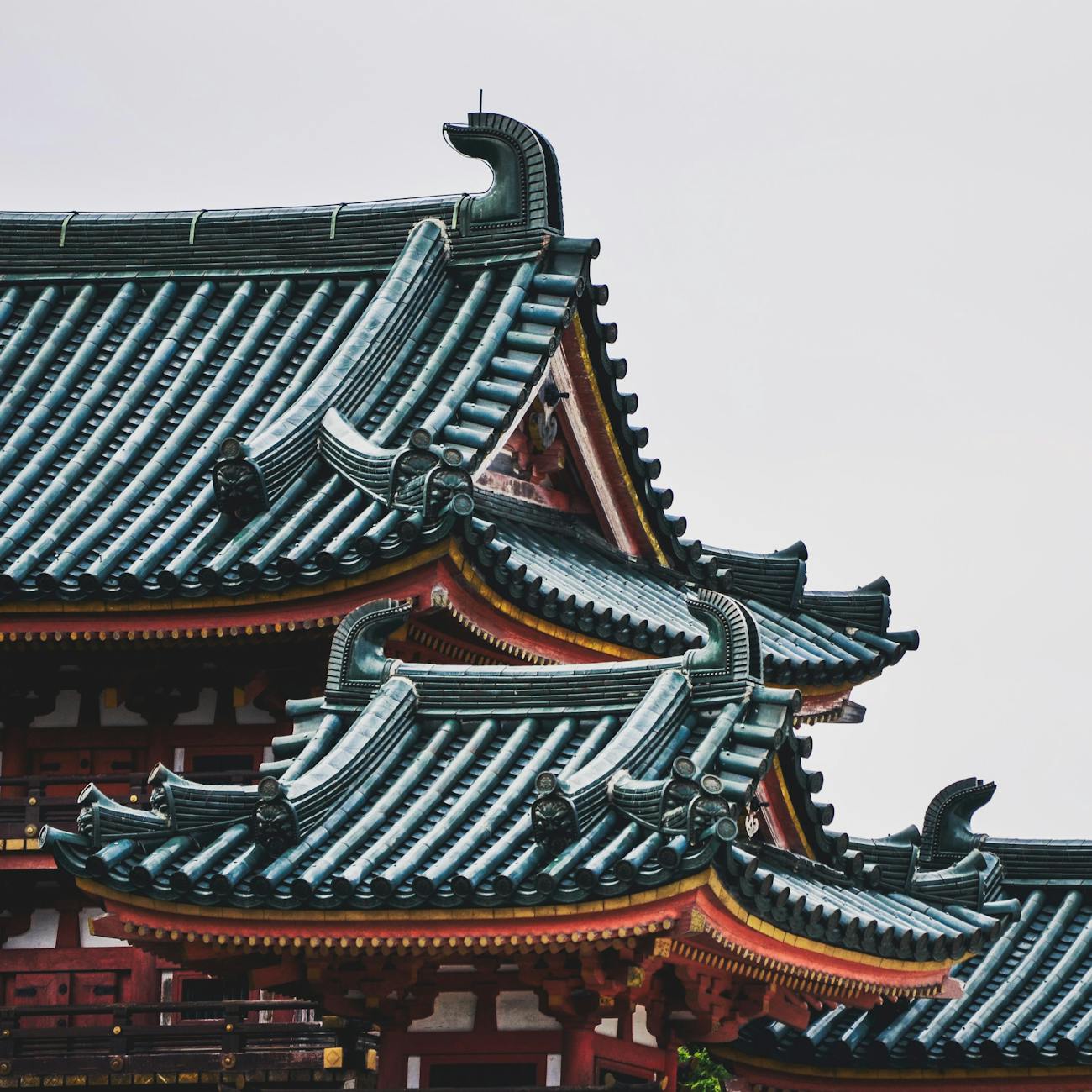
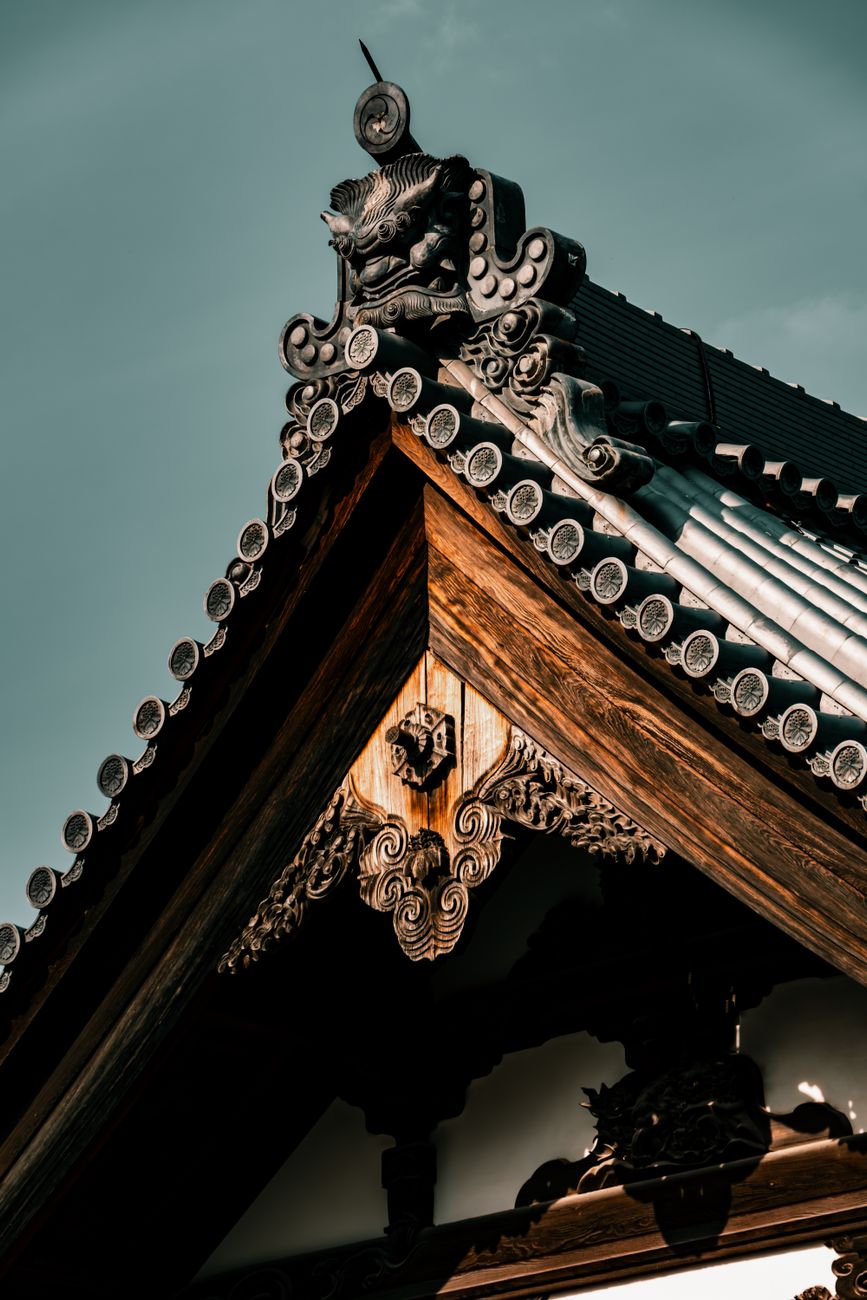
Materials were humble but chosen with intention: clay roof tiles, timber posts and beams, woven bamboo ceilings, paper sliding doors. Everything could be repaired, replaced, adapted. A house wasn't meant to last forever unchanged — it was meant to evolve with the family inside it.
The Shopfront That Became a Way of Life
Machiya weren't just homes. They were businesses.
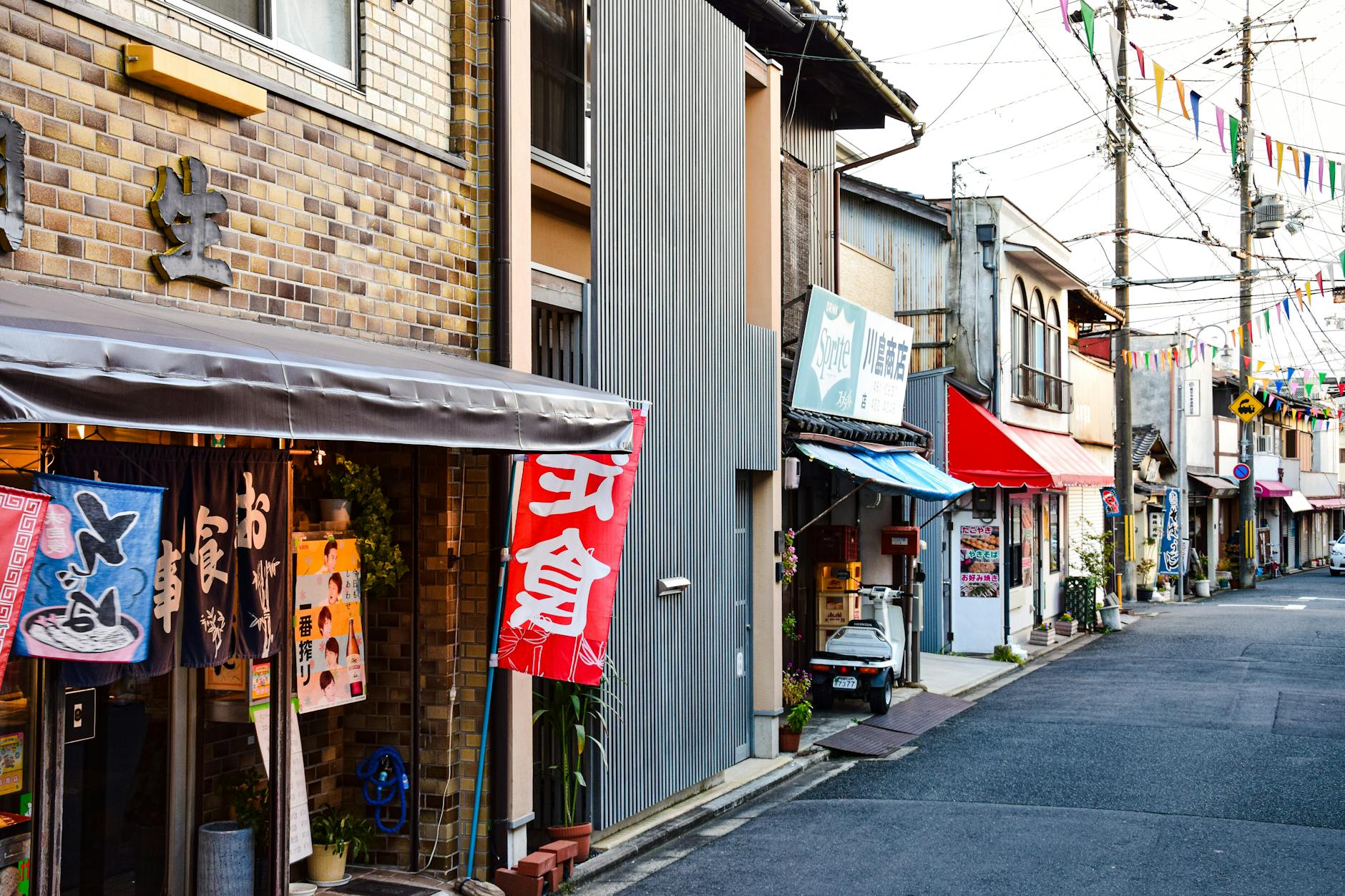
The ground floor facing the street served as a shop, workshop, or storefront — sake brewers, textile merchants, tea dealers, craftsmen of every kind. The family lived above and behind, blurring the line between commerce and domesticity in a way that shaped entire neighborhoods.
You can still see it today in Kyoto's Nishijin weaving district or along the narrow lanes of Gion. The architecture created a street life: merchants greeting neighbors, goods spilling onto the lane, the hum of looms or the scent of roasting tea drifting into the evening air.
Many machiya have disappeared — cleared for parking lots, replaced by modern buildings. But in recent years, some have been carefully restored. A few now house galleries, cafes, guesthouses. Others remain private homes, their interiors updated but their bones intact.
Living Inside the Grain of the City
What makes a machiya more than just old construction is how it fits. These houses were designed for density, for neighbors living wall-to-wall, for a city built before cars. They turned architectural constraints — narrow lots, limited street access, summer heat — into a vocabulary of courtyards, lattices, and long sight lines.
Walking through one today feels like stepping into a conversation between material and climate, commerce and privacy, tradition and adaptation.
The machiya doesn't announce itself. It leans back from the street, quiet and composed, waiting for you to notice the grain of its wood and the cool exhale of its garden.
FAQ
Chaware curates authentic Japanese crafts — straight from the makers in Japan to your table.
Explore the Chaware collection →