What Makes Dashi Broth the Soul of Japanese Cuisine
You can simmer beef bones for days, roast chicken carcasses until they crack, sweat vegetables into sweet submission. But dashi asks for something different: patience measured in minutes, and the discipline to stop.
The broth that whispers instead of shouts
Dashi is the foundation of Japanese cooking, yet it contains almost nothing. No hours of bubbling. No layers of aromatics building complexity. Just water, kombu seaweed, and katsuobushi (dried bonito flakes) meeting briefly—sometimes for mere minutes—before being separated forever.
The clarity is the point. Where Western stocks extract everything possible from bones and vegetables, dashi extracts just enough. It's meant to amplify other ingredients, not compete with them. The ocean minerality of kombu. The smoky whisper of bonito. Together they create what Japanese cooks call umami—that fifth taste beyond sweet, sour, salty, and bitter.
This is a broth designed to disappear into a dish while somehow making everything taste more like itself.
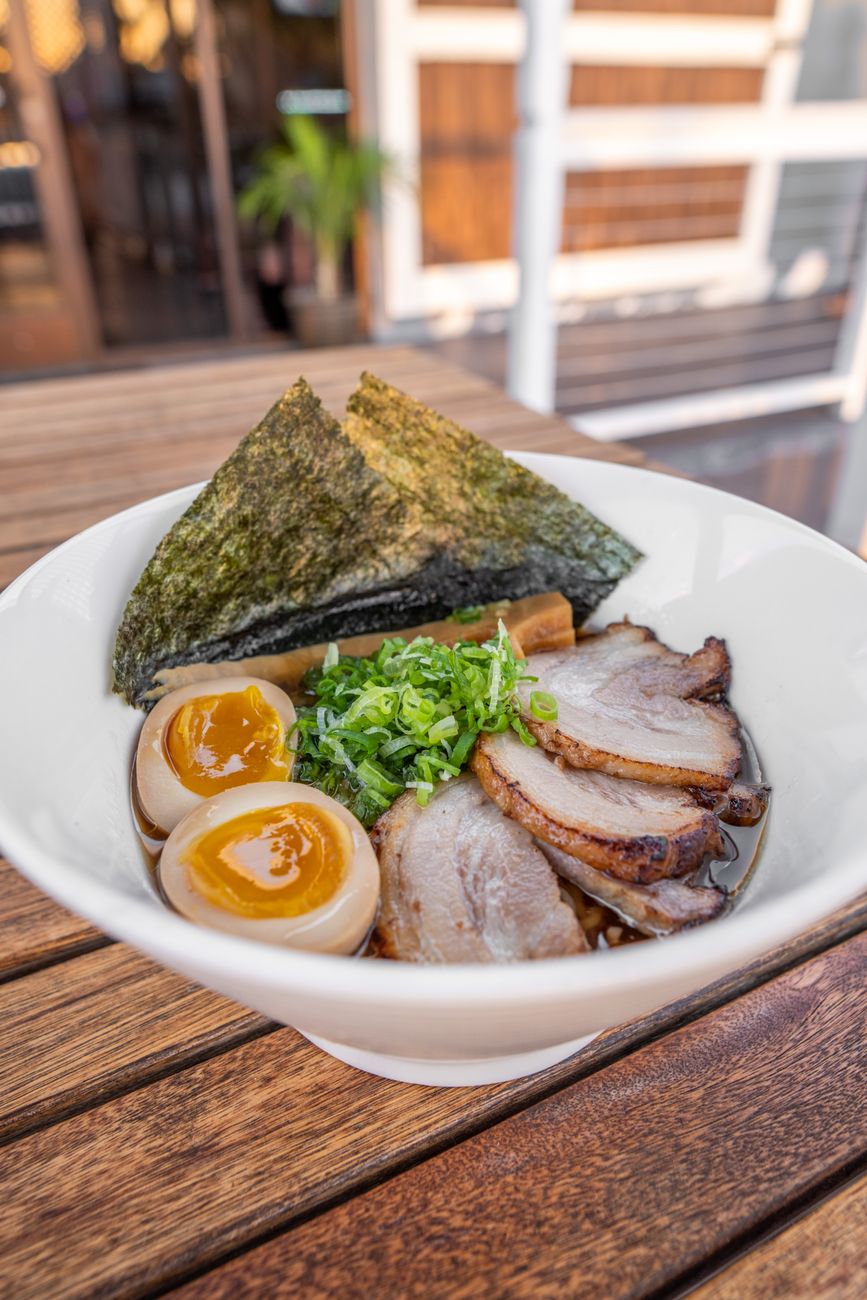
Seaweed that never boils
The kombu step breaks every rule you know about stock-making. You place the thick, dark kelp in cold water and heat it slowly. Just before boiling—right when tiny bubbles form at the pot's edge—you pull it out.
Boil it, and the dashi turns bitter, cloudy, thick with seaweed slime. Stop early, and you capture only the sweet mineral essence, the taste of cold northern seas. It's a technique that requires you to pay attention, to actually watch the pot.
Dashi teaches you that the best flavor often comes from knowing when to stop, not when to add more.
Some cooks soak the kombu overnight instead, drawing out flavor without any heat at all. Others make a second, lighter dashi by reusing the same kombu and bonito. Nothing is wasted, but nothing is pushed past its moment either.
Bonito shavings like wood smoke and ocean
Katsuobushi looks like driftwood—hard, dark, utterly unappetizing until you understand what it is. Bonito fillets are boiled, smoked repeatedly over weeks, then inoculated with beneficial mold and aged until they become the hardest food product in the world. Shaved fresh, the flakes are translucent, curling, impossibly thin.
They hit hot kombu water and immediately begin their dance, swirling and tumbling before sinking. Thirty seconds. Maybe a minute. Then you strain.
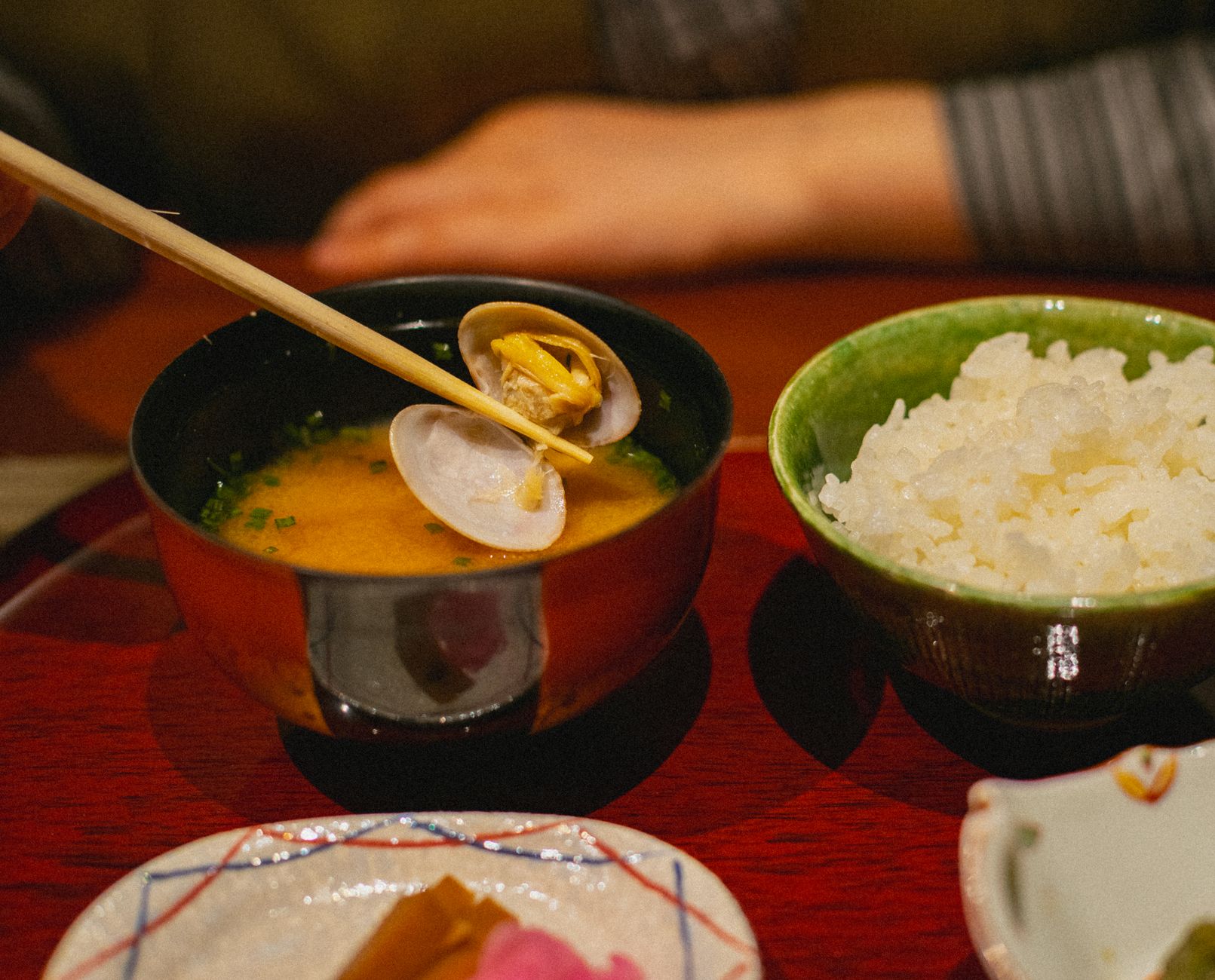
The result tastes like the ocean crossed with a wood fire, savory and round and somehow clean. This is the backbone of miso soup, the invisible architecture beneath simmered vegetables, the secret in a bowl of noodles that tastes like more than the sum of its parts.
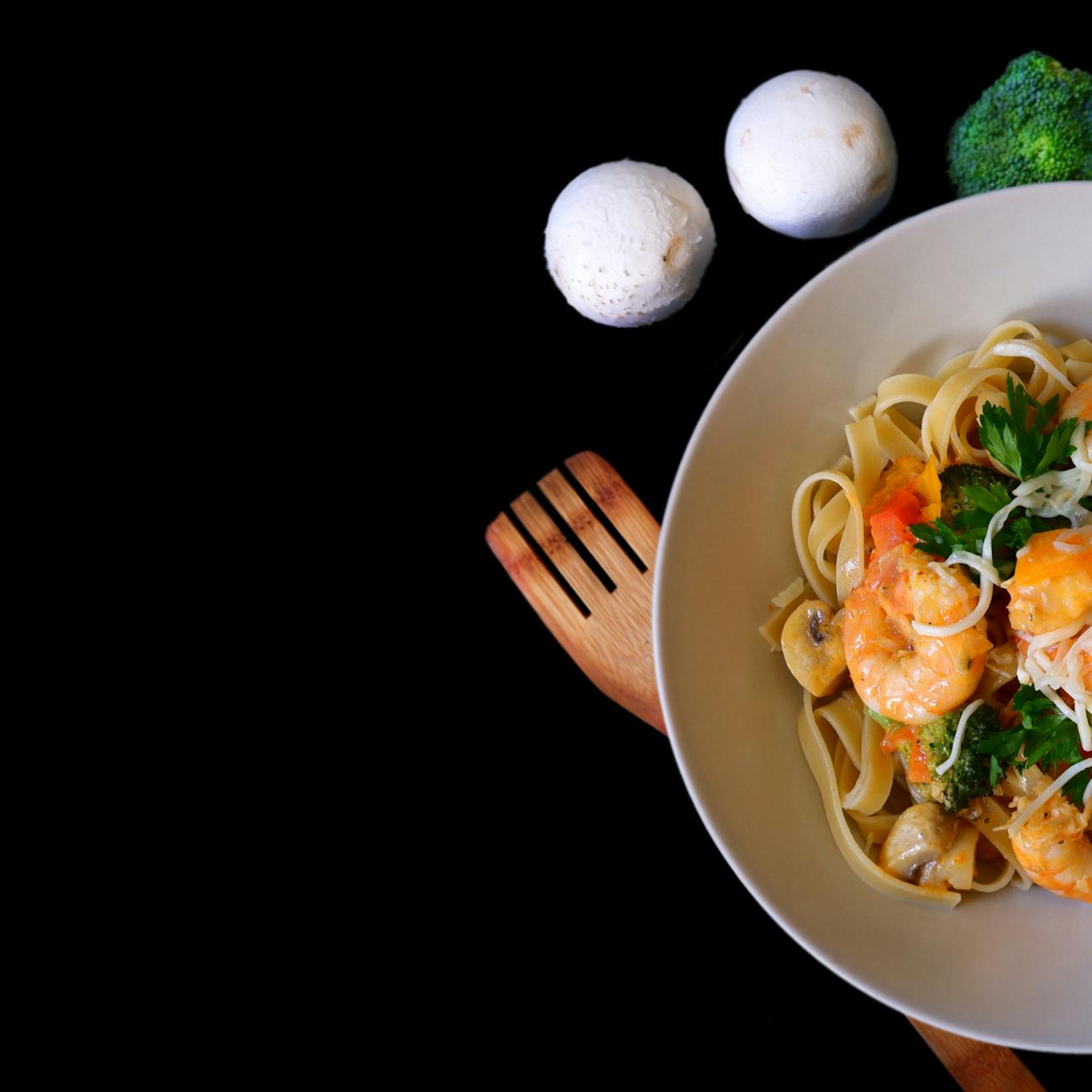
Three ingredients, infinite variations
Not all dashi uses bonito. Niboshi (dried sardines) create a more assertive, fishier base popular in regional cooking. Dried shiitake mushrooms make a vegetarian version with deep, earthy umami. Some combine all three—kombu, bonito, and mushroom—for formal kaiseki cuisine.
But the principle never changes: brief extraction, maximum respect for the ingredient, flavor that supports rather than dominates.
You can buy instant dashi powder, and many Japanese cooks do. But making it fresh means understanding that great cooking isn't always about complexity. Sometimes it's about knowing exactly how long to let seaweed steep, exactly when to pull smoked fish from heat.
It's a lesson in a pot: flavor as subtraction, not addition. Clarity earned through restraint.
FAQ
Chaware curates authentic Japanese crafts — straight from the makers in Japan to your table.
Explore the Chaware collection →