Why Japanese Zen Gardens Use Raked Gravel: The Meaning Behind Karesansui
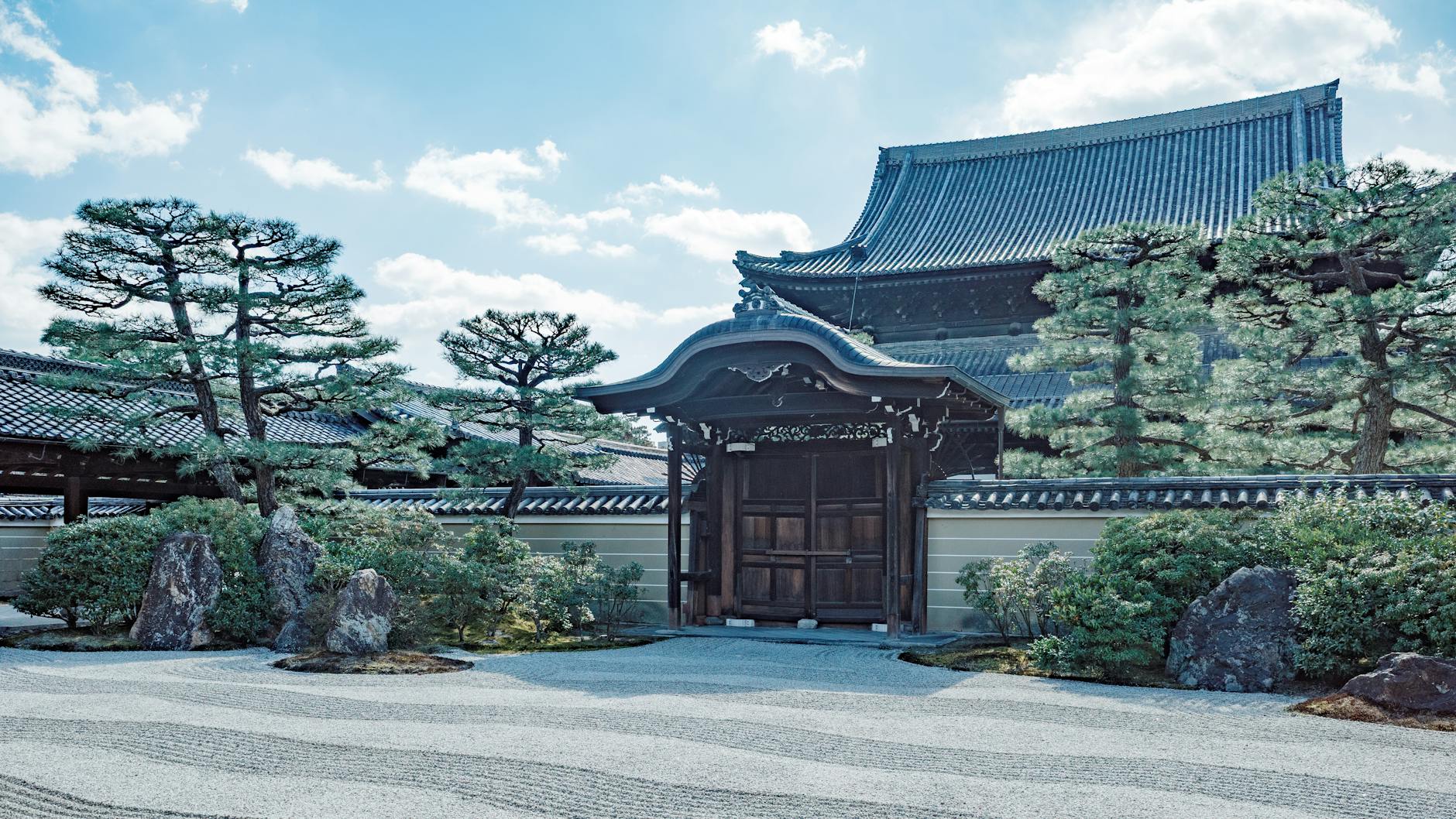
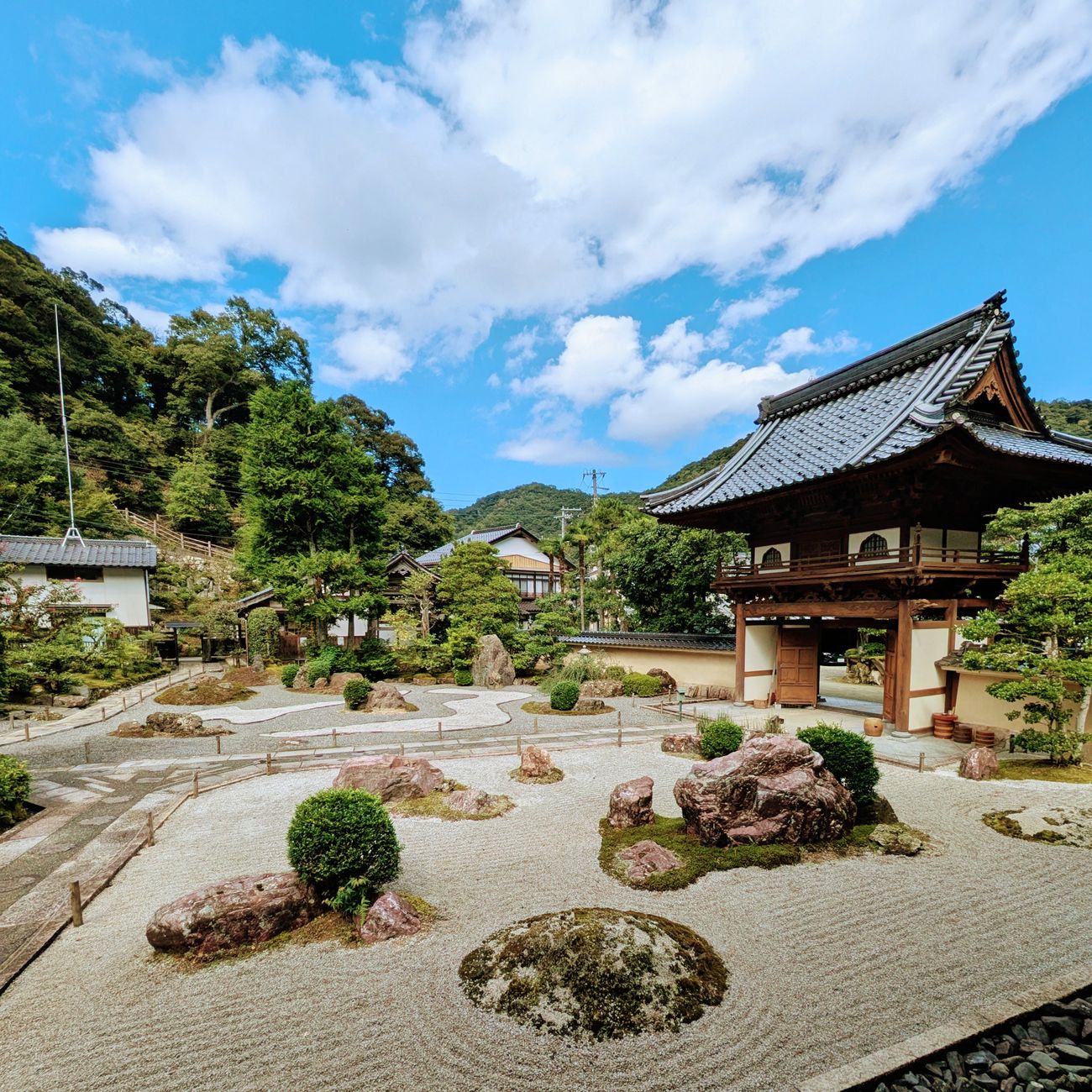
You walk into a Zen garden and the first thing you notice isn't the rocks or the moss. It's the silence held in place by lines—hundreds of perfectly raked lines curving through pale gravel like frozen water.
The ocean that never moves
The raked gravel in a Zen garden isn't decoration. It's a stand-in for water itself.
These gardens, called karesansui (dry landscape), emerged during Japan's Muromachi period as a form of meditation made visible. Monks couldn't always build gardens with streams and ponds, so they used stone and gravel to suggest them instead. The raked lines became waves, currents, ripples—an ocean you could walk beside but never get wet in.
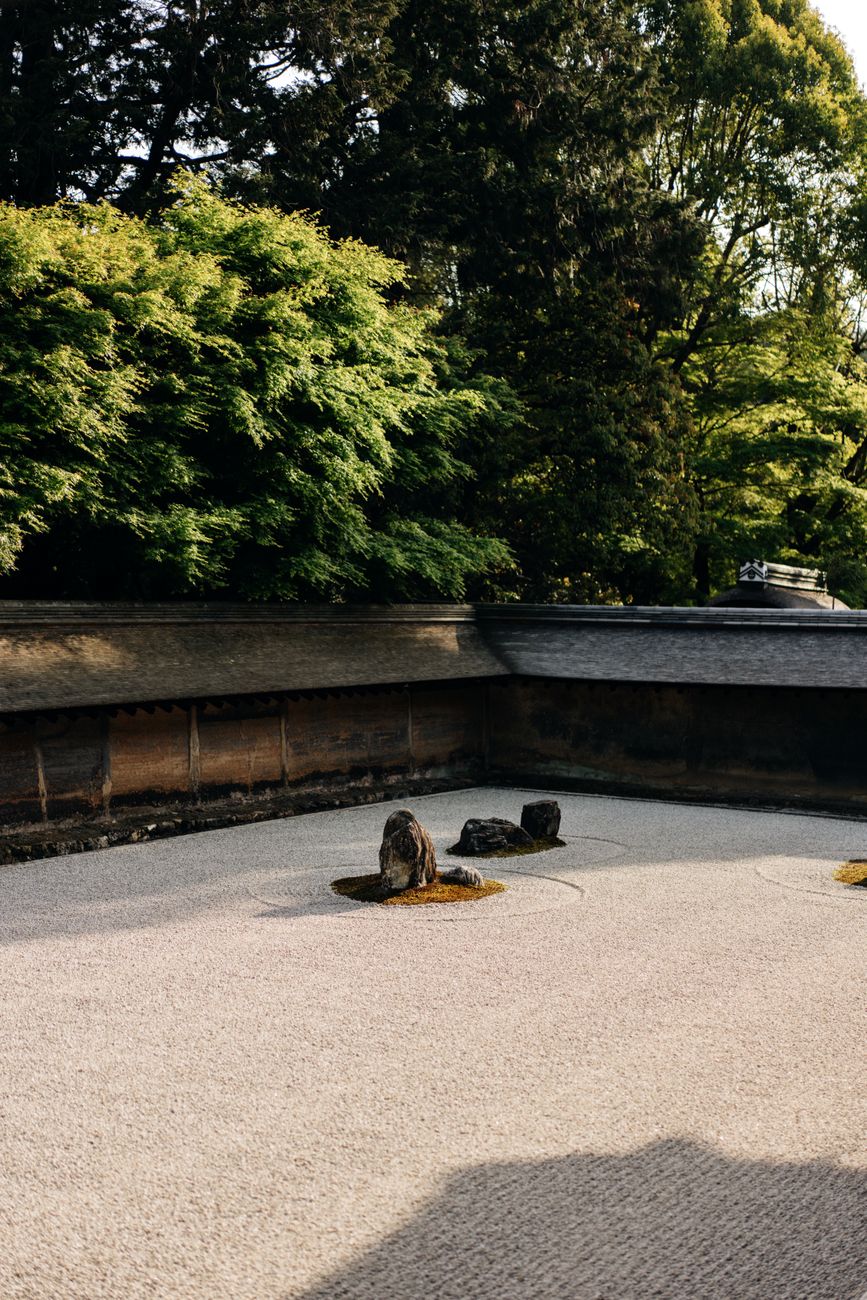
The patterns aren't random. Straight lines evoke calm, still water. Concentric circles around a rock mimic ripples from a dropped stone. Swirling curves suggest rapids or tides pulling around an island. Each morning, a monk or gardener re-rakes the gravel, erasing yesterday's marks and beginning again.
What raking actually does
There's a reason this task falls to someone, not to the wind.
Raking is the point. The repetitive motion—the drag of wooden tines through stone, the focus required to keep lines straight and even—is a walking meditation. Your mind empties as your hands move. You're not making something beautiful. You're practicing presence.
The garden doesn't exist to be looked at; it exists to be tended.
And when you're finished, the pattern you've made is already temporary. Footprints, falling leaves, rain—it all disturbs the lines. That impermanence is intentional. Nothing lasts. The beauty is in accepting that and raking again tomorrow.
Why gravel, not sand
You'd think sand would be easier, softer, more cooperative. But Zen gardens use gravel for good reason.
Crushed granite or white river stones hold their shape better than sand. The individual pieces catch light, creating subtle texture and shadow that shifts throughout the day. Sand would blow away, clump when wet, lose definition. Gravel stays put, keeps its ridges, maintains the illusion of frozen movement even in wind.
The size matters too—not so fine it scatters, not so coarse it won't rake smoothly. Most gardens use stones between 2-10mm, small enough to flow under the rake but large enough to hold a line for days.
The space between things
Western gardens tend to fill space—more flowers, denser plantings, abundance as the goal. Karesansui gardens do the opposite.
They use emptiness. The raked gravel is negative space made tangible, a way of showing that what's not there matters as much as what is. The rocks become islands or mountains precisely because the gravel around them suggests vast distance. Remove the gravel, and the rocks are just rocks.
This reflects a deeper Zen principle: ma, the meaningful void. It's the pause between breaths, the silence between notes, the blank space that gives form to everything else. In a Zen garden, gravel makes that philosophy visible. You can see emptiness. You can rake it into patterns.
What remains
The gardens at Ryoan-ji, Daisen-in, Tofuku-ji—they've been raked daily for centuries, the same motion repeated thousands of times by hundreds of hands. The gravel itself gets replaced, the patterns evolve slightly, but the practice continues.
Not because the lines need to be perfect, but because the act of making them is where the garden actually lives.
FAQ
Chaware curates authentic Japanese crafts — straight from the makers in Japan to your table.
Explore the Chaware collection →