Magewappa: The Art of Odate's Bentwood Boxes Made From Akita Cedar
On this page
The scent of cedar rises faintly from the oval box in your hands, warm and resinous even after decades. Along its rim, tiny stitches of cherry bark hold the curve—a seam so fine it seems the wood simply decided to bend.
A Craft Born of Necessity and Cedar
In the mountains of Odate, Akita Prefecture, craftsmen have shaped magewappa (曲げわっぱ) bentwood boxes for roughly 1,300 years. Fragments of Heian-era bentwood pieces survive in the region, some preserved beneath the mudflow of a volcanic eruption in 915. But the craft as an organized trade took root much later, under unusual circumstances. After the Battle of Sekigahara in 1600, the daimyo Satake Yoshinobu was transferred to Akita, a domain rich in forests but economically struggling. The Satake-nishi branch encouraged lower-ranking samurai to supplement meager stipends by making bentwood containers, turning the region's greatest resource—Akita cedar—into a means of survival.

The Grain That Bends Without Breaking
Not just any cedar will do. Odate magewappa relies on the masame (正目) grain, the straight, even growth rings found in natural Akita cedar. This tight, springy grain allows thin strips of wood to bend sharply without splintering, a quality that defines the craft. The wood is cut into thin sheets, each one reading like a topographic map of the tree's patient growth. It is this regularity, this disciplined verticality of fiber, that makes the impossible curve possible.
Water, Heat, and the Decisive Moment
The process is deceptively simple. Thin strips of cedar are immersed in hot water until the fibers soften and yield. Then comes the critical moment: the craftsman bends the pliable wood quickly around a wooden mold, coaxing it into an oval or circle before it cools. There is no second chance—the curve must be true on the first attempt. Once shaped and dried, the overlapping ends are stitched together with fine strips of sakura-kawa (cherry bark), a traditional join that is both functional and beautiful. The bark stitches darken with age, tracing the seam like calligraphy.

The Only Bentwood with National Recognition
In a country with many regional bentwood traditions, Odate magewappa stands alone. It is the only bentwood ware to hold the designation of Traditional Craft (伝統的工芸品) at the national level, a recognition of both its historical continuity and technical rigor. The distinction reflects not only the age of the practice but the unbroken lineage of makers who have refined it. What began as a samurai side trade has become a symbol of Akita's identity, its boxes and lunch containers prized across Japan and beyond.
A Living Object in Daily Hands
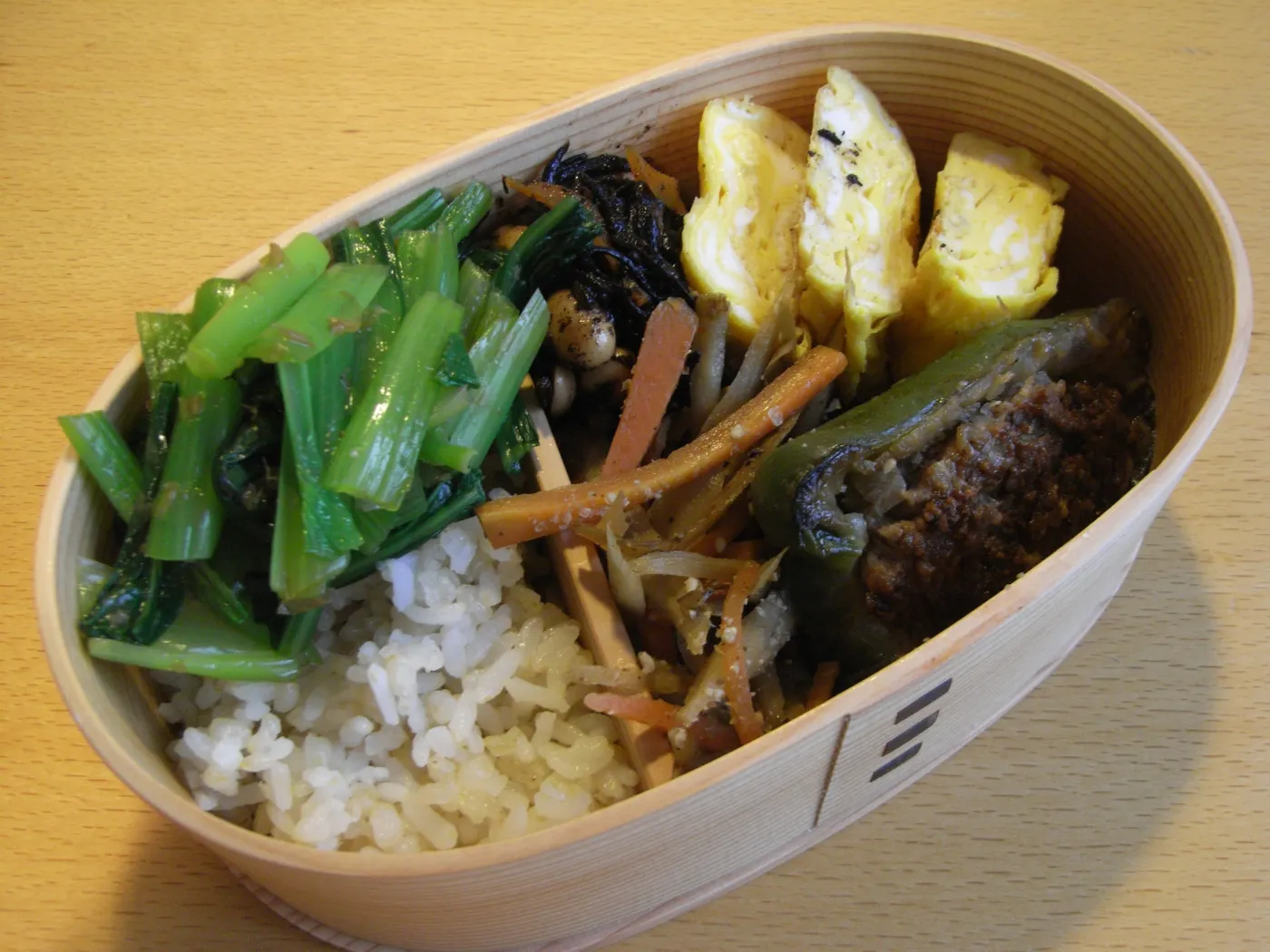
Hold a magewappa bento box and you hold a conversation between tree and hand. The wood breathes, absorbing excess moisture from rice, releasing it slowly to keep the grain tender. The cedar's natural oils resist bacteria without varnish or sealant. Over years of use, the pale wood deepens to honey, then amber, each meal leaving an invisible mark. It is a craft made not for the shelf but for the table, for the repetition of opening and closing, filling and emptying, day after day.
The curve endures because it was never forced—only invited, at the exact moment the wood was ready to bend.
FAQ
Chaware curates authentic Japanese crafts — straight from the makers in Japan to your table.
Explore the Chaware collection →
Keep exploring


