Nara Sumi: The Ancient Art of Japanese Ink Making
On this page
The lampblack that pools above four hundred flames in a Nara workshop has been gathered the same way for centuries. Each flicker of rapeseed oil leaves its mark: a fine, deep soot that will become ink darker than any pine could yield.
The Monk's Gift and the Temple's Fire
Legend credits the monk Kukai with bringing ink-making techniques from Tang China in 806, establishing the craft at Kofuku-ji temple's Nitaibo workshop. But the truth is more grounded in innovation than import. Japan's first yuen-boku (油煙墨), or oil-soot ink, was actually born in the early Muromachi period within those same temple precincts. The monks at Nitaibo discovered that the soot from their oil lamps produced a pigment far superior to the traditional shoen-boku (松煙墨) made from pine smoke—blacker, finer, more lustrous on paper.
Four Hundred Flames
At Kobaien (古梅園), a house founded in 1577, the ancient method persists. Craftspeople still tend some 400 individual flames burning rapeseed or sesame oil, each contributing its microscopic harvest of soot. The collection process is painstaking: soot settles on ceramic surfaces suspended above the flames, then is carefully scraped away. This oil-derived pigment gives Nara-zumi (奈良墨) its characteristic depth, a blackness that seems to hold light rather than simply block it.
The work demands patience and timing. Too much heat and the soot coarsens; too little and the yield drops. Each flame must be monitored, adjusted, coaxed into producing that perfect carbon bloom.
Winter's Grip on the Ink
Nara-zumi is made in winter, and not for romantic reasons. The cold, dry air of the season allows the ink mixture—soot bound with animal glue—to set properly without cracking or warping. In the humid warmth of other months, the sticks would never cure correctly.
The winter workshop is a study in contrasts: fingers numbed by cold performing work that requires the most delicate touch, shaping each stick by hand before it hardens beyond correction.
This seasonal rhythm has governed the craft for centuries, linking modern artisans to their Muromachi predecessors through the simple fact of weather.

The Geography of Darkness
Today, almost all of Japan's ink sticks are still made in Nara. The city holds what amounts to a quiet monopoly on a substance essential to calligraphy and sumi-e painting. This concentration isn't accidental—it reflects centuries of accumulated knowledge, the kind that can't be easily transplanted. The craftspeople know their materials intimately: which oils burn cleanest, how humidity affects curing, the precise moment when mixed ink can be shaped.
At places like Kobaien, methods remain hand-guarded, passed from master to apprentice rather than written in manuals. The specific ratios, the kneading techniques, the quality checks—all exist as embodied knowledge.
Shaping Darkness in Your Hands
Visitors to Nara workshops can try nigiri-zumi (握り墨), hand-shaping their own ink stick. The experience reveals what words cannot: the particular density of the mixture, the way it responds to pressure, the narrow window during which it can be formed before setting. Your hands learn what the eye cannot see—that ink is not liquid made solid, but a careful suspension of countless particles, each one a tiny absence of light, held together by will and glue and winter air.
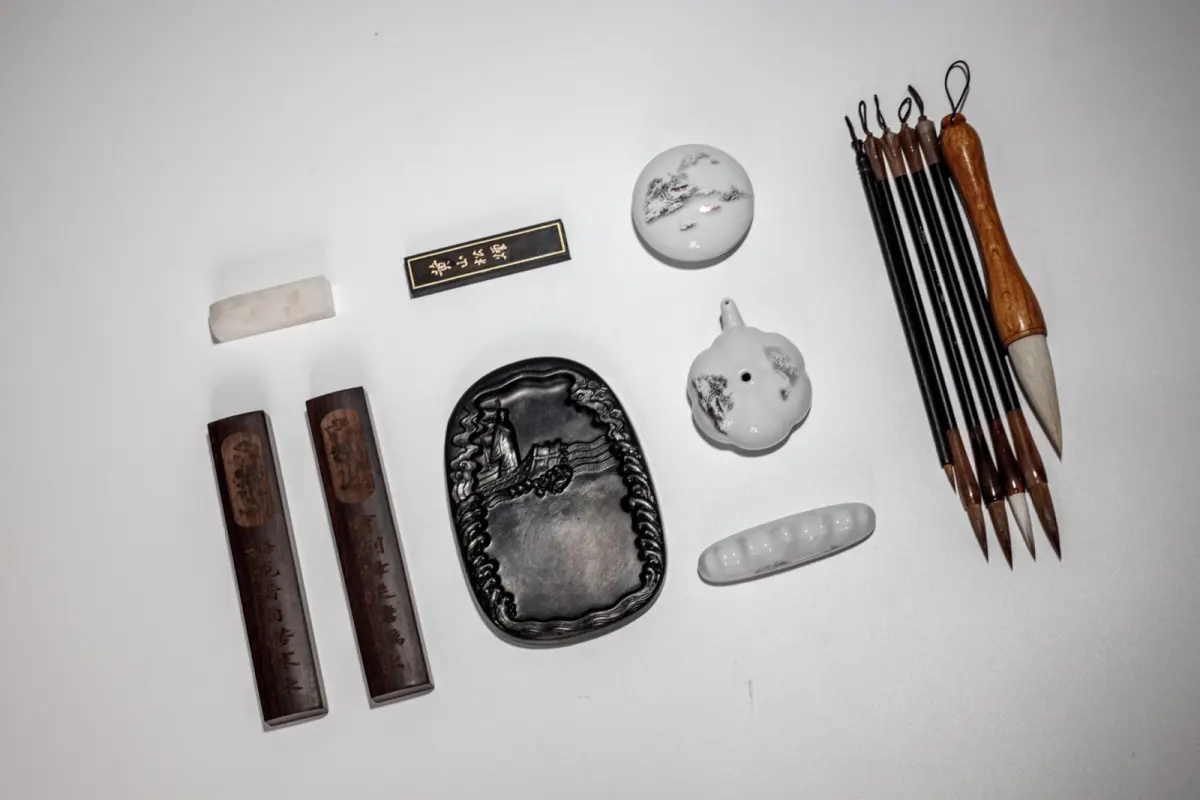
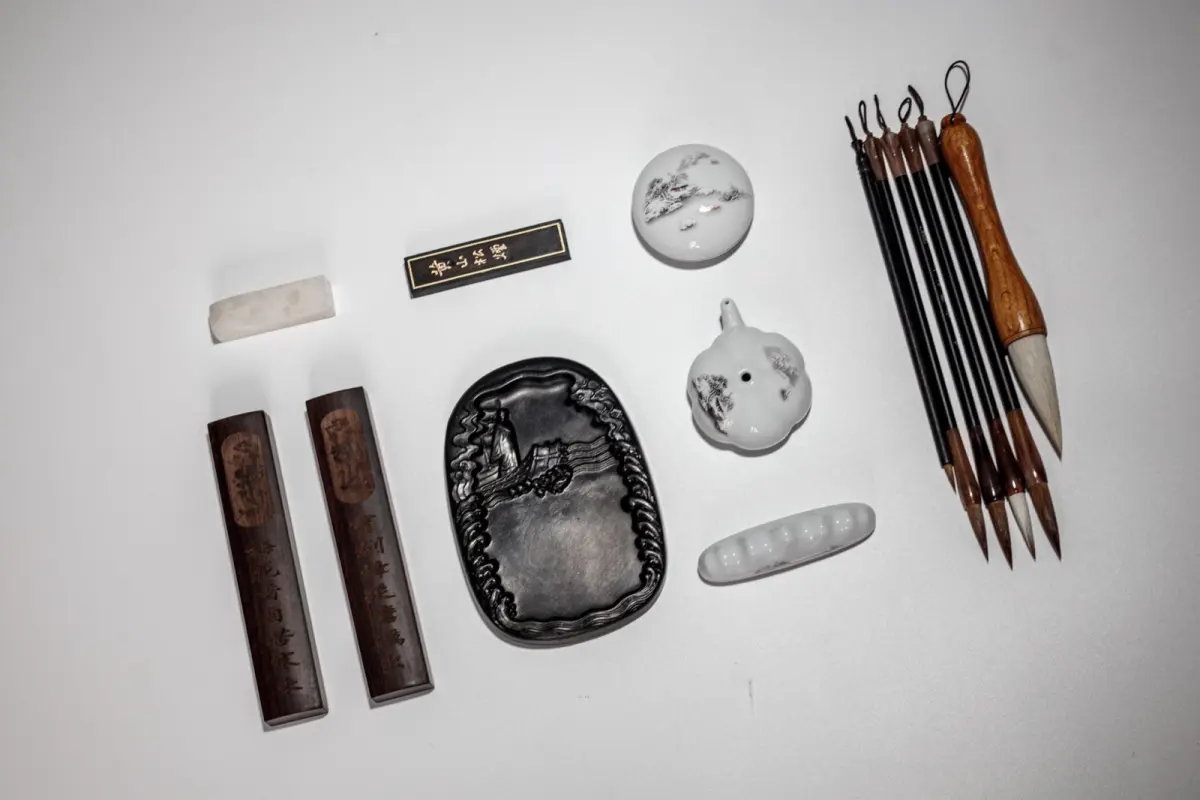
The stick you shape will dry over weeks, hardening into something that will last decades. Ground against stone with water, it releases its darkness slowly, becoming the medium through which brush meets paper, thought meets form.
FAQ
Chaware curates authentic Japanese crafts — straight from the makers in Japan to your table.
Explore the Chaware collection →
Keep exploring


