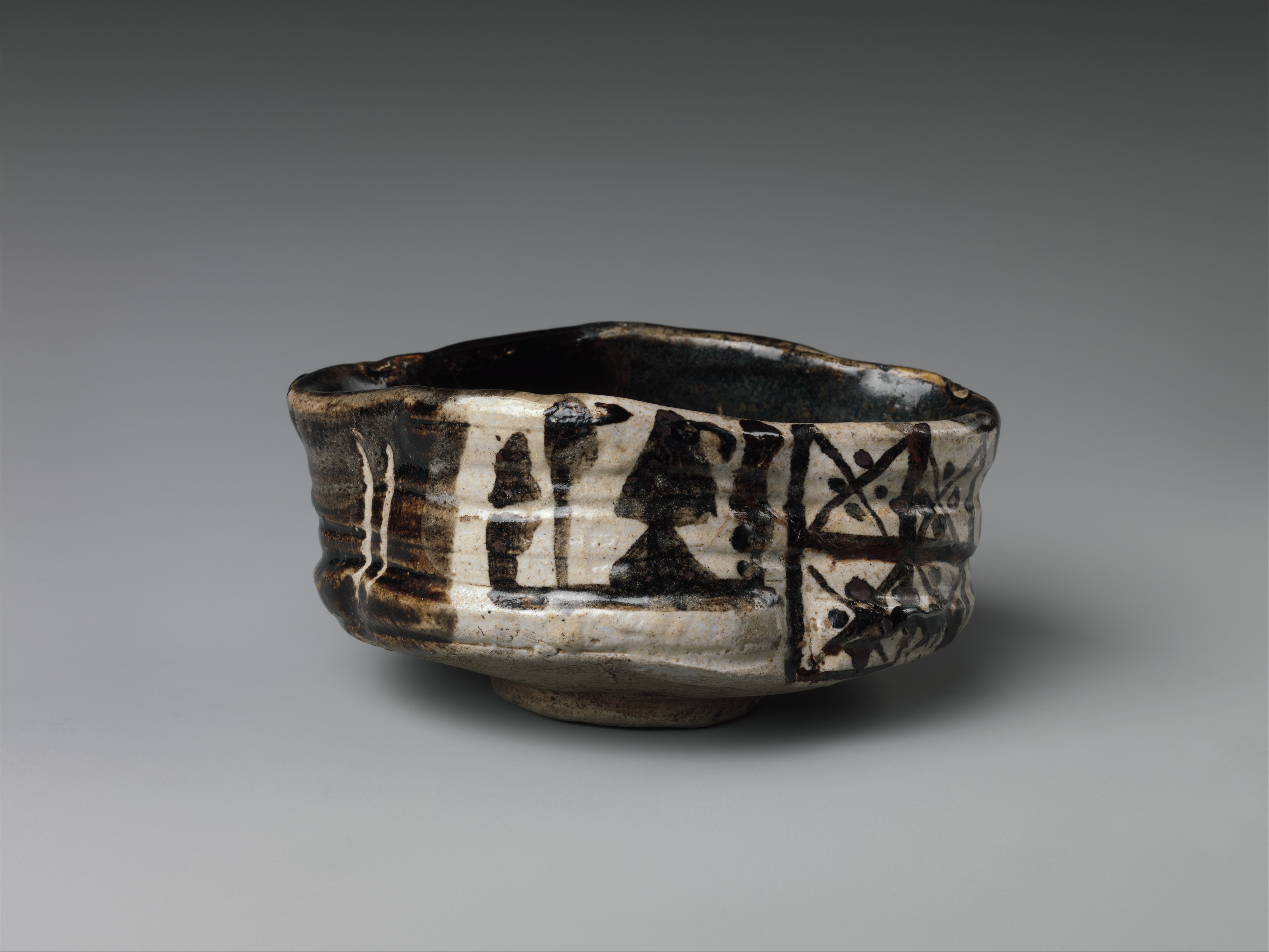
Why This 17th-Century Tea Bowl Isn't Round
On this page
Pick up a typical bowl and your hand expects a circle. This one refuses it. The rim dips and warps unevenly, the whole shape pulled slightly out of round — not from damage, but by design.
A shape with a name: kutsu-gata
This distortion has a term: kutsu-gata, "clog-shaped," named for its resemblance to the irregular outline of a traditional sandal. Rather than keeping the clean circle a potter's wheel naturally produces, the maker reshaped the rim by hand after throwing it, pushing and pulling the still-soft clay into something deliberately uneven.
This wasn't a mistake someone decided to keep. It reflects a specific aesthetic current in Japanese tea culture — one that valued a bowl looking shaped by hand, imperfect and specific, over one that looked perfectly symmetrical and anonymous.
Decoration that follows the warp
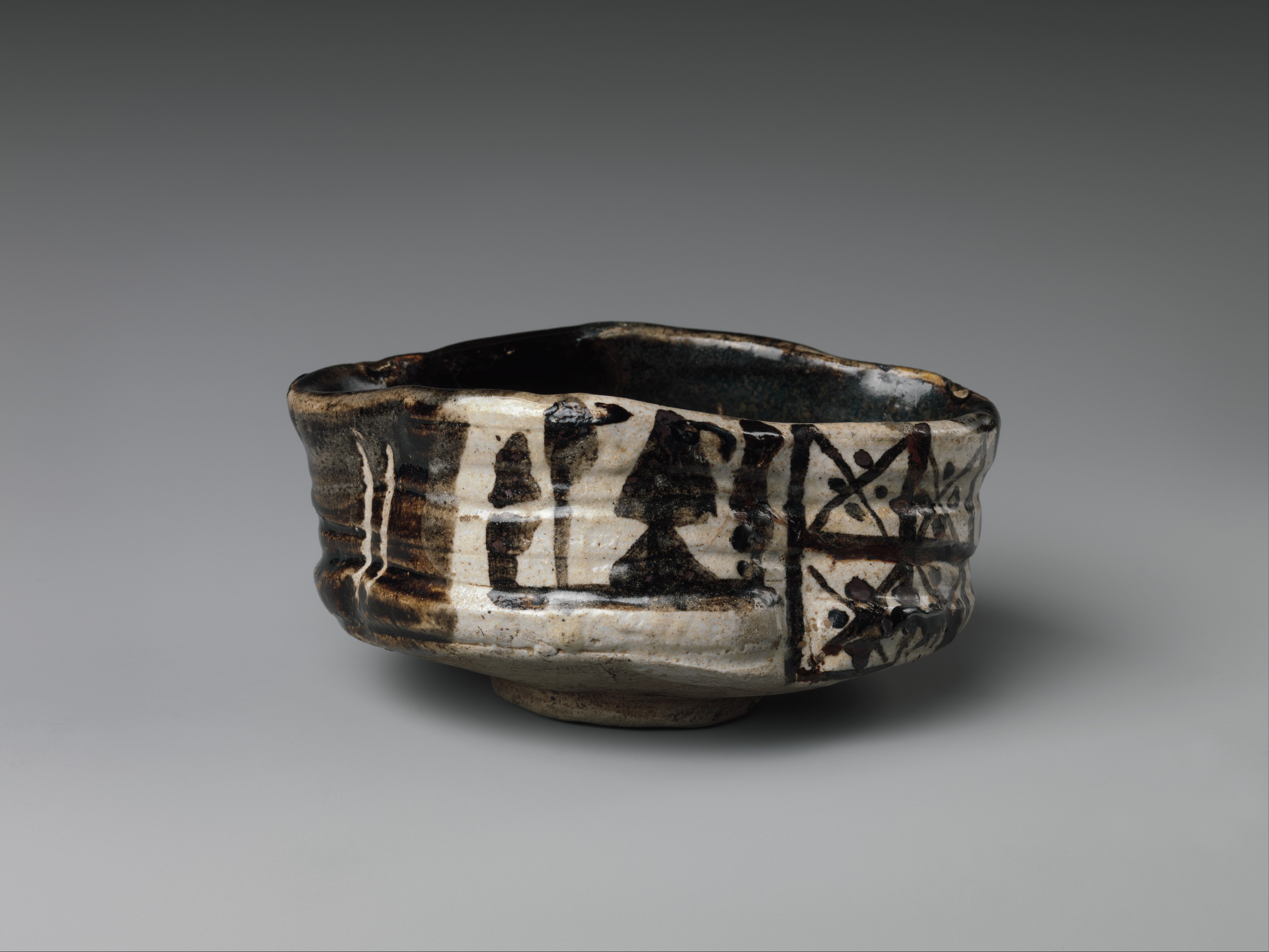
Painted across the surface in iron-black slip against pale cream is a motif of plum blossoms alongside a geometric lattice pattern. Because the surface itself isn't a true cylinder, the decoration doesn't sit evenly — it bends and compresses along the bowl's irregular contour, which means the pattern reads slightly differently depending on which part of the rim you're looking at.
A round bowl holds one pattern, the same from every angle. This one holds several, because the shape itself keeps changing underneath it.
Early seventeenth century, deliberately imperfect
This bowl dates to the early 1600s, a period when tea practice in Japan was deeply shaped by an aesthetic that prized irregularity, asymmetry, and the visible trace of a human hand. A perfectly round, perfectly even bowl could look mass-produced or impersonal. A warped one couldn't.
What the shape does in the hand
Beyond appearance, an irregular rim changes how a bowl feels to hold and drink from — no two spots on the rim present quite the same angle to the lips. It's a small, physical reminder, every time the bowl is used, that it was shaped by a person rather than a mold.
Part of the Chaware Library — practical guides and terms, not just stories. Visit the Library →
Chaware curates authentic Japanese crafts — straight from the makers in Japan to your table.
Explore the Chaware collection →
Keep exploring