Why Slurping Matcha Is the Proper Way to Finish Your Tea
On this page
You lift the bowl to your lips, tilt it back, and—sssslurp—pull in the last sweet, frothy dregs of matcha with an audible sound that would earn you a glare at most dinner tables. But here, in the quiet of the tea room, it's not just acceptable. It's expected.
The sound that signals completion
In Japanese tea ceremony, that final slurp isn't a breach of etiquette. It's a punctuation mark.
The deliberate intake of air along with the last sip—called susuru—serves as an audible signal to your host that you've finished. No need to peek awkwardly into the bowl or ask if you're done. The sound itself is the message: I have received your tea completely.
It's a small gesture that reflects the deeper logic of tea ceremony, where every movement carries meaning and nothing is left to guesswork.
Respect written in sound
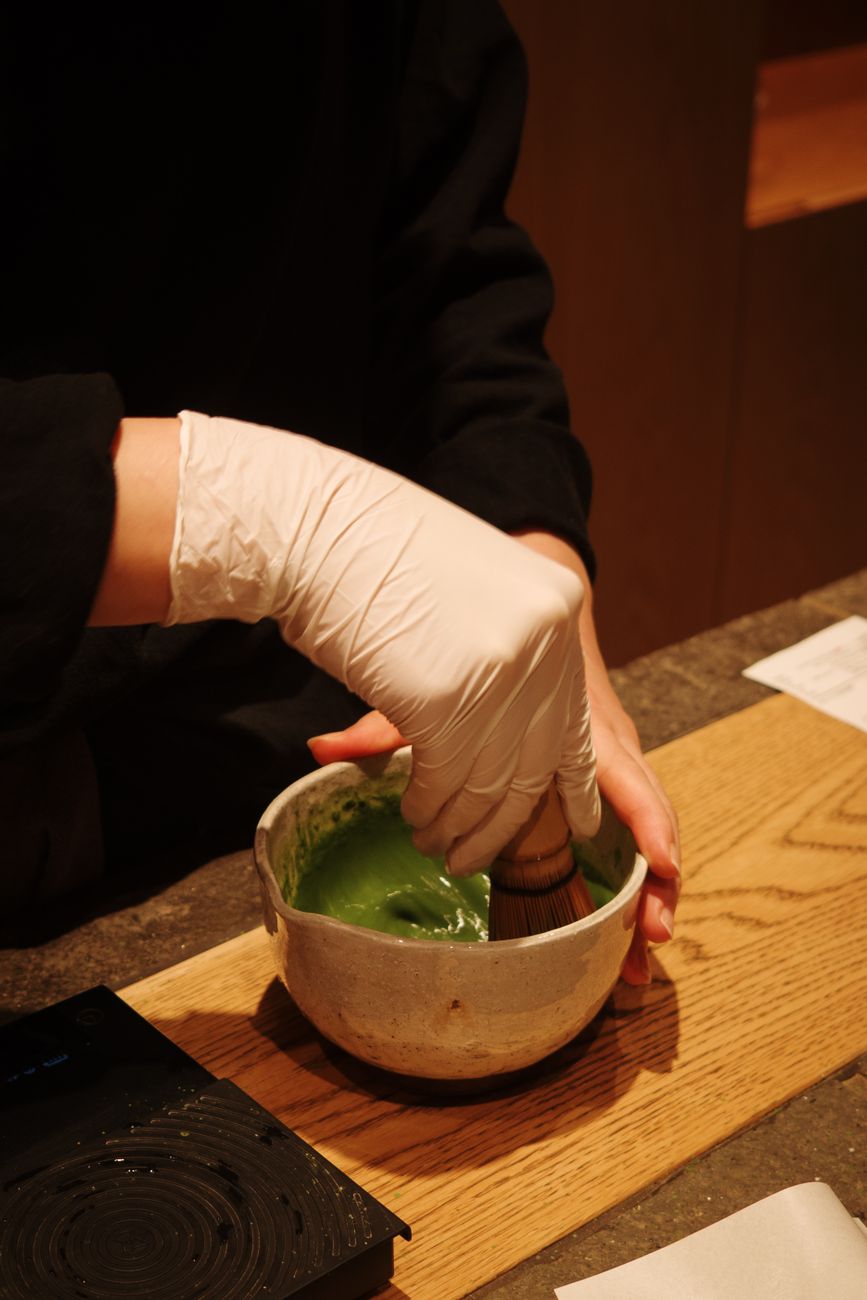
Tea ceremony operates on layers of non-verbal communication. The host has spent considerable time whisking your matcha to the right consistency, serving it at the proper temperature, even rotating the bowl so its most beautiful side faces you.
That slurp? It's your reply.
The sound of the final sip tells your host: I honored every drop you prepared for me.
By audibly finishing the tea, you're demonstrating mottainai—the Japanese concept of regret over waste—and showing that you valued the effort behind your bowl. Leaving liquid undrunk or finishing in silence would create ambiguity. Did you not enjoy it? Are you still drinking? The slurp removes all doubt.
The physics of froth
There's a practical reason, too. Matcha isn't strained—it's whisked powder suspended in water, settling toward the bottom as you drink. The final portion concentrates that vivid green sediment, along with any remaining foam.
A quiet sip won't capture it all. You need a little velocity, a little air, to pull the denser liquid and froth from the curve of the bowl. The slurp isn't crude—it's functional. It's how you actually finish a bowl of properly prepared matcha.
Different tea ceremonies have different intensities of slurp, from subtle to pronounced, but the principle holds: the sound is part of the drinking.

What it teaches about presence
Walk into a contemporary café and you'll see people sipping matcha lattes in silence, scrolling their phones, the drink reduced to fuel. There's nothing wrong with that—but it's a different relationship to tea.
The traditional slurp asks you to be present for the final moment. To acknowledge the person across from you. To complete the transaction of care that began when they scooped powder from the natsume tea caddy.
It's a tiny, noisy reminder that tea ceremony isn't about the tea alone. It's about connection made visible—and audible—through ritual.
In a world that often mistakes silence for politeness, the tea room teaches something else: sometimes the most respectful thing you can do is make a little noise.
FAQ
Chaware curates authentic Japanese crafts — straight from the makers in Japan to your table.
Explore the Chaware collection →