How Shade Growing Transforms the Flavor of Matcha Tea
On this page
Three weeks before harvest, the tea farmers of Uji do something counterintuitive. They cover their fields in darkness.
This deliberate act of deprivation — blocking sunlight from plants that literally photosynthesize to live — is what transforms ordinary green tea into matcha. But the transformation isn't just taxonomic. It's chemical, sensory, and entirely intentional.
The architecture of shadow
Walk through a shaded tea field and you'll notice the light has turned aquatic. Farmers drape the plants with tana structures — bamboo scaffolding supporting layers of reed screens or modern synthetic mesh. Some use the jikagise method instead, draping fabric directly over the bushes like tucking in children for a long sleep.
The coverage isn't total. Roughly 90% of sunlight gets filtered out, leaving just enough for the plant to survive but not enough to thrive in its normal way. Stressed and starving for light, the tea plant shifts its entire metabolism.
What happens in the dark
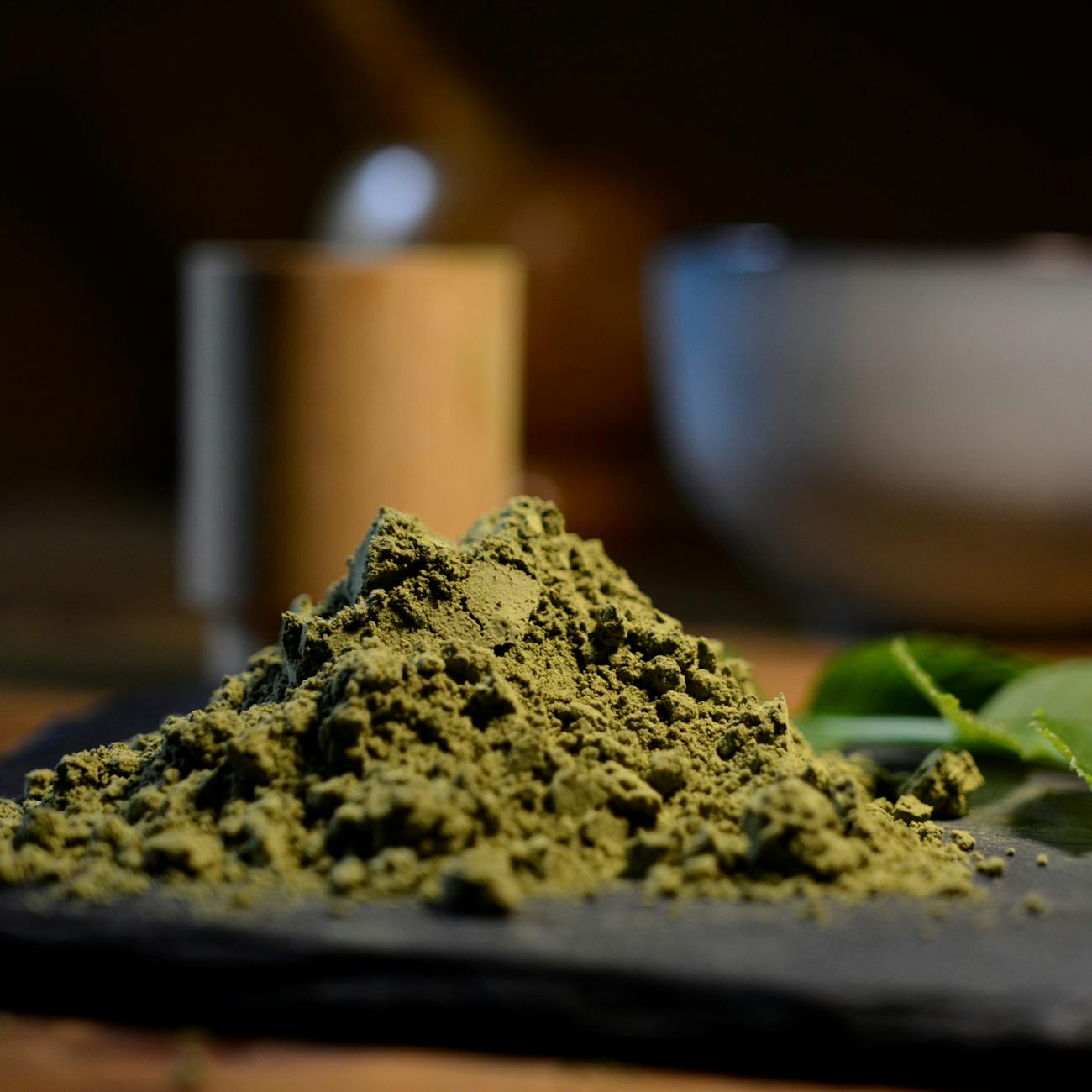
Deprived of intense sun, the leaves can't efficiently perform photosynthesis. So they adapt: they flood their tissues with chlorophyll, desperately trying to capture every available photon. This chlorophyll surge is what gives matcha its signature vivid green — not a mere aesthetic, but visible evidence of biological desperation.
But the more important change happens with amino acids.
In darkness, tea leaves hoard L-theanine like a plant preparing for winter that never comes.
Normally, sunlight would convert L-theanine into catechins — the compounds that make green tea astringent and bitter. Shading interrupts this conversion. The L-theanine accumulates, concentrations rising week by week. This single amino acid is responsible for matcha's characteristic umami richness, that savory-sweet complexity that lingers on your palate long after you've finished the bowl.
Meanwhile, catechin levels drop. The bitterness recedes. What emerges is a flavor profile that seems almost impossible: intensely vegetal yet sweet, substantial yet delicate.
The timing of transformation
Two weeks of shade produces a different tea than three. Four weeks creates something else entirely.
Most premium matcha undergoes 20 to 30 days of shading. Less time and you retain too much astringency, too much of the plant's defensive bitterness. More time and diminishing returns set in — the plant has already made its adaptations, and extended darkness begins to weaken rather than refine.
The farmers watch carefully. They're not just blocking light; they're conducting a timed chemical intervention, using shadow as their primary tool. The same cultivar, grown in the same soil, becomes fundamentally different depending on how long it spent in darkness.

The taste of patient work
Pour hot water over usucha — thin matcha — prepared from shaded leaves, and the first thing you notice isn't bitterness. It's a gentle sweetness, almost creamy. Then comes the umami, that hard-to-name savoriness that makes you pause mid-sip.
This is L-theanine expressing itself, the molecular signature of those weeks spent under reed screens. The flavor is inseparable from the method. You can't replicate it with unshaded leaves, no matter how carefully you grind them or how precisely you whisk.
The traditional tea masters knew this centuries before anyone understood amino acid chemistry. They simply observed: plants grown in shadow tasted better. Richer. More complex. Worth the extra labor of building all those scaffolds and draping all that fabric.
They were right, of course. But they were also doing something more profound than improving flavor. They were proving that sometimes the path to refinement requires taking something essential away.
The best matcha is born not from abundance, but from precisely calibrated scarcity.
FAQ
Chaware curates authentic Japanese crafts — straight from the makers in Japan to your table.
Explore the Chaware collection →