The Five Tastes of Japan: A Beginner's Guide to Japanese Flavor Balance

On this page
You lift the lid of the miso soup. Before you taste it, you already know—something would feel missing if it were only salty, only sweet, or only savory.
Japanese cooking doesn't chase a single dominant flavor. It seeks gochōmi, the five tastes, a centuries-old framework that turns every meal into a study in balance. Understanding this philosophy changes how you experience Japanese food—and maybe how you think about flavor itself.
The foundation that predates the science
Long before umami had a name in English, Japanese cooks structured their kitchens around five distinct tastes: amai (sweet), karai (salty), suppai (sour), nigai (bitter), and umami (savory). This wasn't culinary theory—it was kitchen practice, rooted in Buddhist temple cooking and refined through tea ceremony cuisine.
The concept draws from Chinese five-element philosophy, but Japan made it its own. Each taste was believed to correspond to an organ in the body, a season, even an emotional state. Balance wasn't just aesthetic. It was considered essential to health.

Why a single flavor never dominates
Walk through a kaiseki meal and you'll notice something unusual: no dish screams for attention. The grilled fish carries salt and char, yes, but it sits beside vinegared vegetables, a dab of sweet miso, and perhaps something faintly bitter—shiso leaf, yuzu peel, young greens.
This is intentional withholding. Japanese cooks layer tastes so no single one dominates the palate. The goal isn't bold. It's complete.
In Japanese cooking, satisfaction comes not from intensity, but from the presence of all five tastes in conversation.
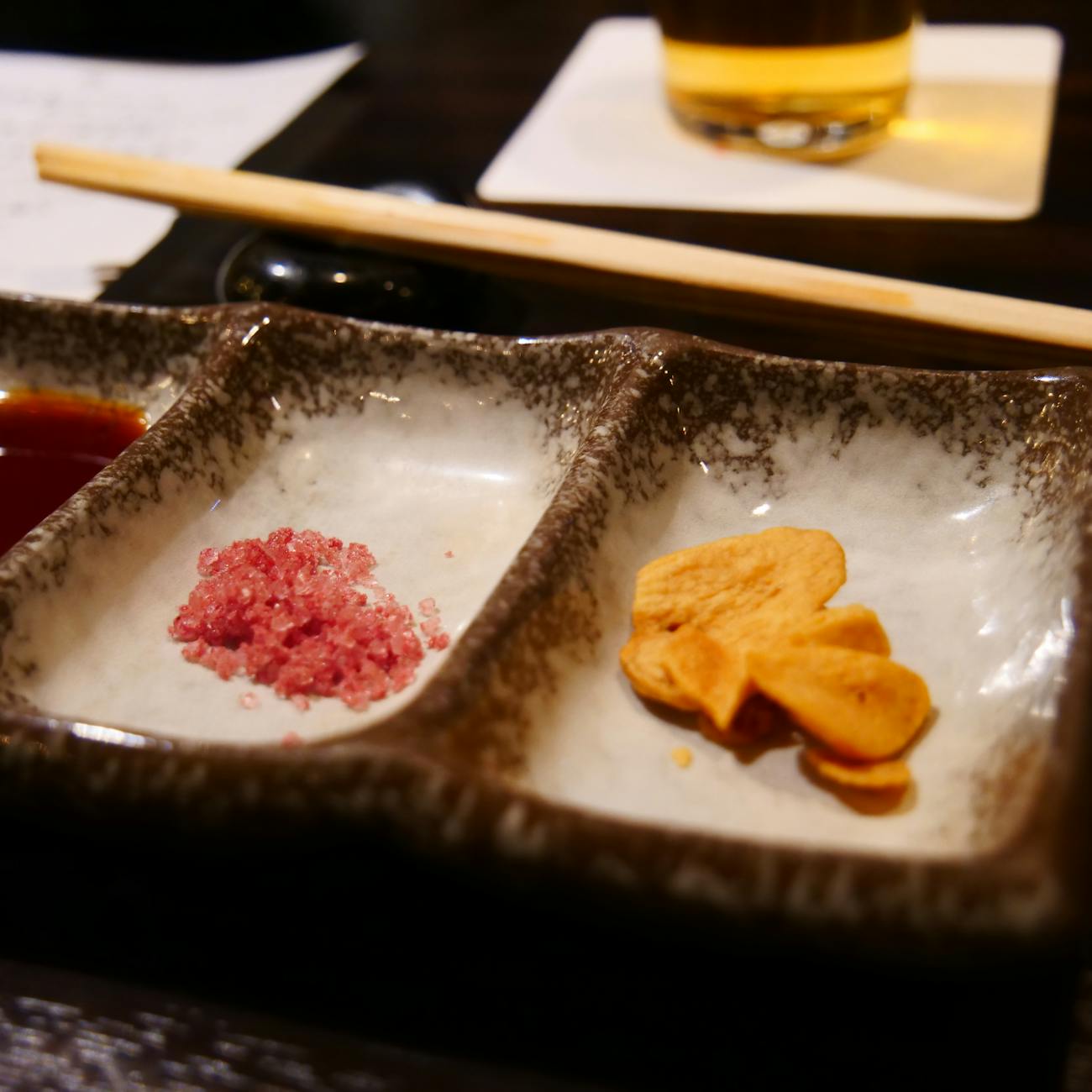
Even in home cooking, this shows up quietly. Soy sauce (salty, umami) meets mirin (sweet). Rice vinegar (sour) softens the edge. A pinch of karashi mustard (bitter, sharp) wakes up the tongue. You might not consciously register each element, but your palate does.
The taste the West didn't have a word for
Umami entered the English language only in the 1980s, but Japanese cooks had been building entire broths around it for centuries. Dashi—made from kombu kelp and katsuobushi (dried bonito flakes)—is liquid umami, the savory backbone beneath miso soup, simmered vegetables, noodle broths.
It's not salty. It's deeper—almost meaty, but clean. It makes other flavors taste more like themselves.
Glutamate-rich ingredients show up everywhere in the Japanese pantry:
- Soy sauce and aged miso
- Shiitake mushrooms, especially dried
- Kombu and nori seaweed
These aren't add-ons. They're structural.

Tasting with intention
You don't need to consciously count flavors while eating. But once you know the framework, you start to notice the gaps. A dish that's only sweet and salty feels flat. Add a thread of sour or bitter—yuzu juice, a charred edge—and suddenly it comes alive.
Japanese cooks don't talk much about recipes in the Western sense. They talk about balance, about whether something feels ととのう (ととのう)—properly arranged, harmonized. It's less about precision and more about sensing when all five elements are present, even faintly.
This isn't exclusive to Japan, of course. But few cuisines have made the five-taste framework so central, so quietly essential to every meal.
The next time you sit down to Japanese food, pause before the first bite. Notice what's there beyond the obvious. The faint bitterness. The barely-there sweetness. The way nothing shouts, but everything speaks.
FAQ
Chaware curates authentic Japanese crafts — straight from the makers in Japan to your table.
Explore the Chaware collection →