Meet the Chasen: The Handcrafted Bamboo Whisk at the Heart of Matcha
On this page
You can't make proper matcha with a spoon. The monks knew this five centuries ago, and physics agrees with them today.
Born in the hands of tea masters
The chasen — Japan's bamboo matcha whisk — emerged during the 16th century alongside the formalization of chanoyu, the Way of Tea. While tea had been whisked in China for centuries before, Japanese tea masters refined the tool into something more deliberate. They needed a whisk that could transform bitter powdered tea and hot water into a suspension so fine it would hold foam without collapsing, so uniform it would taste the same from first sip to last.
Takayama, a small town in Nara Prefecture, became the center of chasen-making during the late 1500s. The craft has remained there ever since, passed through family lines in near-complete secrecy. Today, roughly 90% of all chasen still come from Takayama workshops.
Carved from a single piece
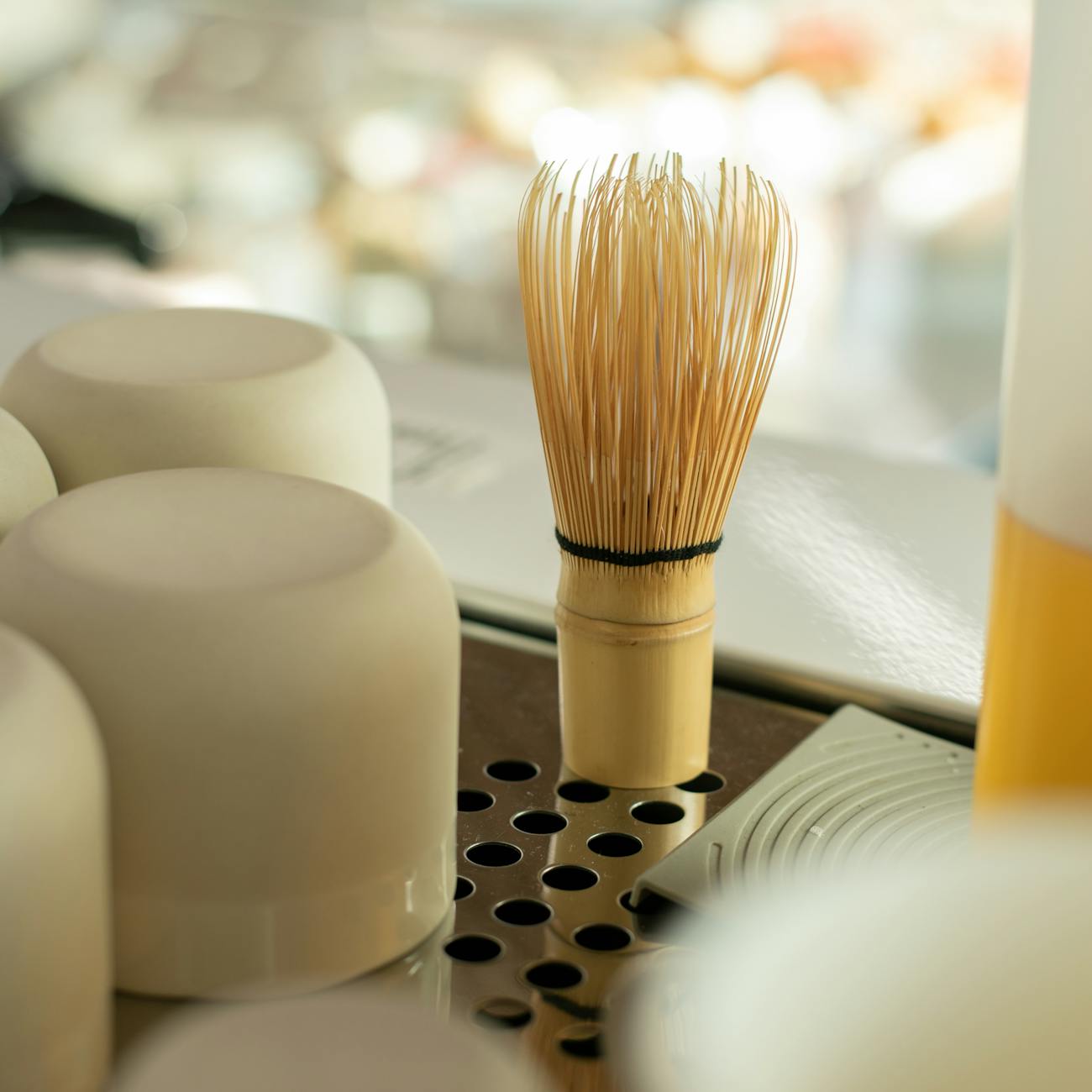
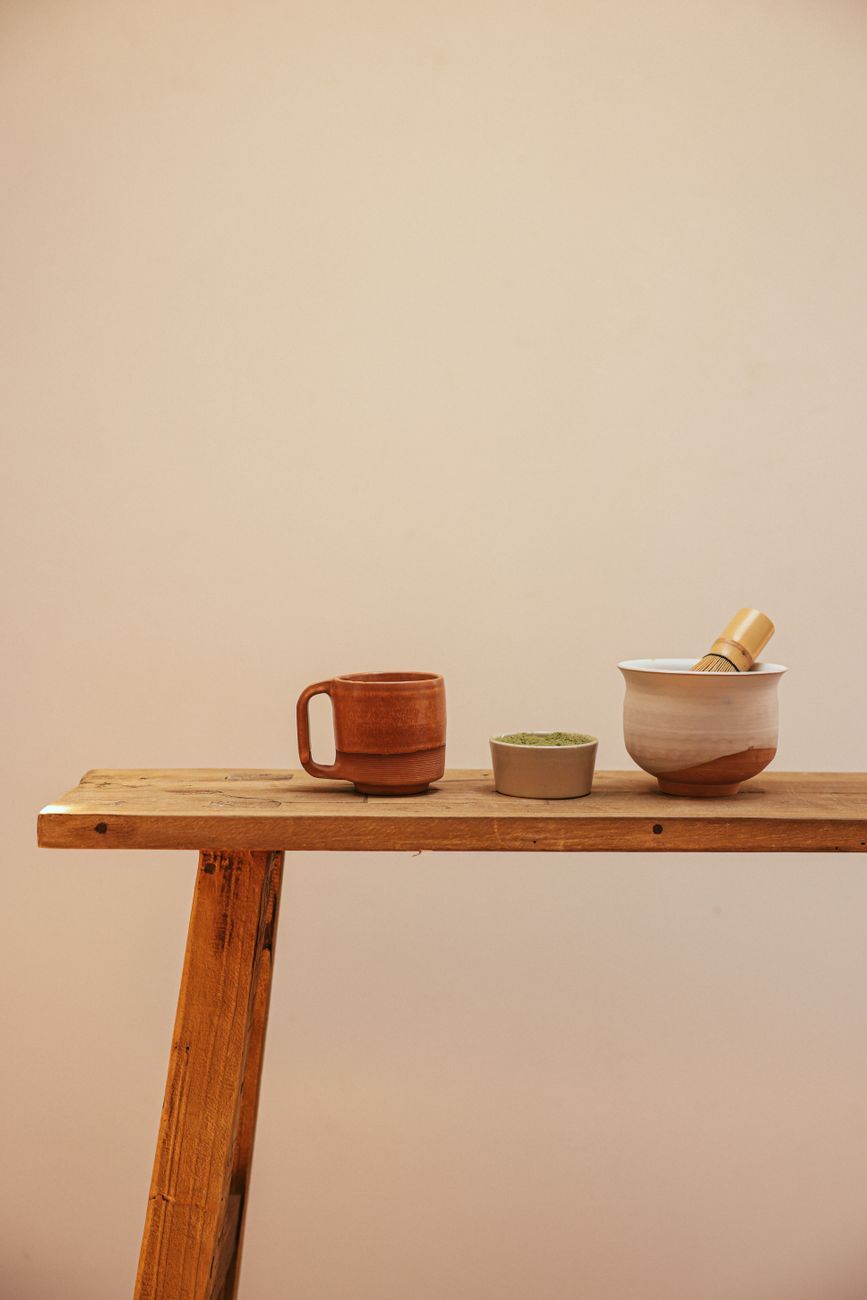
What looks like a bundle of delicate tines is actually one length of bamboo, split and shaped entirely by hand. A craftsman starts with a bamboo segment roughly the size of your fist, then makes dozens of precise cuts downward from the top, stopping just short of the base. These splits — anywhere from 16 to 120, depending on the style — are then carved thinner, shaped outward, and curled into their final form.
The whole process requires no glue, no binding. The whisk holds together because the bamboo was never fully separated.
A chasen with 80 tines can take an experienced maker half a day to complete.
The number of tines affects performance. Fewer prongs (around 60-80) work well for usucha, the thinner, everyday style of matcha. More tines (100+) are reserved for koicha, the thick, paste-like tea served in formal ceremonies, where the whisk must work through density without breaking.
What happens when you whisk
Matcha doesn't dissolve — it suspends. The tea particles are too large to disappear into water the way sugar or instant coffee does. Instead, the chasen's rapid back-and-forth motion (never circular) breaks apart clumps and distributes the powder evenly throughout the liquid. The curved tines incorporate air, creating the signature foam that sits on top of properly prepared matcha.
This is why a fork or a spoon fails. They can't move fast enough, can't reach the curve of the bowl, can't aerate without splashing. The chasen was designed specifically for the shape of a chawan (tea bowl) and the physics of suspension.
It won't last forever
Bamboo is organic. It splits, it warps, it eventually wears down. A well-used chasen might last a few months to a year, depending on how often you prepare tea. The tines will begin to splay, crack at the tips, lose their spring.
Tea practitioners don't see this as a flaw. There's a small ritual called chasen kuyō — a whisk memorial service — held annually at temples in tea-producing regions, where old whisks are burned with gratitude. The tool served its purpose. It returns to nothing.
Before each use, soak the chasen in warm water for thirty seconds. After, rinse it gently and let it air-dry upright. Never scrub it. Never put it in a dishwasher.
The weight of a gesture
Using a chasen doesn't require ceremony, but it does ask for a moment of attention. The wrist motion — brisk, light, focused — becomes a small reset in your day, a brief suspension of hurry. You're not just mixing a drink. You're continuing a motion that someone in Takayama split bamboo to make possible.
The foam will fade in minutes. That's the point.
FAQ
Chaware curates authentic Japanese crafts — straight from the makers in Japan to your table.
Explore the Chaware collection →