How the Chashaku Scoop Is Made: The Art of Crafting Bamboo Tea Scoops
On this page
A strip of bamboo no wider than your thumb becomes a scoop that has measured matcha for centuries. But calling the chashaku a "scoop" barely touches what happens in its making.
Split, not sawed
The bamboo isn't cut—it's split. A craftsman reads the grain of a single culm, usually madake (timber bamboo), and cleaves it along its natural fault lines. This matters more than it sounds. Sawing severs fibers. Splitting follows them, preserving the bamboo's tensile strength and keeping the grain unbroken from node to tip.
The strip that becomes a chashaku is taken from near a node, where the bamboo wall is thickest. It's carved while still green, when the fibers yield to the blade without splintering.
The bend that defines it
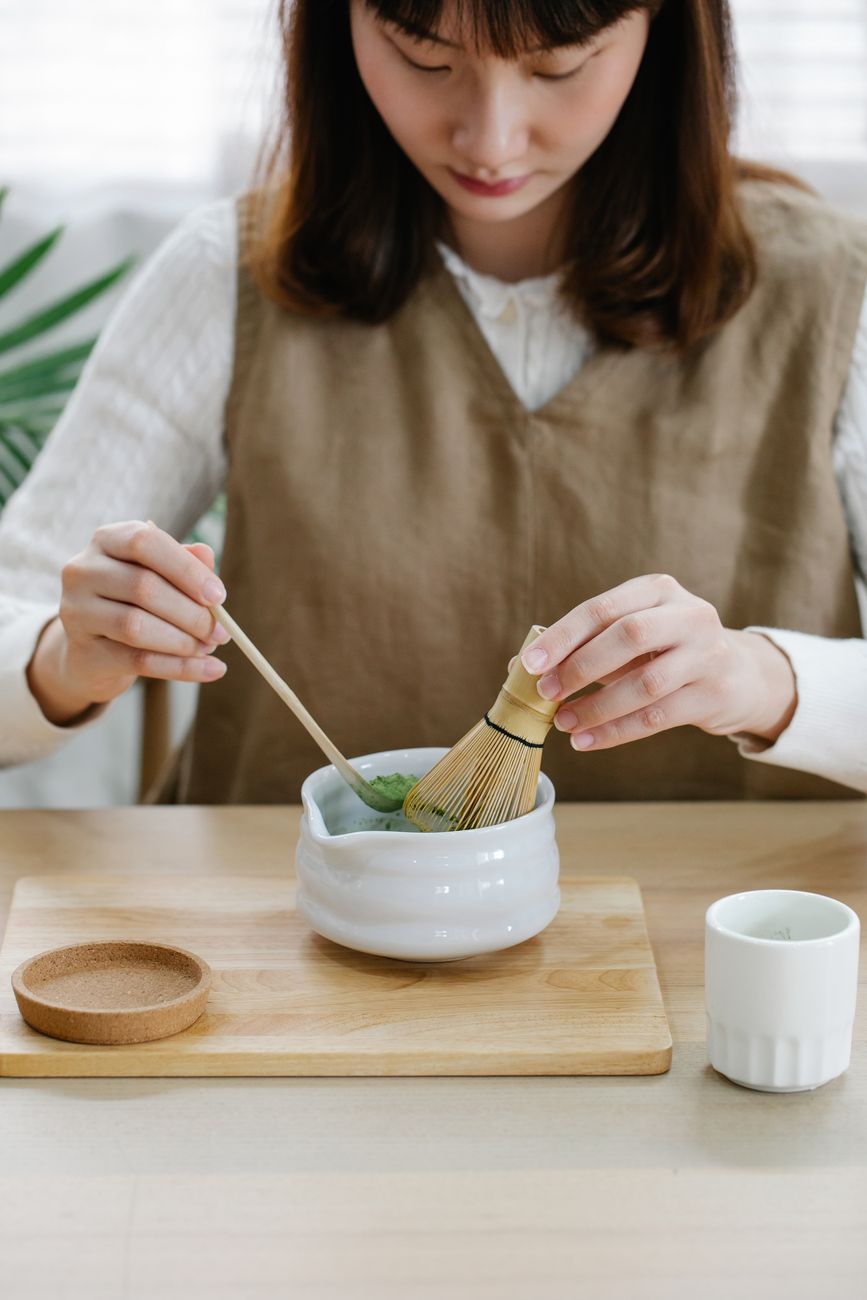
Here's where the chashaku earns its form. The carved strip is held over charcoal heat—not flame—until the lignin softens. Then it's bent by hand into that distinctive curve, the one that lets the scoop nestle into the curve of the tea bowl and release powder cleanly.
The curve isn't decorative—it's the result of heat, timing, and a maker's hands reading resistance in real time.
Once bent, the bamboo is left to cool and set. Some makers age their finished scoops for months, even years, letting the bamboo's natural oils cure and deepen the color from pale straw to amber.
What the knife leaves behind
The shaping is done with a small, sharp knife—often a kogatana—and the maker's hands never stop moving across the surface. You can see this in the finished scoop: faint ridges where the blade passed, a slightly faceted surface that catches light differently than something sanded smooth.
Traditional chashaku have three sections: the wide saki (tip) that holds the matcha, the slender shaft, and the fushi (node) near the handle. That node isn't added—it's the original node from the bamboo, left intact as both structure and signature. It's proof the scoop came from a single piece.
Some makers carve their seal on the underside of the handle. Others leave it anonymous.

Why it still matters
In a world of stainless steel measuring spoons and precision scales, the chashaku persists because it does something they don't. It slows you down. It makes you measure with your eyes and adjust with your wrist. The two scoops of matcha for usucha (thin tea) aren't level teaspoons—they're mounded, slightly heaped, and they change depending on the powder's humidity and your bowl's depth.
The chashaku teaches you to pay attention.
And because it's bamboo, it changes. It darkens with age and use. It absorbs trace amounts of matcha oil. After years, no two look the same, even if they left the same maker's hands on the same day.
---
Hold one and you're holding a sliver of culm that grew in a grove, was read like a text, carved, bent over coals, and left to cure. All so you could measure powder for tea.
FAQ
Chaware curates authentic Japanese crafts — straight from the makers in Japan to your table.
Explore the Chaware collection →