The Journey From Tencha Leaf To Matcha Powder: Inside Japan's Most Refined Tea
On this page
The emerald powder that dissolves into your bowl traveled a path few teas dare to take—one defined not by what happens to the leaf, but by what never touches it at all.
Growing in shadow
Most tea leaves chase the sun. Tencha does the opposite. Roughly three weeks before harvest, farmers drape the tea fields in shade—traditionally with reed screens and rice straw, though modern growers often use synthetic tarps suspended on scaffolding. The effect is the same: filtered, dappled light that forces the plant into a quiet panic.
Starved of full sunlight, the tea bush pumps chlorophyll into its leaves, deepening their green and flooding them with L-theanine, the amino acid responsible for matcha's umami sweetness and its peculiar calm-alert effect. The leaves grow thin, tender, almost translucent. They're picked only once a year, in late spring, when the first flush reaches its peak.
This is the gamble. Shade-growing is labor-intensive, risky, and expensive. But it's what transforms ordinary tea into something ceremonial.

The steaming that stops time
Freshly picked tencha leaves arrive at the processing facility within hours. Speed matters here. The moment a leaf is plucked, enzymes begin breaking down its structure—oxidation, the same process that turns green tea into oolong, oolong into black.
To make tencha, that process must be stopped immediately.
The leaves are steamed for seconds, just long enough to halt oxidation without cooking away their character.
After steaming, the leaves pass through drying chambers where hot air pulls out moisture. But here's what makes tencha different from sencha or other Japanese green teas: the stems and veins are meticulously removed. Only the pure leaf tissue remains—soft, flat, brittle fragments that look nothing like the tightly rolled needles you'd recognize as tea.
This is tencha. It's not meant to be steeped. It's waiting to be ground.
Stone against stone
The final transformation happens in near-silence. Traditional matcha production uses stone mills—circular granite wheels that rotate at roughly 30 revolutions per minute. Slow, deliberate, meditative.
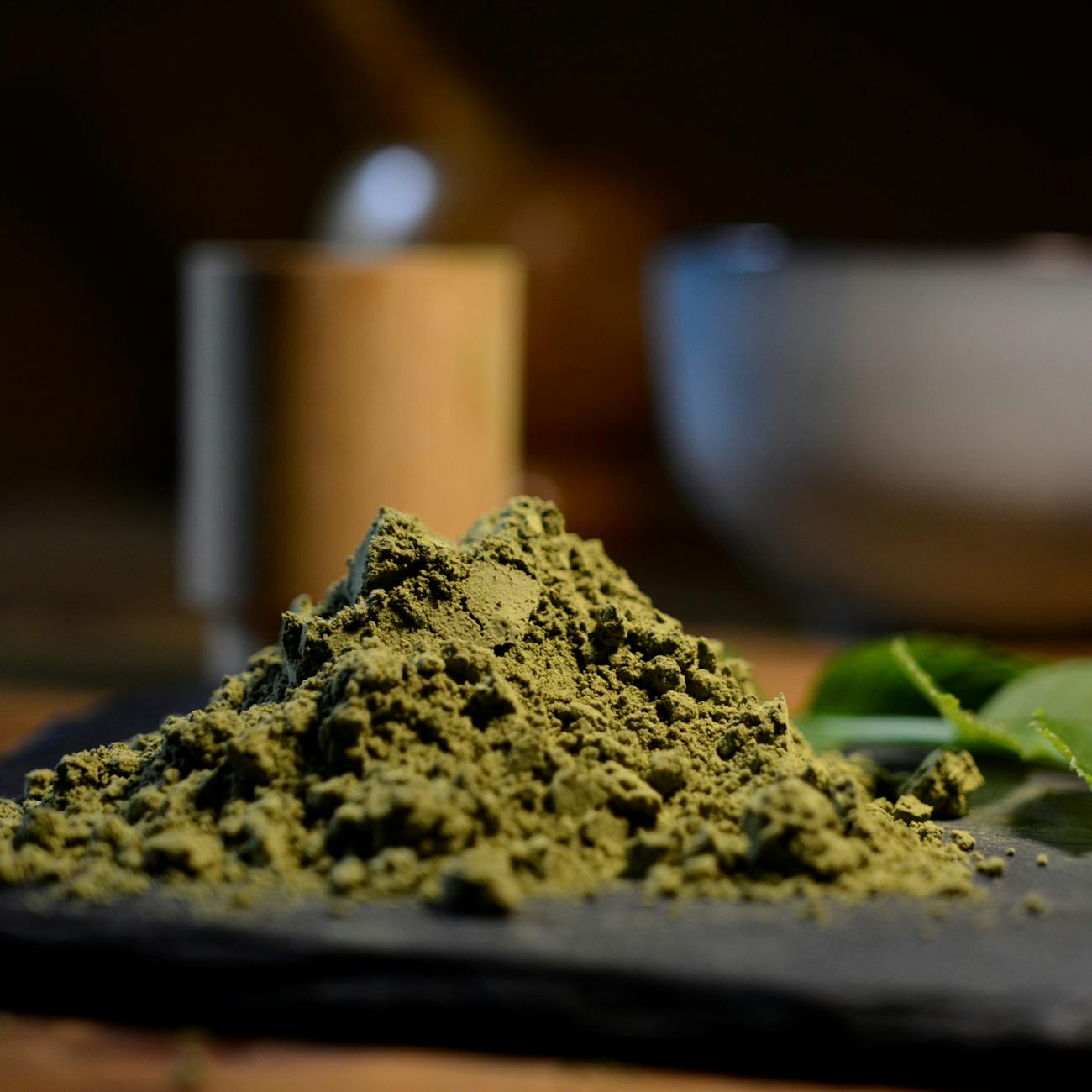
The tencha leaves are fed into the mill's center, where they're crushed between the stones into powder so fine it measures around 5-10 microns. For context, a human hair is about 70 microns wide. At this scale, the powder doesn't just mix with water—it suspends, creating that signature jade opacity.
A single stone mill produces about 40 grams of matcha per hour. That's barely enough to fill a small tin. It's inefficient by industrial standards, which is precisely why it works. The slow grind prevents heat buildup that would damage the tea's delicate aromatics and volatile compounds.
Some modern facilities use ceramic or stainless steel mills for higher volume production, especially for culinary-grade matcha. But the finest ceremonial grades still come from stone, ground cool, in the dark.

The powder remembers
What you whisk into foam carries the memory of those shaded fields, that split-second steam, that patient grinding. The vivid green speaks to chlorophyll protected from sun. The umami sweetness points back to L-theanine built up in shadow. The fineness of the grind determines how smoothly it dissolves, how long the flavor lingers on your tongue.
From leaf to powder, nothing is accidental. Every step exists to preserve what shade created and time would steal.
The journey ends in your bowl, but the care that brought it there—that remains suspended in every sip.
FAQ
Chaware curates authentic Japanese crafts — straight from the makers in Japan to your table.
Explore the Chaware collection →