Why the Matcha Stone Mill Grinds at Just 40 Grams per Hour
On this page
The finest matcha powder takes an entire hour to grind. Just 30 grams.
The sound of patience
Step into a traditional matcha workshop before dawn and you'll hear it—a rhythmic whisper of stone on stone, steady as breathing. The ishiusu (stone mill) turns at roughly 60 rotations per minute. Not because the craftspeople choose slowness. Because the tea leaves demand it.
Matcha is ground between two granite discs, the upper stone rotating while the lower stays fixed. Grooves carved into both surfaces pull tencha leaves inward, crushing them into particles finer than pollen. But here's what most people miss: speed creates heat. And heat destroys everything matcha is meant to be.
Why friction is the enemy
Grind faster and the temperature rises. Even a few degrees transforms the vivid chlorophyll into dull olive-brown. The delicate amino acids—particularly L-theanine, which gives matcha its umami sweetness and calm-alert effect—begin to break down. The volatile aromatics, those grassy-sweet notes that should bloom on your tongue, simply vanish into the air.
The stone mill's crawling pace keeps the temperature below 30°C. It's not romantic tradition. It's thermal physics in service of flavor.
True matcha green exists only in the absence of haste.
The granite matters too
Not just any stone will do. The mills are carved from mikage ishi, a fine-grained granite quarried specifically for its density and hardness. Softer stones would shed grit into the powder. Harder stones would generate more friction. The grooves—cut by hand in radiating patterns—must be recarved every few months as they wear smooth.
Each mill can cost several thousand dollars and weighs upward of 30 kilograms. The upper stone alone requires perfect balance; even a slight wobble means uneven grinding, which means inconsistent particle size, which means bitter spots in your tea.
What industrial grinders can't replicate
Modern ball mills and jet mills can pulverize tencha in seconds. The particle size might even be uniform. But they generate heat, introduce metal contamination, and create jagged particles rather than the round, soft shapes stone grinding produces. You can taste the difference immediately—the texture on your tongue, the way the powder suspends in water, the layered sweetness versus flat bitterness.
Some producers now use temperature-controlled industrial methods that come close. They're honest about it, and the results can be quite good for culinary-grade matcha. But for ceremonial grade—the powder meant to be whisked alone with water and contemplated—stone mills remain unmatched.
The slowness isn't a bottleneck to overcome. It's the technique itself.
The economics of green powder
This is why authentic matcha costs what it does. An experienced mill operator might produce 500 grams in a full day's work. A single tea plantation's annual harvest, even from premium first-flush leaves, yields only so many kilograms of finished powder. The mathematics are unforgiving.
When you see matcha priced like commodity green tea, you're almost certainly looking at something ground differently, or not from tencha at all.
---
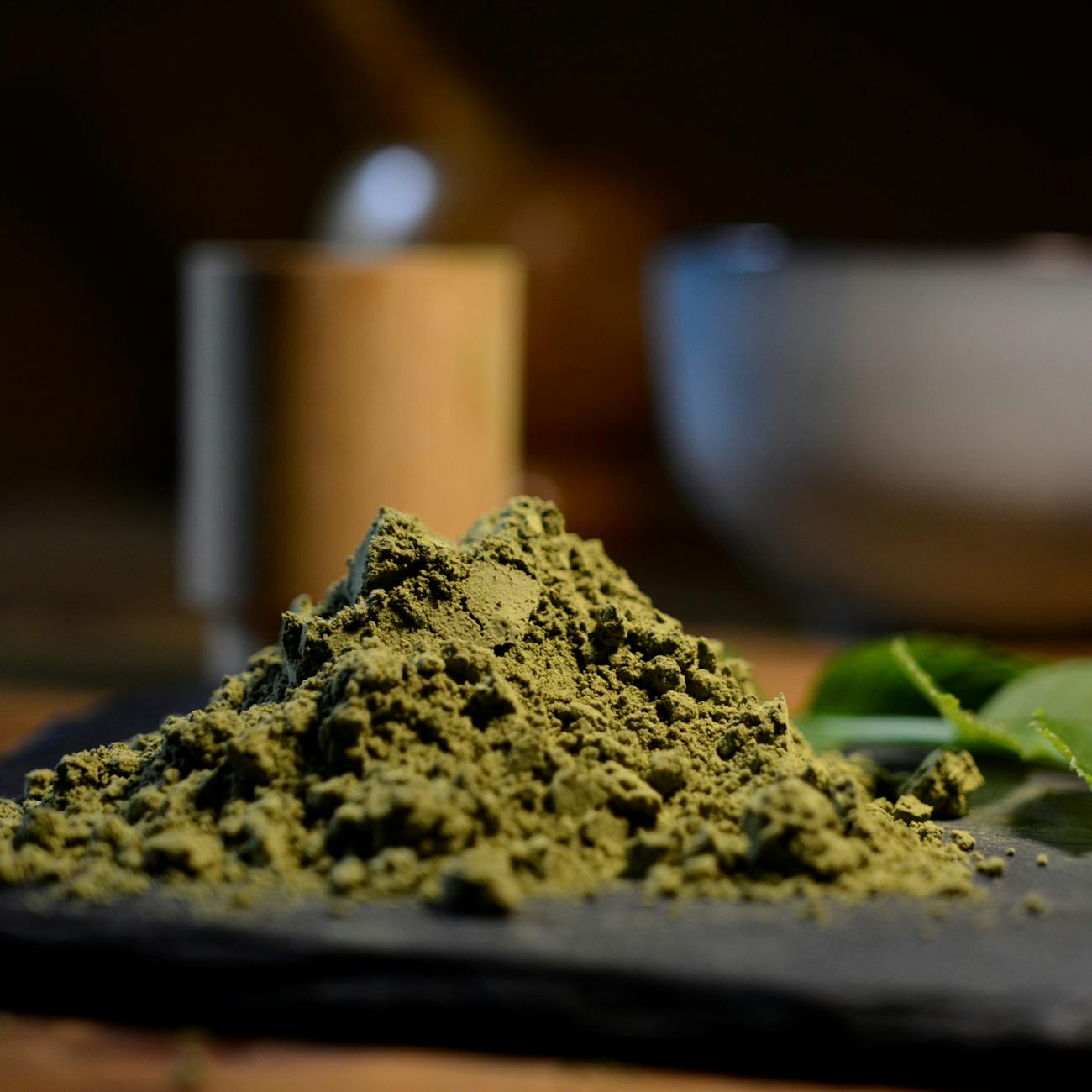
The stone turns. The powder falls like colored snow. And somewhere, someone waits an hour for what takes three minutes to drink.
FAQ
Chaware curates authentic Japanese crafts — straight from the makers in Japan to your table.
Explore the Chaware collection →