How to Store Matcha to Keep It Fresh: A Complete Guide
On this page
Matcha doesn't age gracefully. It fades.
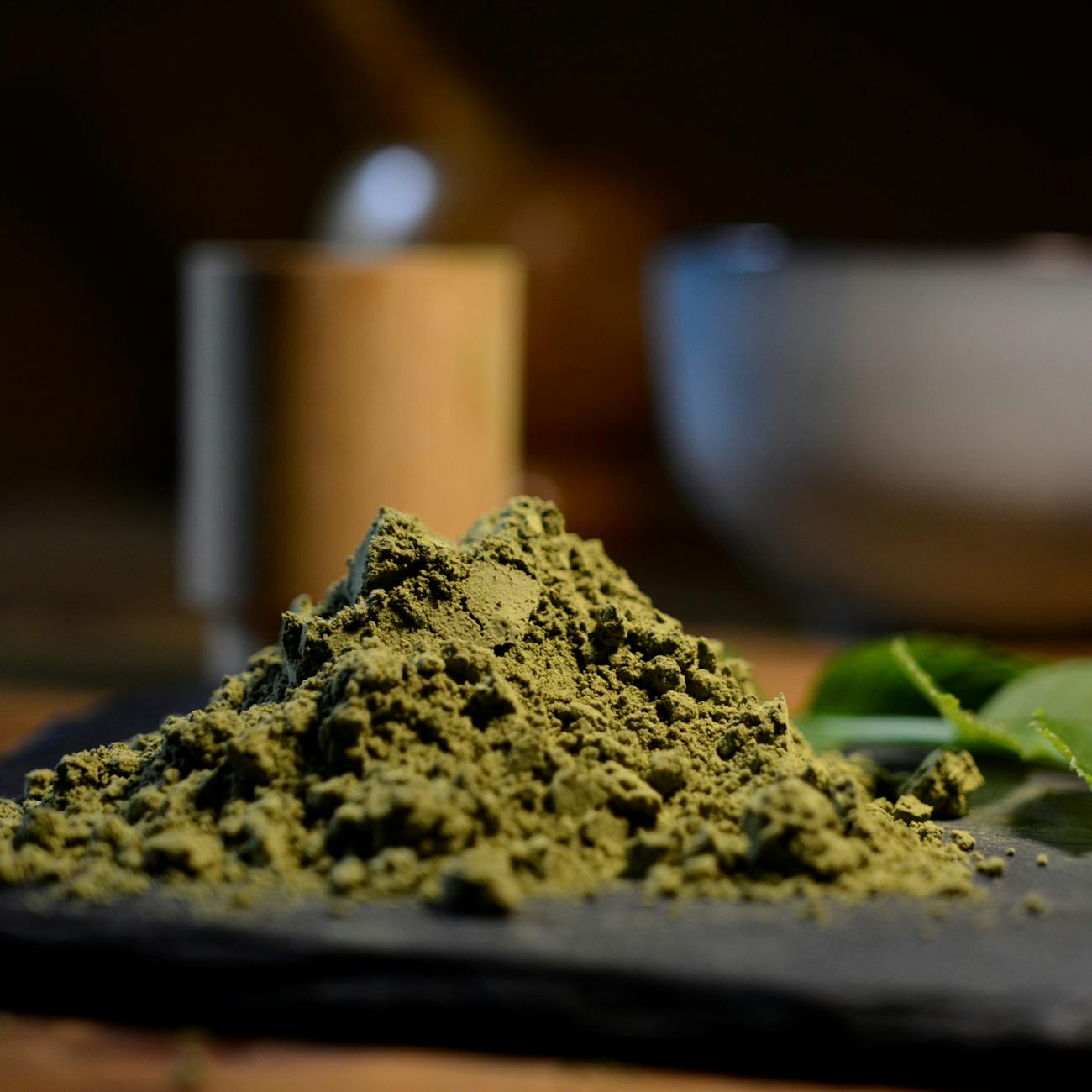
Within weeks of opening, that luminous green powder can lose its vivid color, its grassy sweetness, its fine texture. What was once jade becomes khaki. What tasted of spring starts to taste like dust. The Japanese have known this for centuries, which is why traditional tea masters treat matcha with the same care a perfumer gives a rare essence. Both are volatile. Both demand respect.
The enemies are everywhere
Light, air, heat, moisture. These four forces conspire against your matcha from the moment you unseal the tin.
Light degrades chlorophyll—the very compound that gives matcha its emerald intensity. Air triggers oxidation, turning delicate amino acids bitter. Heat accelerates every chemical breakdown. And moisture? Even a whisper of humidity will cause clumping, then mold.
In Japan, tea merchants have traditionally stored their finest tencha leaves (the shade-grown leaves ground into matcha) in ceramic jars sealed with washi paper, kept in cool, dark storerooms. Some high-end producers still use nitrogen flushing before sealing—creating an inert atmosphere inside the package, as if the tea were held in suspended animation.
The refrigerator question
Should matcha live in the fridge? Yes—but with caveats.
Cold slows degradation beautifully. But refrigerators are humid environments, and matcha is hygroscopic: it pulls moisture from the air like a sponge. The solution is an airtight container, always. And when you remove matcha from the fridge, let it come to room temperature before you open it. Otherwise, condensation forms on the cold powder the instant you break the seal.
Treat matcha like film in the pre-digital age: store it cold, handle it quickly, seal it immediately.
Some tea practitioners keep a small amount—just a week's worth—at room temperature for daily use, while the bulk stays refrigerated. This minimizes temperature swings and moisture risk.
The vessel matters
Once opened, transfer your matcha to an opaque, airtight container if it didn't come in one. Traditional natsume (lacquered tea caddies) are beautiful but not airtight; they're meant for ceremony, not long-term storage.
Modern options work better for preservation: small tins with tight-fitting lids, dark glass jars with rubber seals, even vacuum-sealed bags. The key is eliminating headspace—the less air trapped with your matcha, the slower it oxidizes.
And size matters. A half-empty 100g tin has far more air exposure than a full 30g container. Buy smaller quantities more frequently rather than hoarding a large tin that takes months to finish.

The thirty-day rule
Ceremonial-grade matcha is at its peak for about one month after opening. Culinary grade lasts a bit longer—six to eight weeks—because it starts with more robust (read: less delicate) flavor compounds.
This isn't about safety. Matcha doesn't spoil in the food-poisoning sense. It simply becomes a shadow of itself—dull, flat, faintly fishy instead of sweet and umami-rich. You'll know when it's past its prime. The color tells you first.
Which is why in traditional tea practice, matcha was ground fresh before each ceremony using a stone mill. The tencha leaves could be stored for months; the powder, only hours.
---
You can't stop time. But you can slow it down—just enough to honor what those tea farmers in Uji or Nishio spent months cultivating in the shade.
FAQ
Chaware curates authentic Japanese crafts — straight from the makers in Japan to your table.
Explore the Chaware collection →