What L-Theanine Does in a Bowl of Matcha: The Science Behind Calm Focus
On this page
You sip matcha, and something shifts. Not caffeine's jolt—something softer, steadier, like the room just exhaled.
That feeling has a name: L-theanine. And it's been shaping the rituals of tea masters for centuries, long before anyone knew what to call it.
The molecule that monks noticed first
Buddhist monks in medieval Japan didn't have laboratories. But they understood, intimately, that matcha did something unusual. It kept them awake during long meditation sessions without the restlessness that came from lack of sleep or ordinary stimulants. The tea sharpened focus, but it also calmed.
They were experiencing L-theanine in action—a rare amino acid found almost exclusively in tea leaves, and in its highest concentrations in shade-grown matcha.
When tea plants are covered with screens or tarps in the weeks before harvest, they respond to the darkness by flooding their leaves with chlorophyll and L-theanine. The shading is stressful for the plant. L-theanine is part of its survival chemistry. For us, it becomes the signature of matcha's unique effect: alert calm.
What happens in your brain
L-theanine crosses the blood-brain barrier and does something chemically elegant. It promotes alpha wave activity—the same brainwave state associated with relaxed alertness, the kind you might feel during a walk in the woods or just before a good idea arrives.
At the same time, it modulates the release of neurotransmitters. Dopamine and serotonin levels rise gently. The body's stress response softens.
Matcha doesn't choose between energy and ease—it offers both, simultaneously.
Here's the crucial part: L-theanine works in tandem with caffeine. Matcha contains both, and they balance each other. The caffeine provides clarity and focus. The L-theanine prevents the jitters, the crash, the anxious edge. You get wakefulness without the price tag.
This synergy isn't an accident. It's the biochemical architecture of a plant that spent centuries being selected, cultivated, and refined by people who paid close attention to how it made them feel.
Why the bowl matters
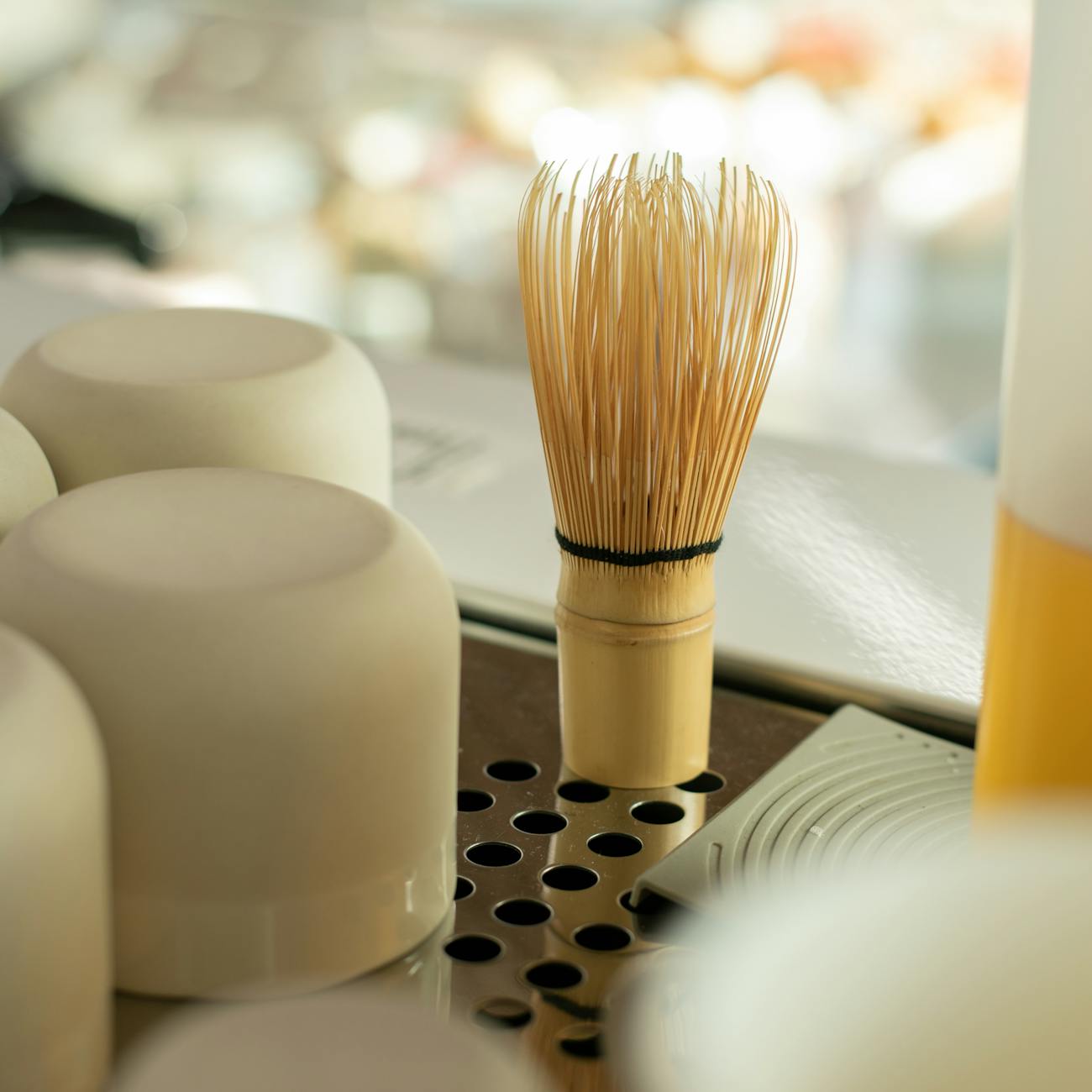
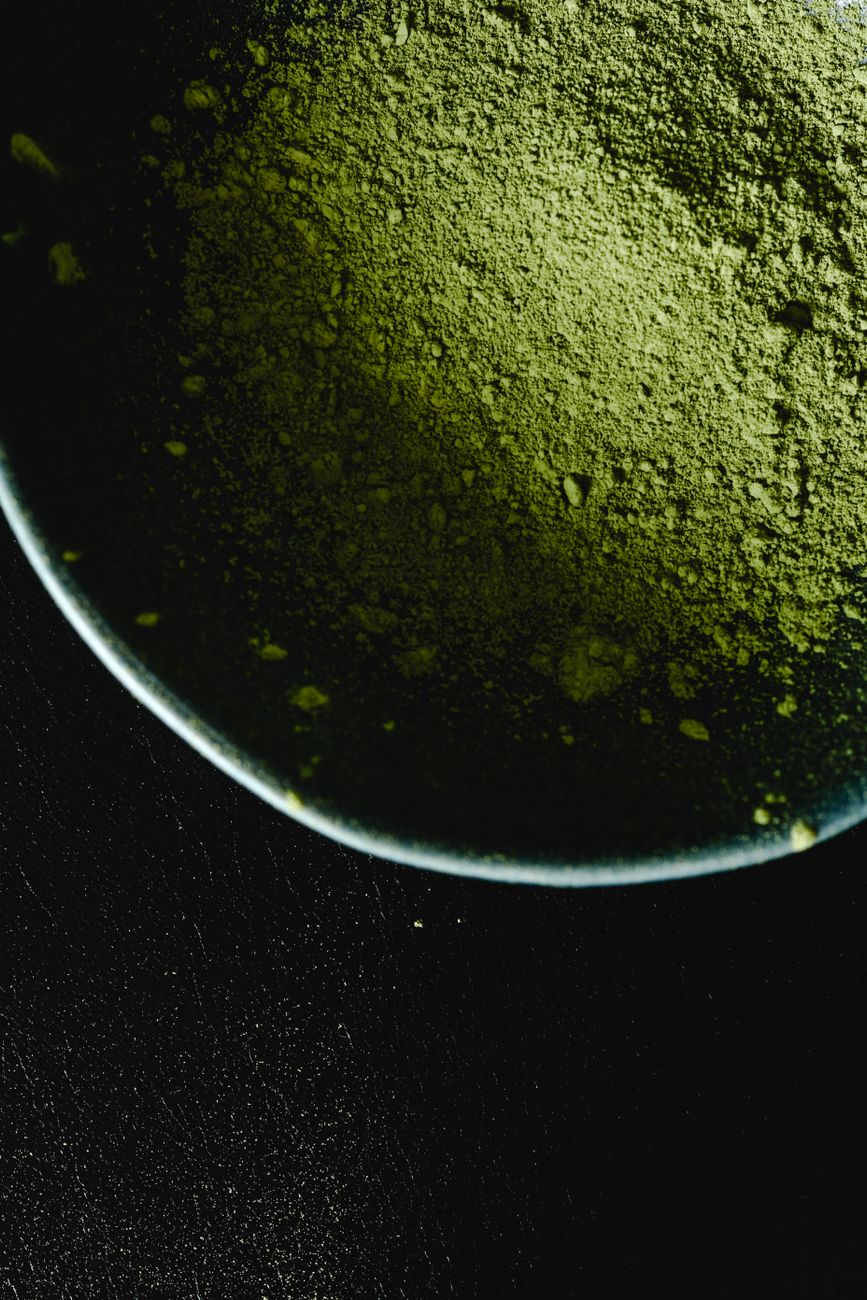
Traditional preparation amplifies the effect. When you whisk matcha with a chasen (bamboo whisk), you're not just mixing powder into water—you're suspending the entire leaf in liquid. You consume everything: fiber, chlorophyll, amino acids.
With steeped tea, L-theanine leaches into water and much remains in the discarded leaves. With matcha, nothing is wasted. The concentration is higher. The effect is fuller.
The ceremony slows you down, too. The deliberate whisking, the attention to temperature, the way you hold the bowl with both hands—it's a behavioral cue. Your nervous system begins to settle before the first sip.
Not all matcha is equal
L-theanine content varies wildly depending on how and where the tea is grown. Shade duration matters. Soil matters. Harvest timing matters. Ceremonial-grade matcha from Uji or Nishio, where generations of growers have perfected the balance, will contain far more L-theanine than a mass-produced culinary blend.
You can taste the difference, but you can also feel it. High L-theanine matcha has a natural sweetness, a creamy umami richness, and a noticeably smoother mental effect. Cheaper grades taste bitter and thin—and they lack the calm.
The long tail of attention
The monks were onto something structural. L-theanine doesn't wear off quickly. Its effects can last four to six hours, a slow arc of sustained focus rather than a spike and crash. It's why matcha became the drink of artists, poets, and anyone whose work required both precision and patience.
It still is.
The bowl cools in your hands. The foam settles. And somewhere in your chest, the day feels just a little more manageable.
FAQ
Chaware curates authentic Japanese crafts — straight from the makers in Japan to your table.
Explore the Chaware collection →