Why Tea Rooms Have Low Entrances: The Philosophy Behind Nijiriguchi
On this page
You have to get on your knees to enter a traditional tea room. Not out of reverence—though that comes later—but because the door won't let you in any other way.
The door that makes samurai bow
The nijiriguchi (crawling-in entrance) stands roughly two feet square. Maybe less. To pass through, you must remove your sword, lower your head, and fold yourself small. In 16th-century Japan, this wasn't poetic symbolism—it was revolutionary architecture.
Sen no Rikyū, the tea master who codified much of the tea ceremony as we know it, designed these entrances with surgical intent. Outside, you might be a warlord. Inside, you're just another person seeking tea. The door doesn't care about your rank.
The physics are simple: a samurai's katana, worn edge-up at the hip, cannot fit through a nijiriguchi while attached to its owner. You must leave it outside. In a culture where your sword was your soul, this was no small ask.
Equality through architecture
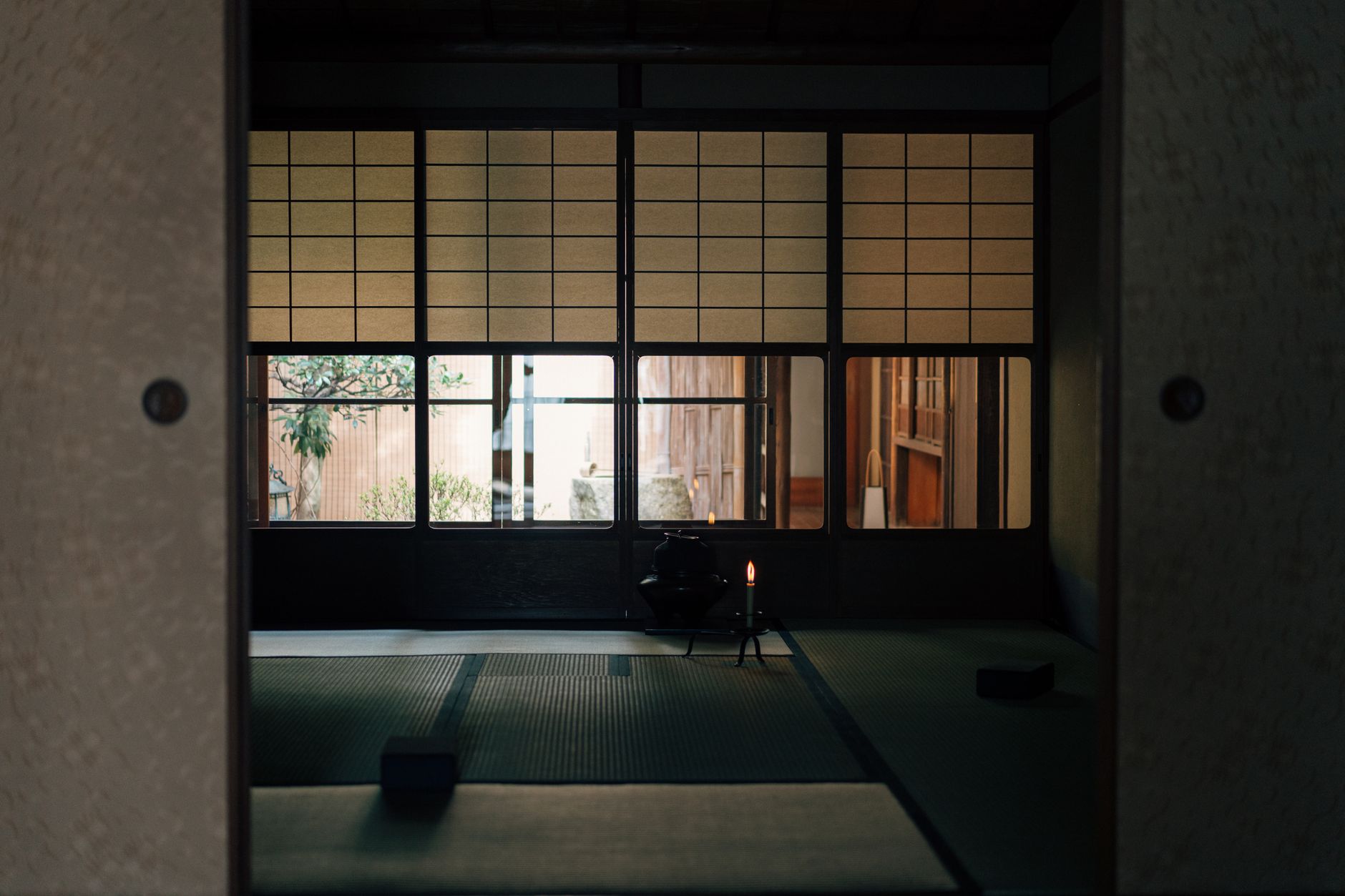
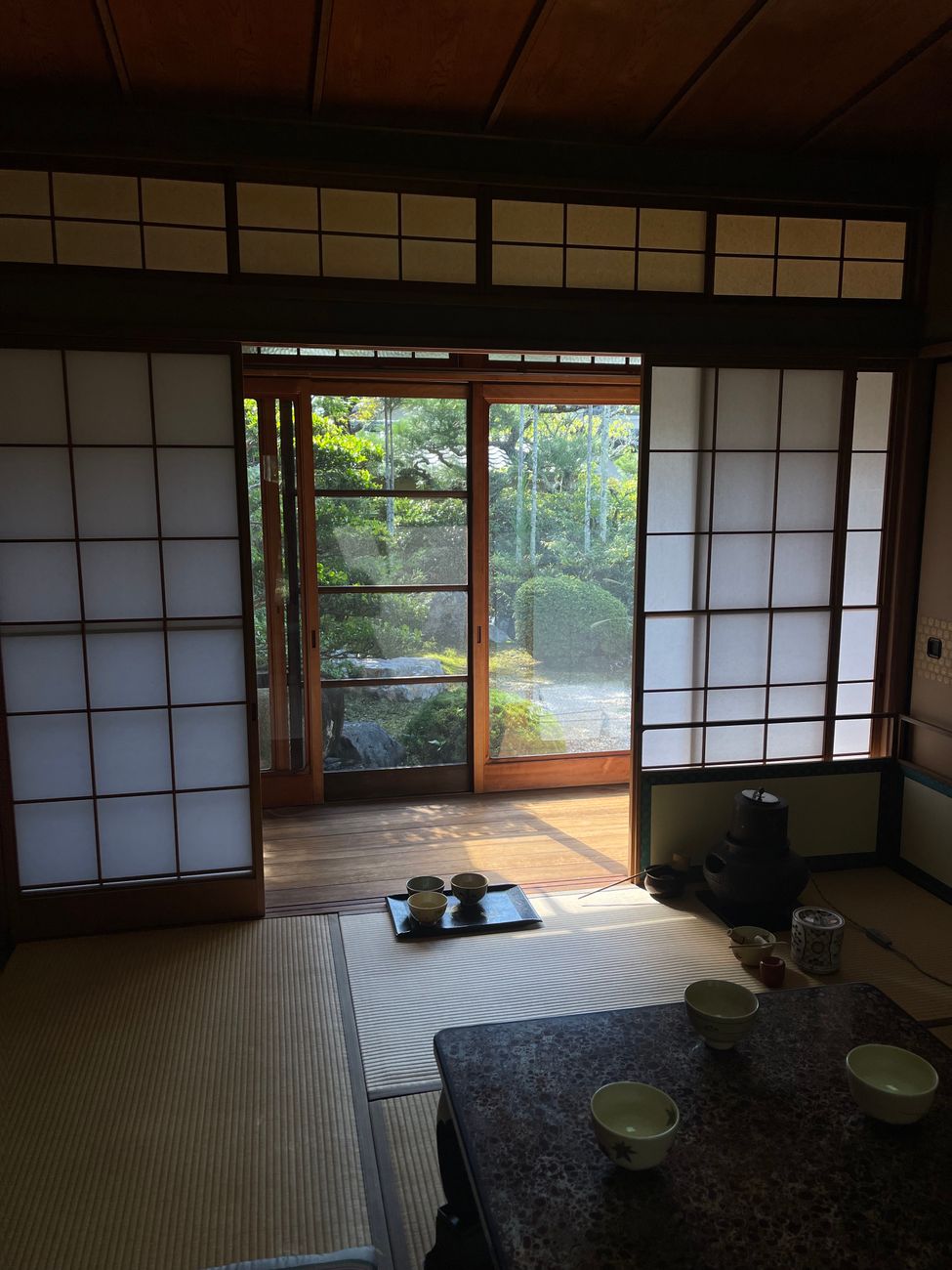
Step through a nijiriguchi and something shifts. The ceiling drops to barely six feet. The space holds perhaps four people, shoulder to shoulder on tatami. Light enters through paper screens in soft, even tones. Everything whispers smallness.
This is wabi-sabi made structural. The tea room—or chashitsu—rejects the grand halls where lords displayed power. Here, the host and guest sit at eye level. The alcove holds a single scroll, one seasonal flower. Nothing competes for attention.
In a space where no one can stand above another, hierarchy dissolves into the rhythm of preparing tea.
The nijiriguchi enforces what the tea ceremony teaches: humility, presence, the radical equality of shared attention. You can't storm into a tea room. You can't bring violence or pretense. The door won't allow it.
The geometry of leaving the world behind
But there's more than philosophy at work. The lowered entrance creates a threshold—a literal and psychological boundary between outside and inside. You don't walk into a tea room; you transition into it.
That moment of crawling, of physical awkwardness, breaks your stride. Your mind, preoccupied with whatever you carried from the street, must focus on your body: knees, hands, head position. By the time you're inside, you've already begun to arrive.
The roji (dewy path) leading to the tea room starts this process—moss underfoot, stone lanterns, the ritual hand-washing. The nijiriguchi completes it. Together, they form a sequence of intentional slowing.
Some tea rooms include a standard-height door for nobility or elderly guests. But the nijiriguchi remains the heart of the design. Even when not used, its presence shapes the room's meaning.
What a doorway remembers
Today, authentic tea rooms preserve these dimensions. Modern practitioners still bow to enter, still leave their metaphorical swords outside. The nijiriguchi hasn't changed because the human need for spaces that insist on our smallness—our equality—hasn't changed.
In a world of ever-larger doors, grand entrances, and spaces designed to impress, the tea room asks you to compress yourself, just for a moment. To remember that some of the most profound human experiences happen in rooms where no one can stand tall.
The door is low because the ceiling of the ego must be, too.
FAQ
Chaware curates authentic Japanese crafts — straight from the makers in Japan to your table.
Explore the Chaware collection →