Why the Shinkansen Bullet Train Is Never Late: Japan's Culture of Precision
On this page
You board the shinkansen at 14:33. The platform clock reads 14:32:58. At 14:33:00, exactly, the train glides forward.
Not 14:33:15. Not "around 2:30-ish." Exactly on time.
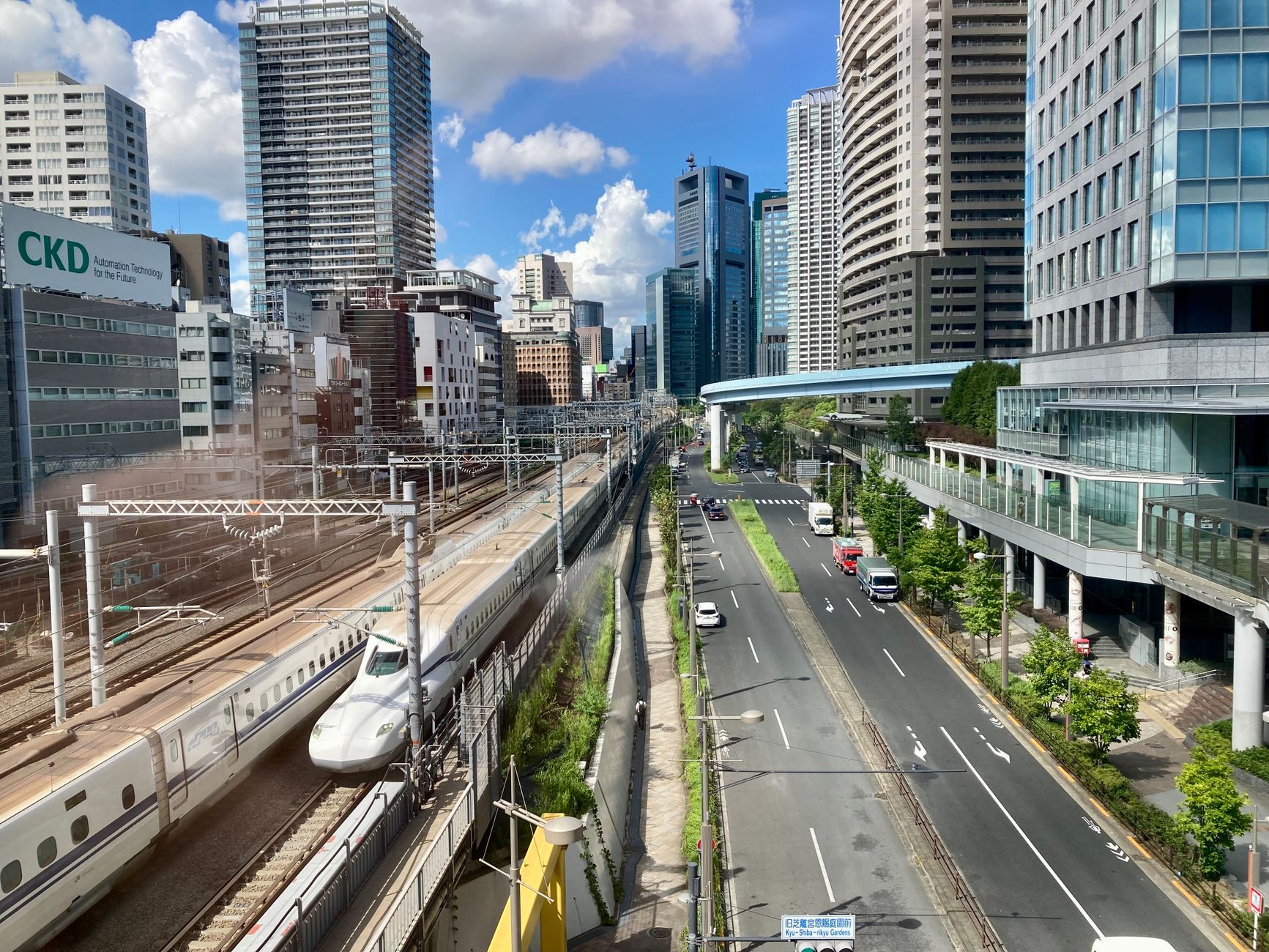
In 2023, the average delay across Japan's entire bullet train network was 0.2 minutes per train. That's twelve seconds. Most of those "delays" were caused by earthquakes and typhoons—acts of nature the trains can't control. Human error? Almost non-existent. This isn't luck. It's a window into something deeper about how an entire culture approaches the concept of time, responsibility, and respect.
The seven-minute turnaround that shouldn't be possible
Between Tokyo and Osaka, a shinkansen pulls into a station, disgorges hundreds of passengers, gets cleaned top to bottom, reboards another full load, and departs—all in seven minutes.
Walk the platform during this controlled chaos and you'll see it: cleaning crews in crisp uniforms bowing before entering each car. They work in synchronized pairs, seat backs flipped, trash removed, floors swept, armrests wiped. No wasted motion. No supervisors barking orders. They finish with twenty seconds to spare, line up on the platform, and bow again as the train pulls away.
The conductors and engineers do the same. Before taking the controls, they point at instruments and verbally confirm readings—a practice called shisa kanko, or "pointing and calling." It looks theatrical. It reduces human error by up to 85%.
When fifteen seconds becomes a national apology
In 2017, a shinkansen between Tokyo and Osaka departed twenty seconds early. Twenty seconds.
The railway company issued a formal public apology. Not because passengers complained—most didn't even notice. They apologized because the contract with riders is sacred: we say 14:33, we mean 14:33. The breach wasn't the time lost. It was the trust.
The train's precision isn't about efficiency—it's about a promise kept, every single time.
This relationship between rider and railway mirrors something older in Japanese culture: the idea that your word, your timing, your presence is a form of respect. Being late doesn't just inconvenience—it disrupts the delicate social fabric where everyone depends on everyone else showing up exactly when they said they would.
The invisible orchestra
You don't see most of what makes the shinkansen run on time because it happens in the margins, the overnight hours, the spaces between.
Every night after the last train, track inspectors walk the lines. They check rail temperature, ballast stability, the torque on every bolt. Sensors embedded in the tracks monitor millimeter-level shifts. The Doctor Yellow—a bright yellow diagnostic train—runs the routes disguised as a passenger service, scanning for imperfections invisible to the human eye.
Weather algorithms predict wind speeds months in advance. Earthquake sensors can halt trains within two seconds of detecting seismic waves. Backup plans have backup plans. And every staff member, from the person sweeping platforms to the engineer in the cab, understands they're not just doing a job—they're upholding a system where nine million people a year trust their lives and schedules to collective precision.
The shinkansen doesn't run on technology alone. It runs on a culture that believes being on time isn't about clocks—it's about dignity.
What a train teaches
Ride the shinkansen and you're not just traveling between cities. You're inside a philosophy made steel and motion: that excellence is a habit, that respect is measured in seconds, that a society works when every small role is performed with quiet, absolute care.
The train will leave at exactly 14:33. And somehow, in a world of delays and excuses and "close enough," that precision feels like grace.
FAQ
Chaware curates authentic Japanese crafts — straight from the makers in Japan to your table.
Explore the Chaware collection →