What Torii Gate Shrine Paths Mean and Why You Walk to the Side
On this page
You pause before the vermillion gate, and someone whispers: walk to the side. But why?
Because the center belongs to the gods.
The threshold between two worlds
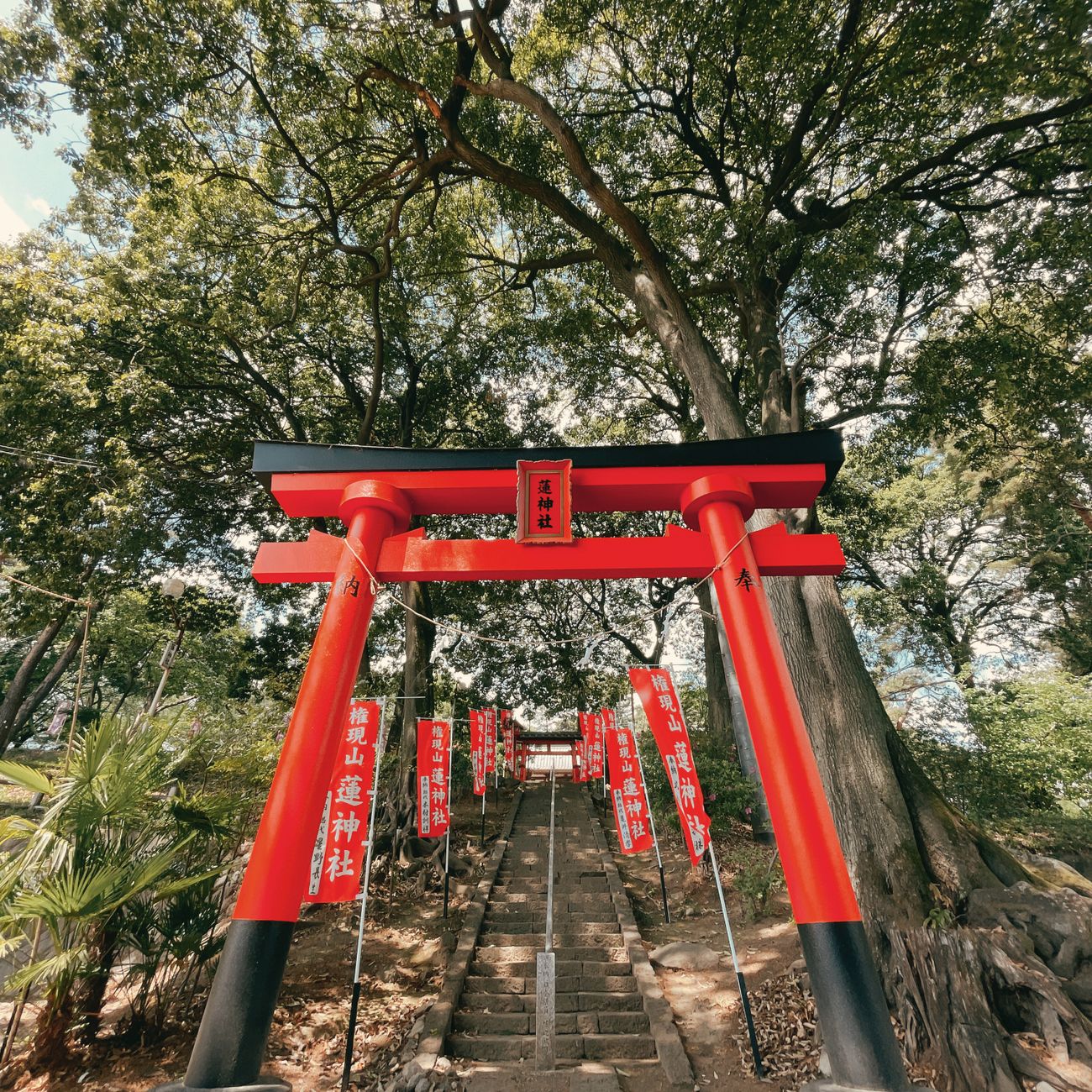
A torii isn't decoration. It's a boundary marker—the point where the everyday world ends and sacred space begins. The moment you pass beneath that bright red frame, you've crossed into the realm of the kami, the spirits that inhabit Japan's Shinto shrines.
The gate itself is simple: two upright pillars, two crossbars. Yet that spare geometry carries profound meaning. It announces that what lies beyond—the forest path, the stone steps, the shrine itself—is different. Charged. Holy.
And the gods? They enter through the center.
Why you keep to the edges
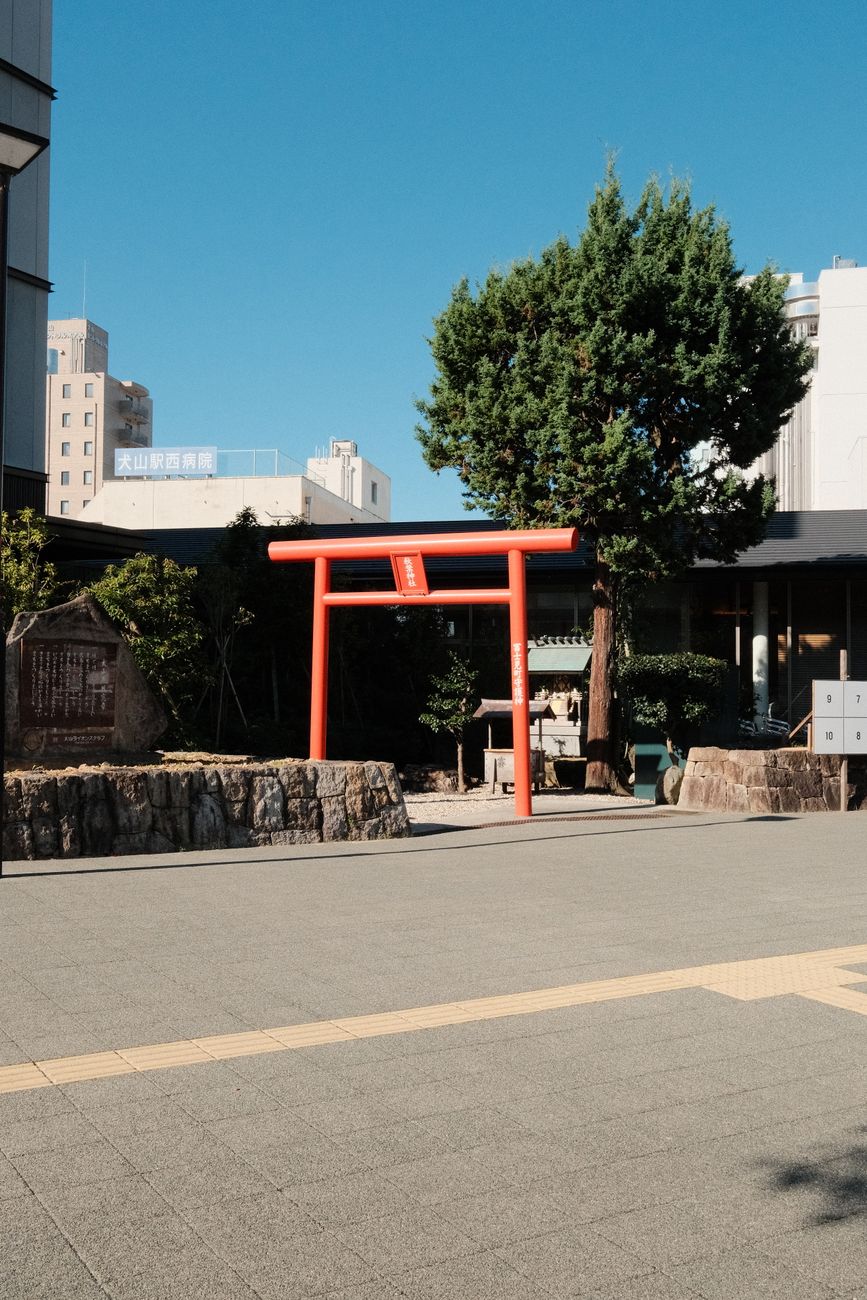
That central path beneath the torii is called the sando, the "approach of the gods." It's reserved for divine passage. Humans walk to the left or right as a gesture of respect and humility.
This isn't superstition. It's spatial etiquette, a physical expression of reverence that's been practiced for centuries. You're a guest here, and guests don't barge down the middle of the hallway.
The center path is the gods' highway—you're simply being a considerate visitor.
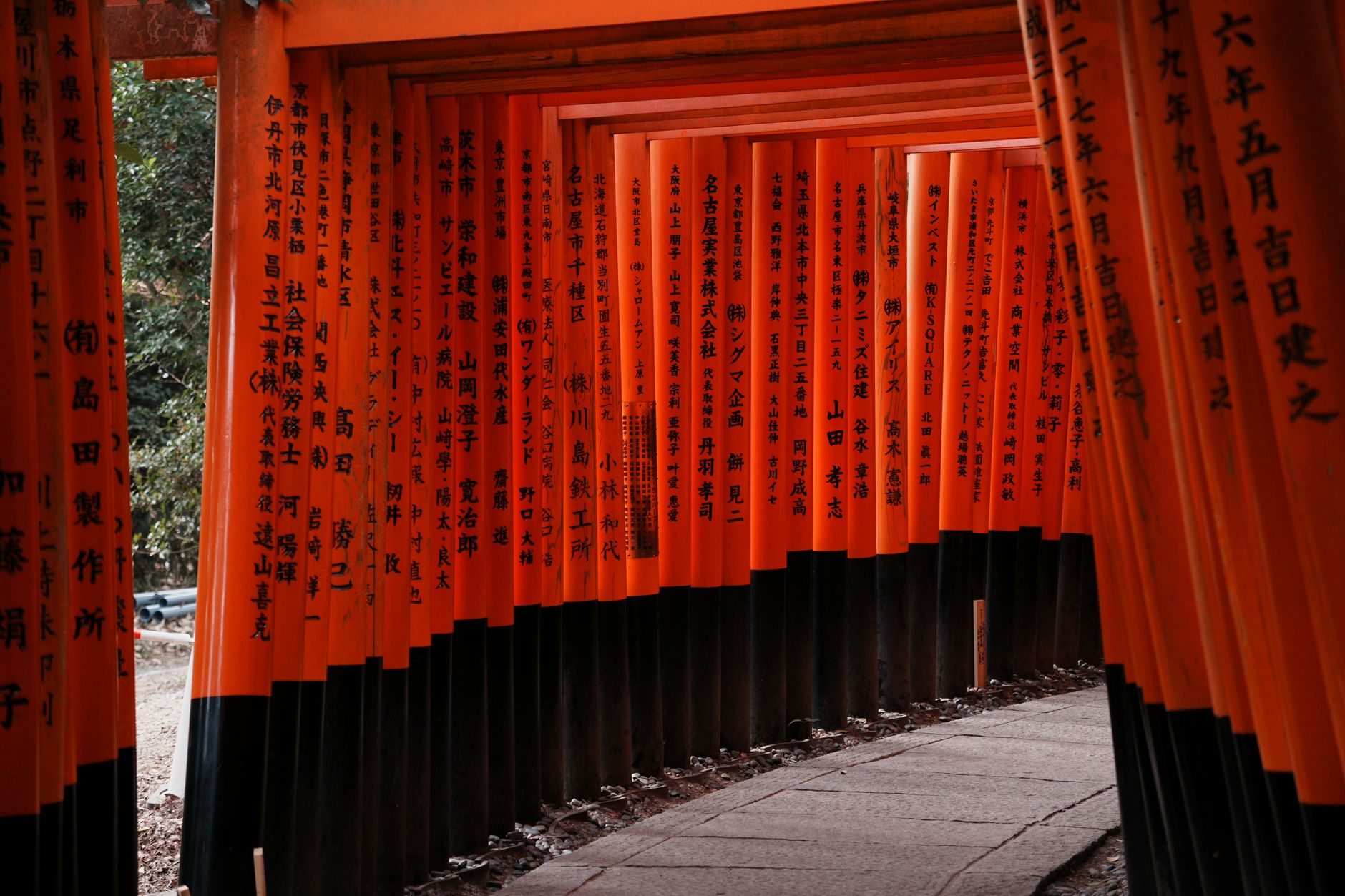
Some shrines mark this more clearly than others. At Fushimi Inari in Kyoto, where thousands of vermillion torii form tunnels up the mountainside, the sheer volume of visitors makes strict adherence impossible. But the principle remains. When you can, step aside. When you bow at the entrance, do it from the side. Small gestures that acknowledge you're entering someone else's home.
What the color tells you
That distinctive red-orange hue—somewhere between cinnabar and persimmon—isn't arbitrary. The color, often made with iron oxide, traditionally wards off evil spirits and decay. It's protective. Purifying.
But it's also wildly visible. Against the deep green of Japanese forests or the pale gravel of shrine grounds, a torii announces itself. You can't miss it. That's the point. It's a beacon marking sacred geography, visible from far off, pulling you toward the threshold.
Not every torii is red. Some are unpainted wood, weathered gray by rain and time. Others are stone. A few are even white. But when you see that vermillion, your body knows: something shifts here.

How to walk the path with intention
Arriving at a shrine isn't a checklist. It's a sequence of small, mindful acts:
- Pause and bow slightly before passing under the torii
- Walk to the side of the path, not the center
- If there's a purification fountain (temizuya), rinse your hands and mouth before approaching the main hall
These aren't rules enforced by shrine attendants. They're invitations. Ways to slow down, pay attention, and acknowledge that you've stepped out of ordinary time.
The path between the torii and the shrine is often longer than you'd expect—winding through trees, over bridges, past stone lanterns. That distance is deliberate. It gives you time to transition. To leave the noise of the street behind. To arrive, truly, at the threshold of the sacred.
##
The next time you see a torii, don't rush through. Step to the side. Feel the shift. You're walking an old, old path—one the gods still travel.
FAQ
Chaware curates authentic Japanese crafts — straight from the makers in Japan to your table.
Explore the Chaware collection →