The Art Behind Japan's Restaurant Food Display Windows: Why Plastic Food Became a Cultural Icon
On this page
You stop in front of a restaurant window in Tokyo and find yourself staring at a perfect bowl of ramen—glistening broth, tender pork belly, a soft-boiled egg split just so. It looks real enough to eat. Because once, it was.
The art born from necessity
In the 1920s, as Western-style restaurants began appearing in Japan's cities, they faced a peculiar problem. How do you show diners what "tonkatsu" or "omuraisu" looks like when most have never seen it before? Menus with text weren't enough. Language barriers made things worse for the growing number of international visitors.
Enter sampuru—from the English word "sample"—the craft of creating hyper-realistic food replicas. What started as a practical solution became an art form uniquely refined in Japan, where the gap between function and beauty has always been narrow.
Wax, then something better
The earliest food models were made from wax, hand-painted and shaped by artisans who studied real dishes with the intensity of portrait painters. But wax had problems. It melted in summer heat. It cracked. It looked convincing only from a distance.
In the 1970s, craftspeople switched to polyvinyl chloride and silicone resins. Suddenly, sampuru could capture the translucency of gyoza skin, the char marks on grilled fish, even the way sauce pools around karaage. The shift wasn't just technical—it was artistic. These weren't approximations anymore. They were celebrations of the dish itself.
In Japan, even a copy demands respect for the original.
The window as promise
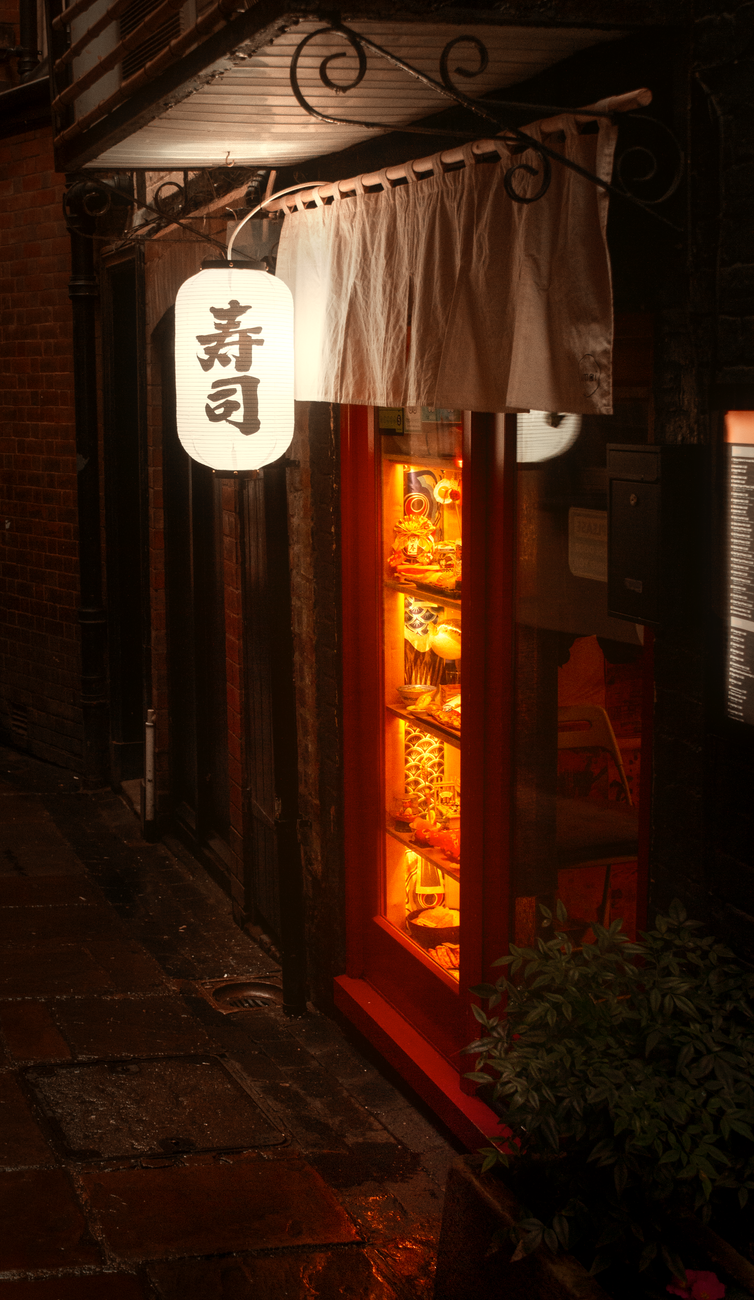
Walk through Kappabashi Street in Tokyo, the district where sampuru studios cluster, and you'll see why these displays matter. A restaurant's window becomes a binding contract. What you see is what you'll receive—not an idealized photograph, but an honest representation of portion, color, and composition.
This transparency builds trust. For Japanese diners, many of whom research restaurants carefully before visiting, the window display offers proof. For tourists navigating unfamiliar menus, it's a lifeline. You can point. You can compare. You can decide without anxiety.
There's also something deeply Japanese about this approach: the belief that care in presentation reflects care in preparation. A restaurant willing to invest in detailed sampuru signals that it takes its food seriously.
Craft, not kitsch
Making sampuru is painstaking work. Artisans pour liquid plastic into molds, layer paint with airbrushes, add sesame seeds one by one with tweezers. Lettuce leaves are curled by hand. The foam on beer is applied in stages to capture both the dense head and the delicate bubbles.
A single bowl of ramen can take hours to complete. Some pieces cost hundreds of dollars.
These aren't tchotchkes. They're collaborations between the sampuru artisan and the chef, often created from the actual dish, measured and matched until both parties agree it's right. Studios keep samples for decades, updating them only when recipes change.
The best sampuru carries a kind of magic—it makes you hungry for food that isn't there, triggers a memory of a taste you haven't experienced yet.
A culture made visible
Today, as digital menus and food photography proliferate worldwide, Japan's restaurant windows still glow with their plastic promises. The tradition persists not because Japan resists change, but because sampuru does something a photo cannot: it exists in three dimensions, in the same physical space as your hunger and your hesitation.
It turns choosing a meal into a moment of certainty.
FAQ
Chaware curates authentic Japanese crafts — straight from the makers in Japan to your table.
Explore the Chaware collection →