The Japanese Restaurant Table Setting Ritual: Why You Always Get a Hot Towel Before Your Meal

On this page
You sit down at a Japanese restaurant, and before you even glance at the menu, a small rolled towel appears—steaming, fragrant, impossibly white. It's not an appetizer. It's a ritual.
The towel that says welcome
The oshibori (literally "wet compress") is one of those tiny gestures that reveals an entire philosophy. Hot or cold depending on the season, it arrives on a small tray or in a bamboo basket, rolled tight as a scroll. You unfold it, press it to your palms, maybe your face if no one's watching, and something shifts. The day's grime lifts. Your shoulders drop. You're present now.
This isn't about hygiene alone—though Japan has always taken cleanliness seriously. It's about transition. The oshibori marks the threshold between the outside world and the meal to come.
Edo-period practicality meets modern grace
The practice traces back centuries, likely to teahouses along Japan's old highways where travelers arrived dusty and road-weary. Innkeepers offered water and cloth—a small kindness that became custom. By the Edo period, this gesture had woven itself into hospitality culture, particularly in establishments serving food.
What began as practicality evolved into ceremony. The temperature matters: hot in winter to warm cold hands, cool in summer to refresh. The scent sometimes carries a whisper of yuzu or hinoki cypress. Even the way it's folded—lengthwise, ends tucked just so—follows an unspoken standard.
The oshibori doesn't just clean your hands. It clears the space between arriving and truly being there.
What the towel teaches about Japanese dining
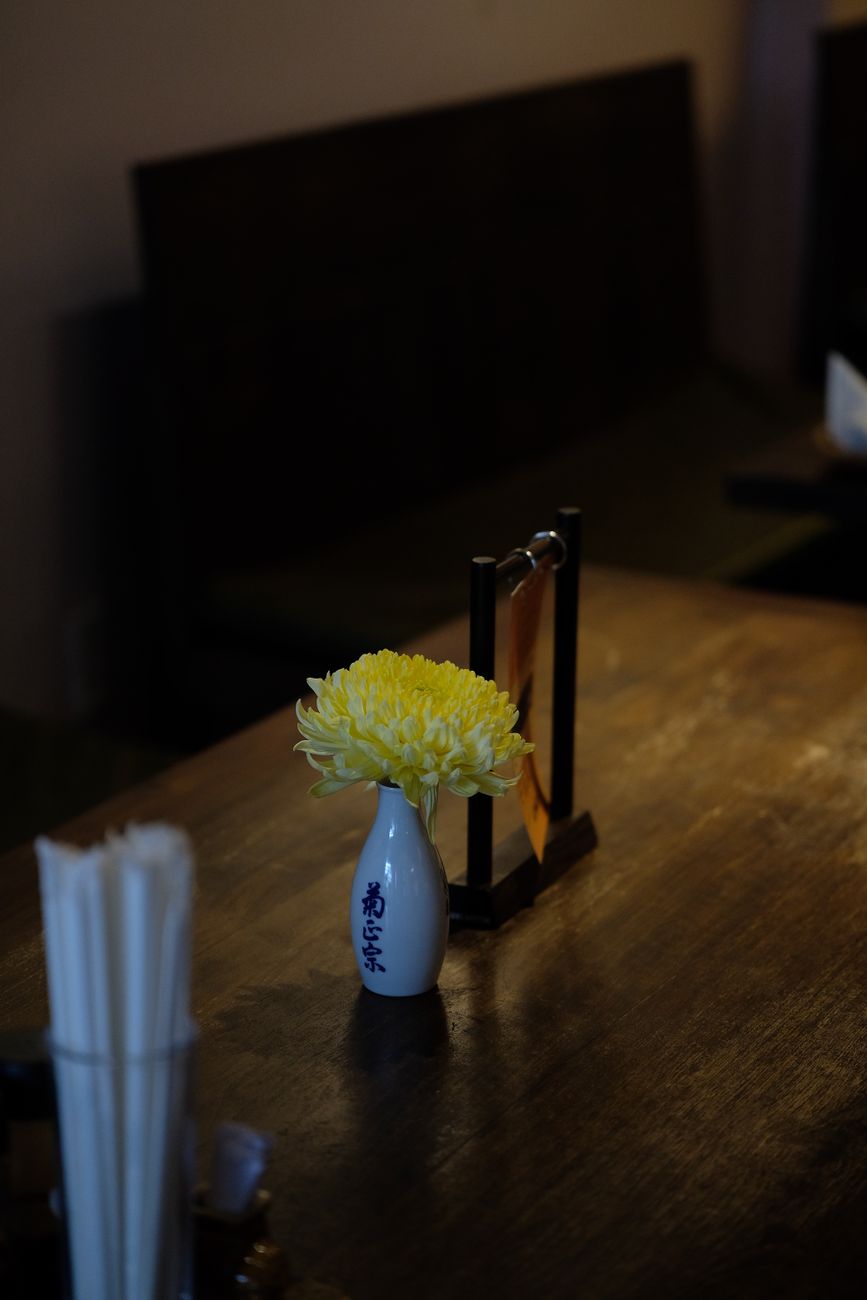
In traditional Japanese dining, the table itself is a landscape of intention. Every element has purpose and position. The oshibori is the opening note—the signal that what follows deserves your full attention.
Notice how it arrives before anything else. Not alongside your water. Not with your appetizer. First. It's a reset button, a small insistence that you pause, attend to yourself, and prepare to receive the meal with respect.
This mirrors a broader truth in Japanese culture: the importance of ma, the meaningful space between things. The oshibori creates that space—a breath between the rush of arrival and the first bite.
The unwritten etiquette
Use it for your hands. That's the primary purpose, though dabbing your face is quietly acceptable in casual settings—just don't scrub your neck or wipe the table. When finished, fold it loosely (not into the original tight roll; that's the server's job for the next guest) and set it aside on the tray or table edge.
Cloth or paper? High-end establishments almost always use cloth—thick, textured, heavy with heat. Casual spots might offer disposable versions, which are perfectly fine but lack that particular weight in your hands, that sense of substance.
The oshibori will sometimes reappear mid-meal or at the end, a quiet bookend to the experience.
More than a towel
What makes the oshibori remarkable isn't the object itself—it's the assumption behind it. The assumption that a meal is worth preparing for. That your comfort matters before profit does. That small rituals, practiced with care, accumulate into something larger: a culture that honors presence, transition, and the space we share when we eat together.
Next time that small white towel appears, let it do its work. It's teaching you how to arrive.
FAQ
Chaware curates authentic Japanese crafts — straight from the makers in Japan to your table.
Explore the Chaware collection →