What Are Those Small Jizo Stone Statues Covered in Moss You See Along Japanese Roads?
On this page
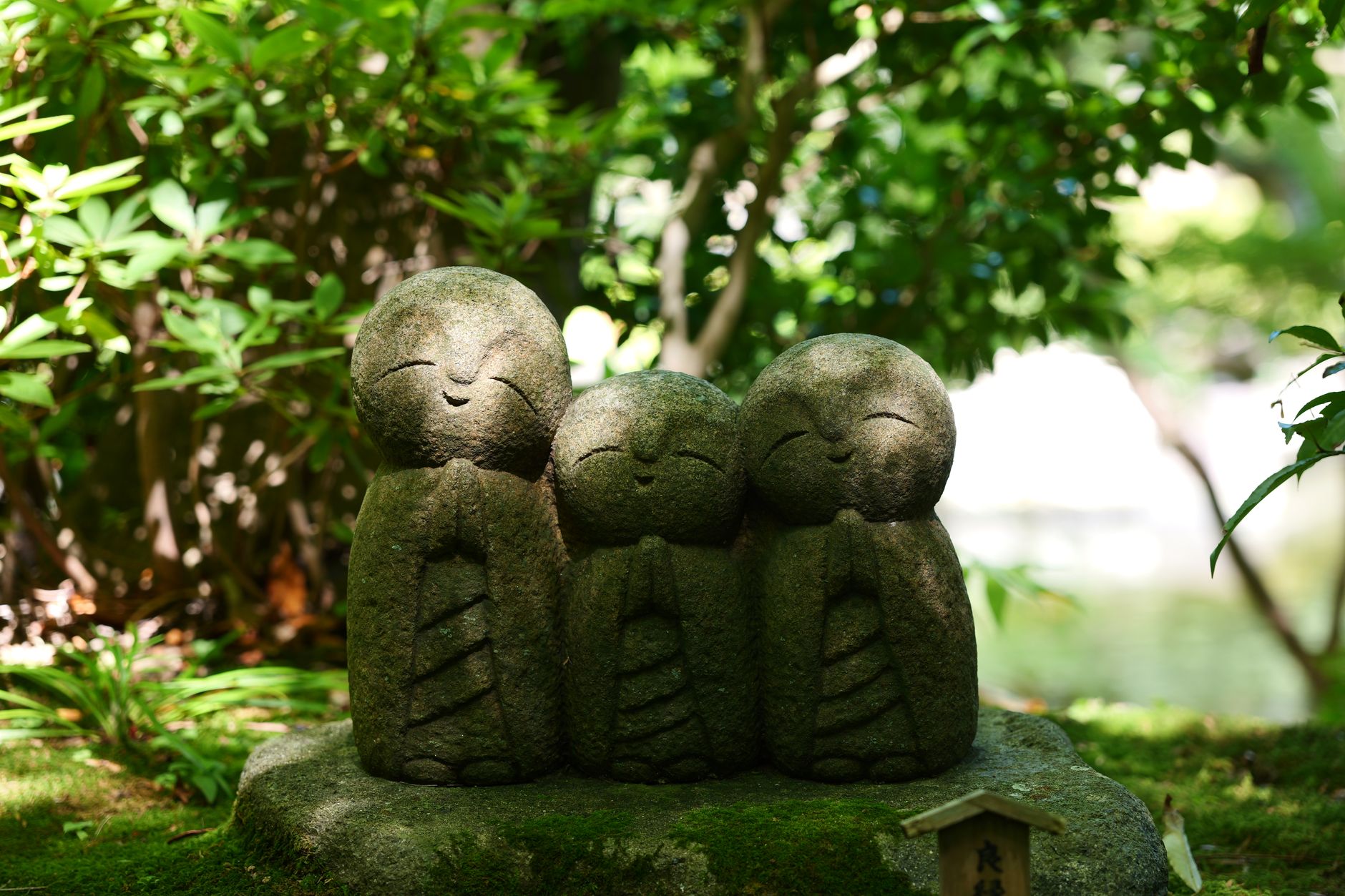
You've seen them. Small stone figures by the roadside, sometimes clustered in groups, often wearing red bibs and knitted caps, their features softened by moss and rain. They're easy to walk past without a second glance—but once you understand what they are, you'll never look at them the same way.
The guardian of children who never grew up
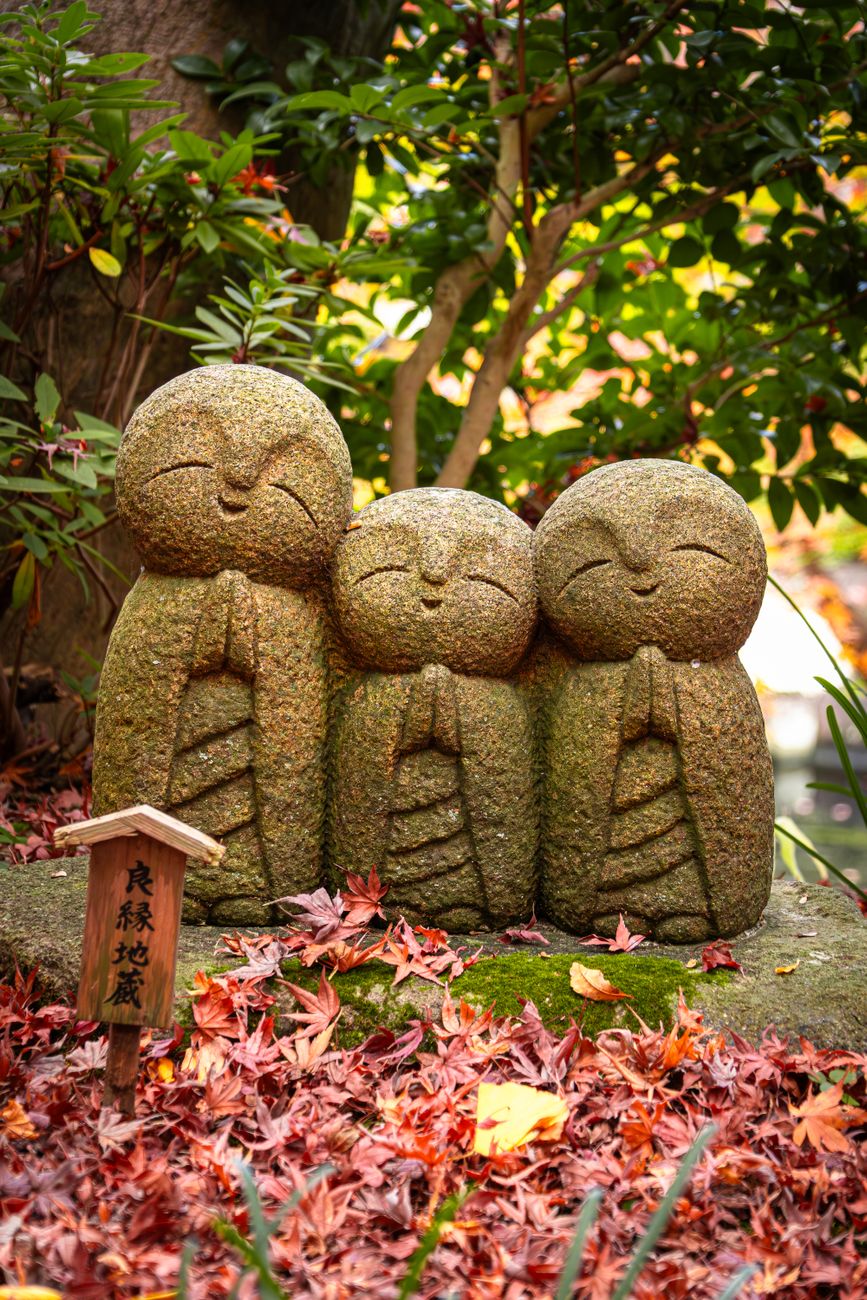
These are jizō, stone statues of a Buddhist bodhisattva who watches over travelers, children, and—most poignantly—the souls of children who died before their parents. In Japanese Buddhist tradition, children who die young cannot cross the Sanzu River to reach the afterlife. They're stuck on the riverbank, building small towers of stones that demons knock down each night.
Jizō intervenes. He hides the children in his sleeves and protects them from these torments, guiding them toward peace.
That's why grieving parents dress the statues. The red bibs, the hand-knitted caps, the small toys left at their feet—these aren't decorations. They're offerings from mothers and fathers who want to keep their lost children warm.
Why you find them everywhere
Walk through any Japanese neighborhood and you'll spot jizō in the most unexpected places. Tucked beside vending machines. Standing at crossroads. Lined up in temple courtyards by the dozens, each one slightly different in expression and wear.
Jizō appears wherever protection is needed—at dangerous intersections, along mountain paths, in places where children once played.
Their placement isn't random. Historically, communities erected jizō statues at village boundaries, dangerous curves in the road, or spots where accidents occurred. They mark thresholds between the safe and the uncertain. Some protect specific neighborhoods; others watch over particular professions. You'll find jizō dedicated to firefighters, to expectant mothers, even to aborted fetuses—a practice called mizuko kuyō that emerged more recently but speaks to the same impulse to acknowledge loss.
The moss that blankets many older statues isn't neglect. It's time made visible, proof that these guardians have stood their watch through decades of weather and seasons.
The ones who keep watching
Not all jizō wear bibs or hold staffs. Some cradle infants. Others stand with their hands in prayer position or hold a wish-fulfilling jewel. Regional variations abound—six jizō together represent the six realms of existence in Buddhist cosmology, while single figures might be centuries old or erected just last year.
What unites them is presence. They don't demand attention. They simply remain, patient and constant, in a culture that values continuity and remembrance.
In rural areas, you might find wooden prayer sticks stacked nearby, or fresh flowers replaced weekly by someone you'll never see. In cities, they're often enclosed in small wooden shelters barely bigger than a phone booth, protected from traffic and construction but still accessible. Still there.
What to do when you encounter one
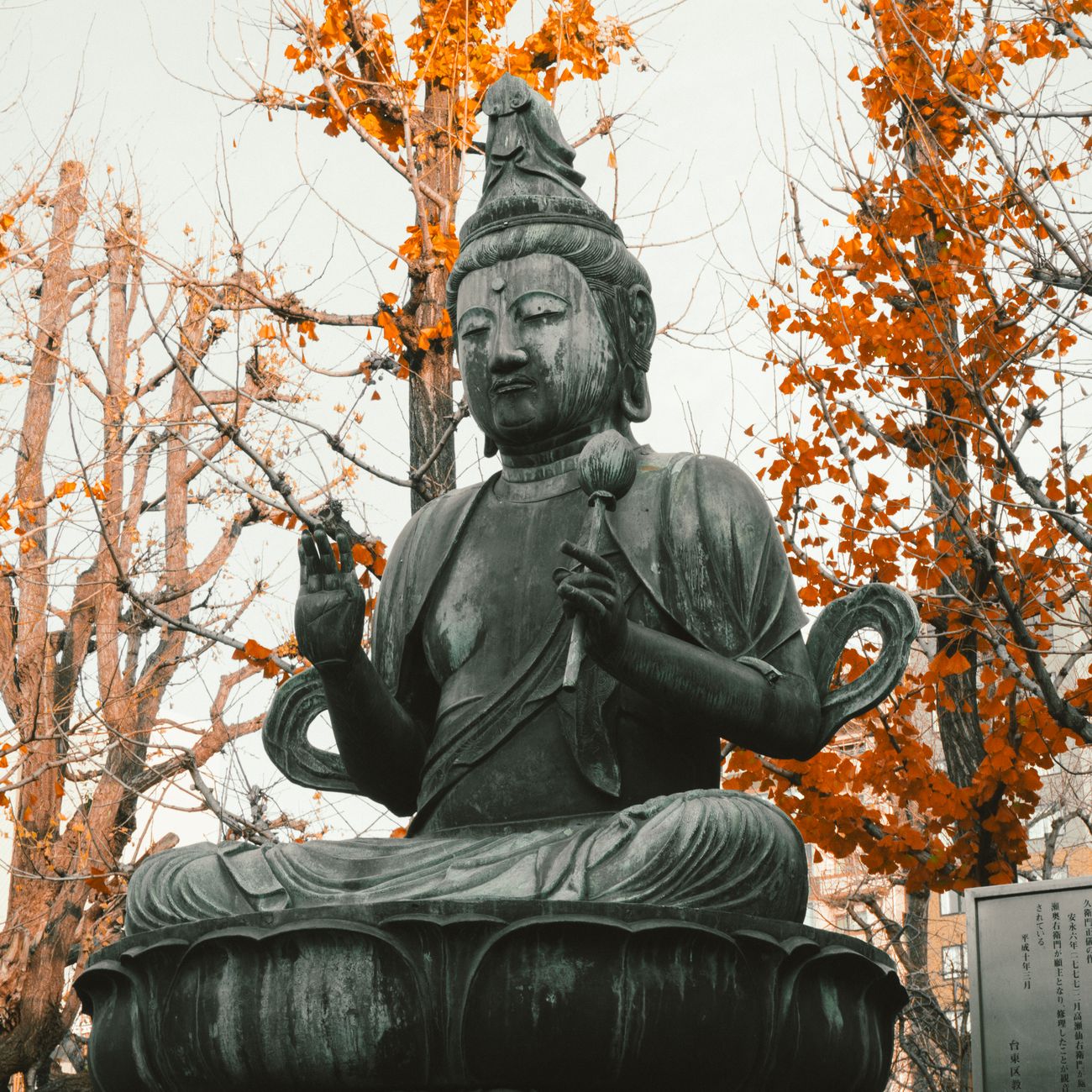
You don't need to be Buddhist to appreciate jizō, but a moment of quiet acknowledgment feels appropriate. Some people bow slightly. Others simply pause.
If you're traveling with children, this is worth explaining—not as something spooky, but as a reminder that cultures have different ways of holding grief and hope in the same space. That small stone figure has probably comforted more people than you'll ever know.
The moss will keep growing. The bibs will fade and be replaced. And jizō will keep standing there, at the edge of the road, watching over travelers who pass without knowing they've been seen.
FAQ
Chaware curates authentic Japanese crafts — straight from the makers in Japan to your table.
Explore the Chaware collection →