Why Kyoto's Old Streets Still Feel Like Traditional Japan
On this page
You step off the train in Kyoto, and the air feels different. Slower. Like the city remembers something the rest of Japan has moved on from.
The capital that refused to forget
For over a thousand years, Kyoto was Japan's imperial heart. While Tokyo races forward, Kyoto preserved what others paved over. The city didn't freeze in time—it made a quiet choice to carry the past into the present.
Walk down Ninenzaka or Sannenzaka, the sloped stone paths leading to Kiyomizu-dera, and you'll see it: two-story wooden machiya townhouses with latticed windows, their dark timber facades weathered by centuries of rain. These aren't museum pieces. People live here. They run tea shops, sell ceramics, sleep upstairs above the street where their great-grandparents once did the same.
The city has zoning laws that most Japanese cities abandoned decades ago. Building heights are restricted. Neon signs face limits. Even a Starbucks here tucks itself into a traditional building, its logo muted to fit the streetscape.
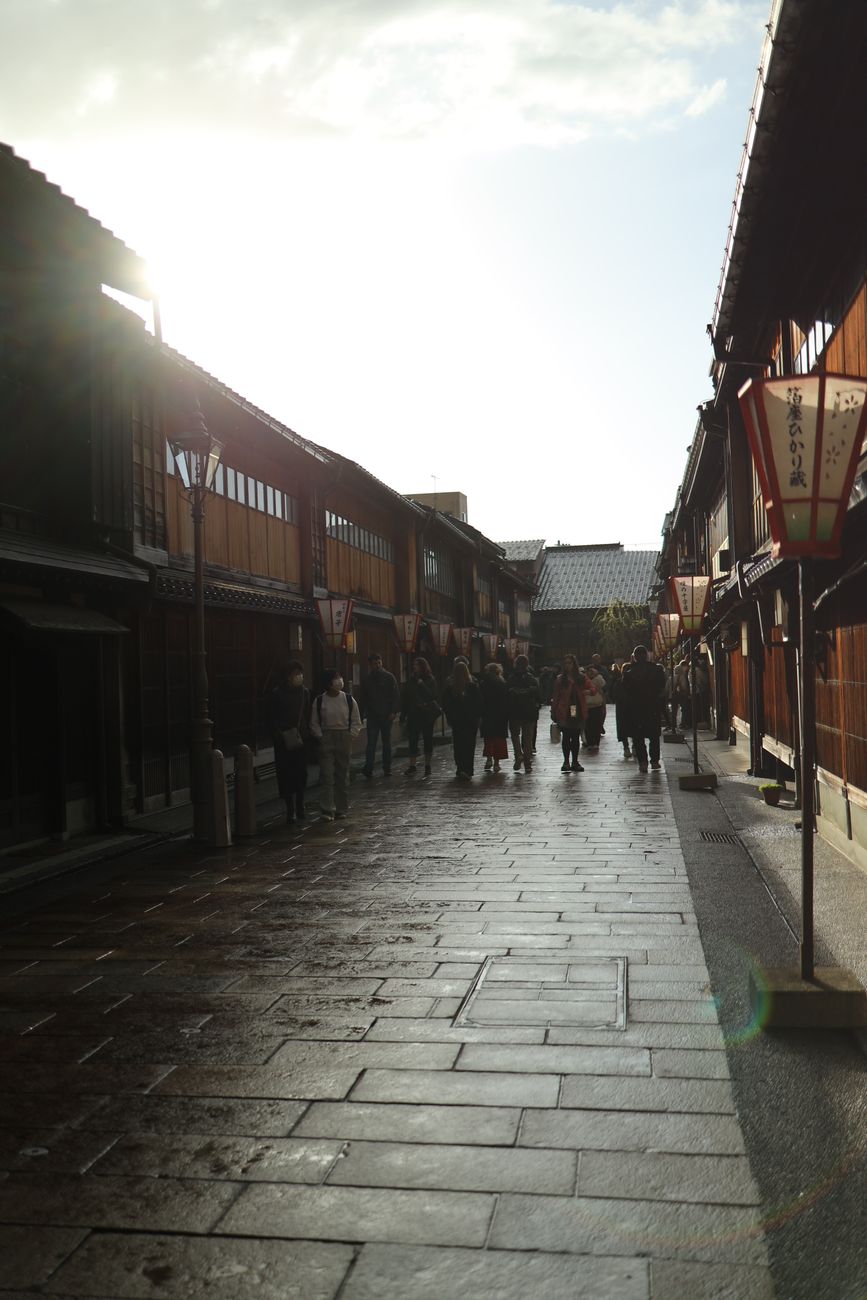
The architecture of restraint
Machiya houses weren't built to impress—they were built narrow and deep because Kyoto taxed properties by street frontage. So merchants stretched their homes backward like long, quiet corridors. You enter through a slatted wooden door into a doma, an earthen-floor entryway, then move through rooms separated by sliding shoji screens that filter sunlight into soft, paper-warm glows.
In Kyoto, even the light feels older.
These houses breathe. Wooden lattices called koshi let air pass through while shielding interiors from view. In summer, merchants would hang sudare bamboo blinds. In winter, they'd layer the rooms with quilted fabrics. The architecture responded to seasons, not conquered them.
Streets that bow to the temple bell
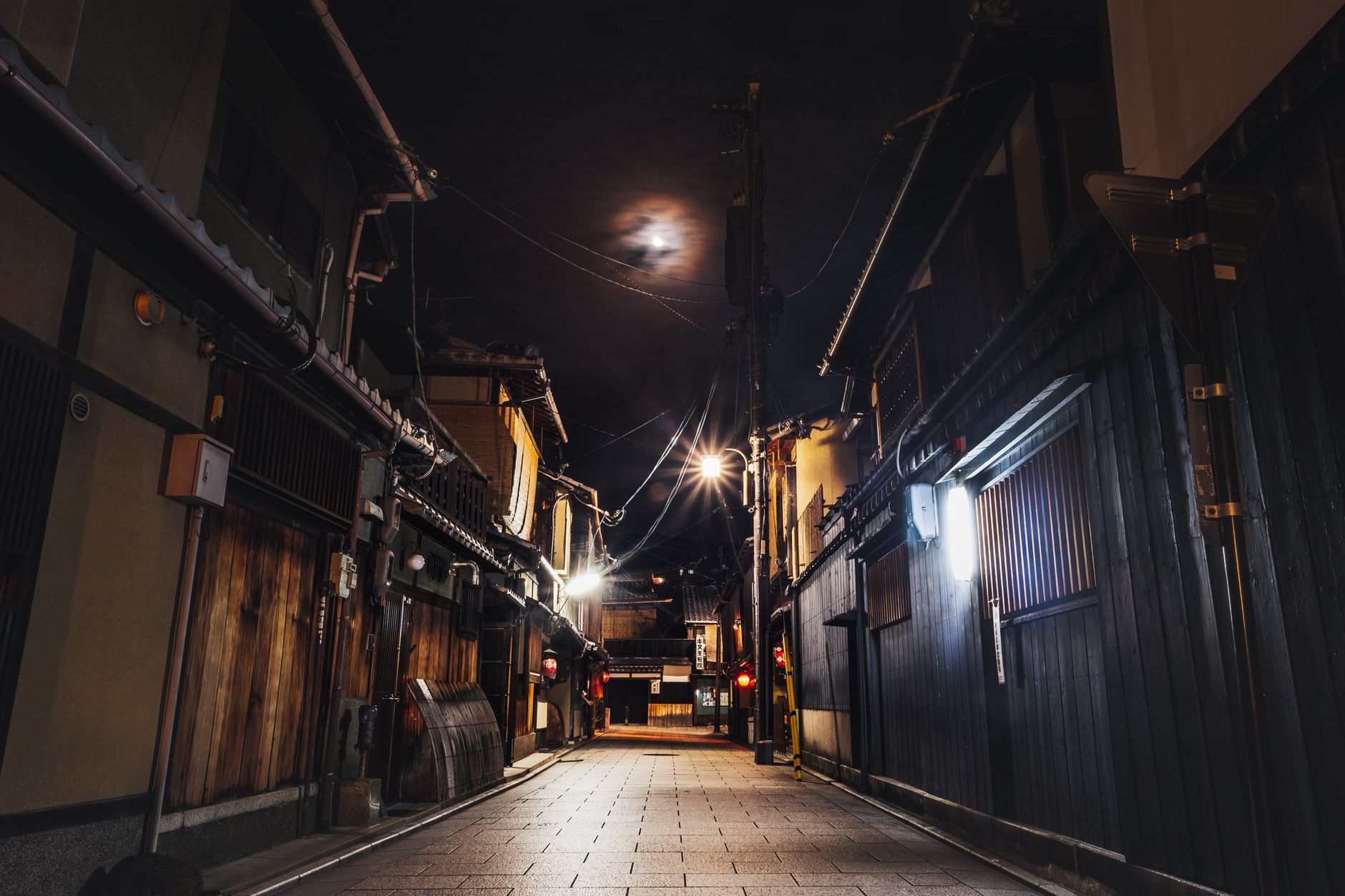
Kyoto's grid layout came from Tang Dynasty China over 1,200 years ago, but the streets themselves still bend to accommodate temples and shrines. Hanamikoji in Gion curves just slightly, lined with ochre-colored walls and lanterns that flicker on at dusk. You might see a maiko—an apprentice geisha—moving quickly between appointments, her wooden geta sandals clacking on stone.
The city's rhythm follows old patterns. Shopkeepers sweep their storefronts at dawn. Temples ring bells at twilight. The Kamo River flows through it all, unchanged, while locals sit on its stepped banks in summer, feet dangling, watching herons fish in the shallows.
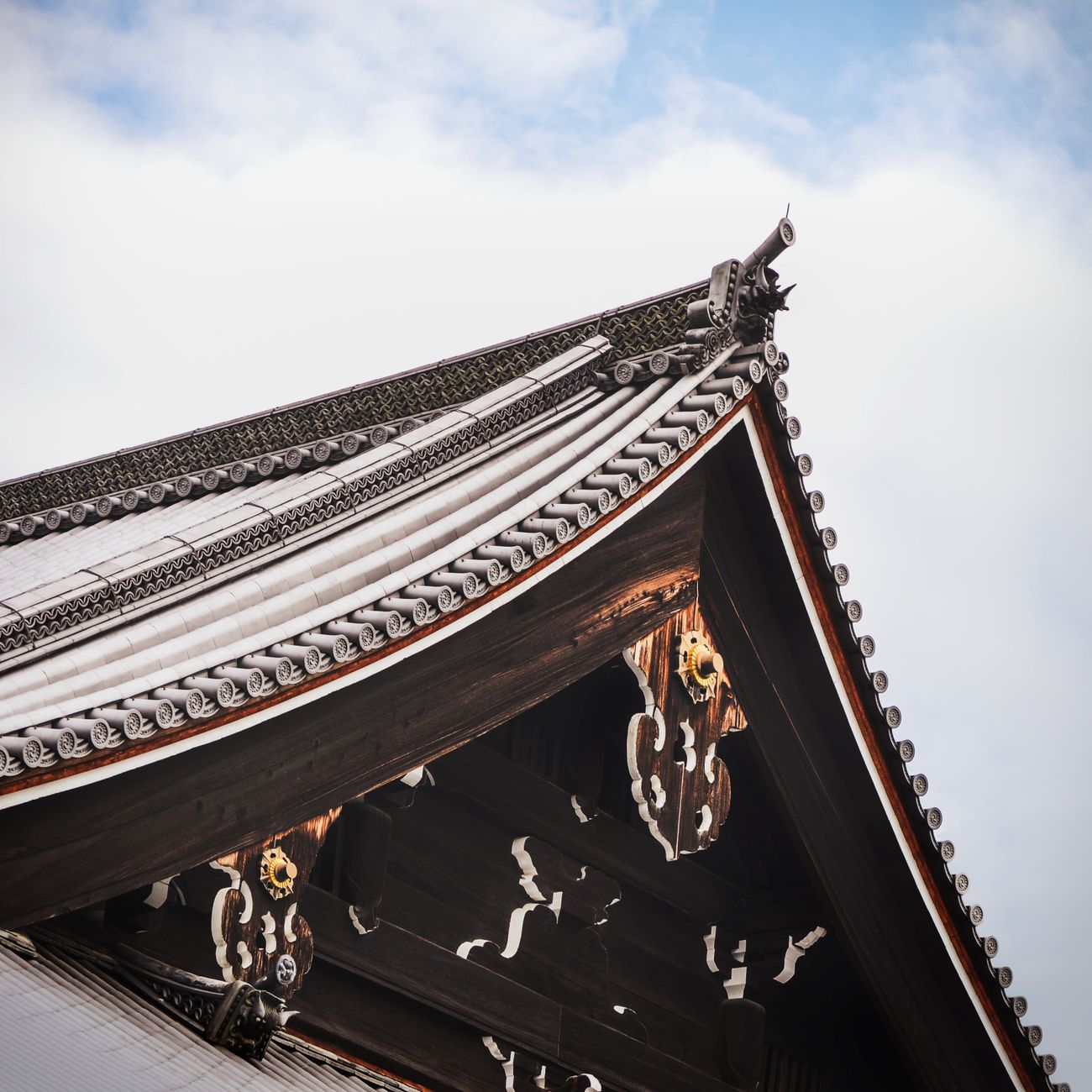
The craft that stayed home
Kyoto became a sanctuary for artisans when other cities industrialized. Kiyomizu-yaki pottery, Nishijin-ori silk weaving, yuzen textile dyeing—these crafts survived here because the city valued them enough to protect them. Workshops still cluster in old neighborhoods, third and fourth-generation craftspeople working in buildings their families have occupied for a century.
You'll find them in Higashiyama, in the alleys behind the tourist streets. A ceramicist hand-turning a tea bowl. A weaver threading silk so fine it catches light like water. They're not performing tradition—they're living it, the same way their hands learned it from hands before them.
What remains when speed leaves
Tokyo shows you Japan's future. Kyoto shows you its memory—not as nostalgia, but as a living choice. The city didn't reject modernity; it simply refused to erase what came before.
Walk its streets at dawn, before the crowds, and you'll hear it: the swish of a broom on stone, the distant ring of a temple bell, the soft creak of a wooden shop door opening for the first time that day, the same way it has for generations.
FAQ
Chaware curates authentic Japanese crafts — straight from the makers in Japan to your table.
Explore the Chaware collection →