Oshima Tsumugi: The Ancient Art of Amami's Mud-Dyed Silk
On this page
The iron-rich mud of Amami Oshima holds a secret: when silk meets earth, chemistry becomes art. For more than a millennium, weavers on this subtropical island have turned thread into cloth so prized that it stands alongside Gobelins tapestry and Persian carpets as one of the world's three great textiles.
Earth and Tannin
Oshima tsumugi (大島紬) begins not at the loom but in the dye vat and the paddy. Weavers steep silk thread in a decoction of teechi-gi (sharinbai, a local shrub), drawing out its tannins. The thread then goes into the iron-rich mud of Amami's fields, where a quiet reaction unfolds: tannin meets iron oxide, and the silk darkens to a deep, subdued black that seems to absorb light rather than reflect it. This dorozome (mud-dyeing) is the signature of Oshima tsumugi, a technique that transforms humble materials into something luminous in its restraint.
The process is neither quick nor forgiving. Thread may be dipped and dried dozens of times before the colour settles into the fibres with the permanence the cloth demands.
A Thousand Years of Tribute
Amami Oshima's weaving tradition runs some 1,300 years deep. In 734, records note a reddish-brown pongee from the southern islands sent as tribute to the imperial court. The cloth was valued then as it is now: not for ostentation but for the quiet authority of its making. Over centuries, the techniques refined, the patterns grew more intricate, and the island's weavers became custodians of a knowledge passed from hand to hand.
The designation as one of the world's three great textiles is no mere marketing flourish. It reflects a recognition that certain crafts transcend their origins, becoming benchmarks against which others are measured.
The Shimebata Revolution
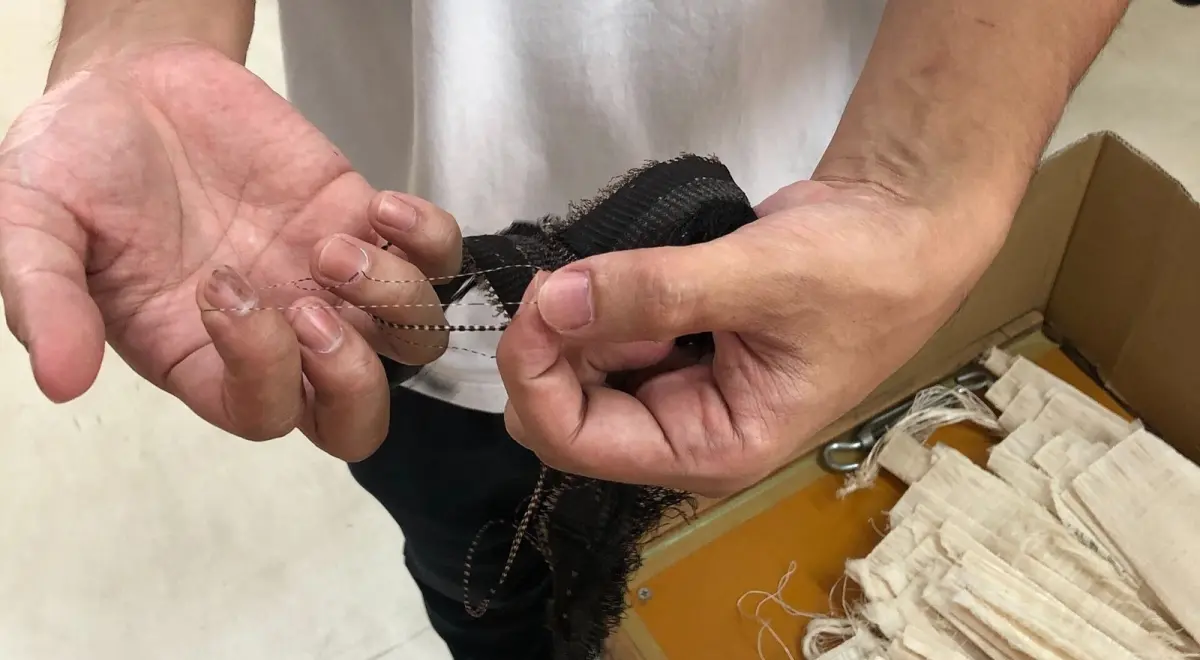
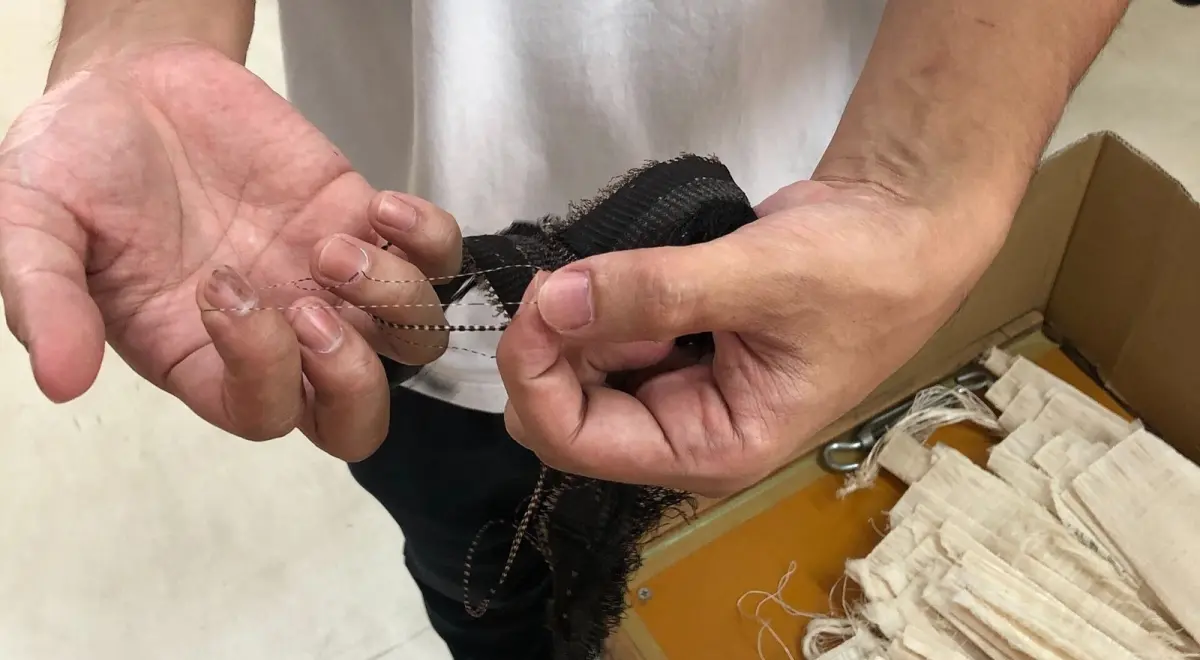
Around 1902, a technical innovation changed the possibilities of kasuri (絣), the resist-dyed patterns that give Oshima tsumugi its visual complexity. The shimebata (締機), a binding loom, allowed weavers to mark out patterns with unprecedented precision. Thread is bound tightly in predetermined sequences, protecting certain sections from the dye. When the bindings are removed and the threads woven, the reserved areas form intricate geometric motifs, some so fine they require a magnifying glass to appreciate fully.
The shimebata does not weave the final cloth; it weaves the blueprint. The true fabric emerges only when dyed threads meet at the loom, their hidden patterns clicking into place like a lock finding its key.
This two-stage process—pattern-binding, then weaving—demands both mathematical precision and an intuitive grasp of how thread will behave under tension.

Wearing the Island
A finished bolt of Oshima tsumugi carries the weight of its making. The cloth is substantial yet breathable, its surface marked by the slight irregularity that distinguishes hand-work from machine perfection. The colours—typically blacks, browns, and deep indigos—resist fading, a testament to the chemical bond forged in the mud. Patterns range from bold stripes to kasuri so delicate it resembles pointillism in silk.
Wearers speak of the fabric's resilience. A well-made kimono in Oshima tsumugi can outlast its owner, the silk growing softer with age while the structure holds. This durability, paired with the cloth's understated elegance, has made it a favourite for formal occasions where quiet confidence matters more than flash.
The Weavers' Calculus
Today, Oshima tsumugi remains a living craft, though the number of practitioners has dwindled. Each bolt represents weeks or months of labour: the gathering of sharinbai, the mud-dyeing cycles, the painstaking work at the shimebata, the final weaving. The economics are unforgiving, the knowledge transfer fragile. Yet the cloth endures, carried forward by those who understand that some things cannot be rushed, cannot be replicated by machine, cannot be separated from the hands and earth that made them.
The mud of Amami still holds its secret, waiting for the next length of silk.
FAQ
Chaware curates authentic Japanese crafts — straight from the makers in Japan to your table.
Explore the Chaware collection →
Keep exploring


