Naruko Kokeshi: The Wooden Dolls of Tohoku That Speak Through Sound
On this page
The mountain valley steams year-round, and for two centuries its woodturners have shaped souvenirs that sing. Twist the head of a Naruko kokeshi and it answers with a soft squeak—a voice born not of hinges or springs, but of wood pressed to wood with such precision that friction itself becomes sound.
Born in the Bathhouse Towns
Naruko kokeshi (鳴子こけし) emerged in the late Edo period in what is now Osaki, Miyagi Prefecture, centred on the hot-spring resort of Naruko Onsen. Woodturners who supplied the region's timber trade began crafting simple turned-wood dolls—limbless, painted, cheerful—as toys and keepsakes for visitors soaking in the thermal baths. The valley's abundant beech and dogwood gave the turners their canvas; the steady flow of travellers gave them a market. What started as a side-line became a signature, and Naruko's dolls grew distinct from the kokeshi made elsewhere in Tōhoku.
The Shape That Sings
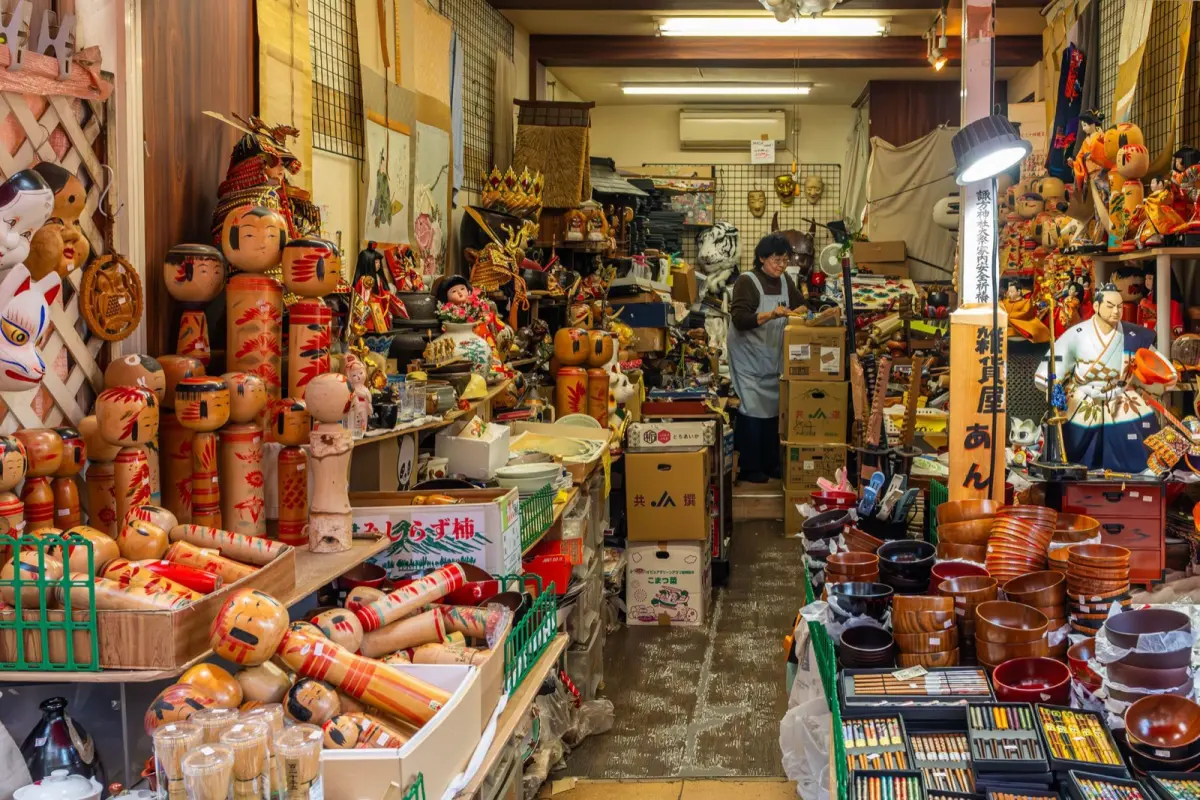
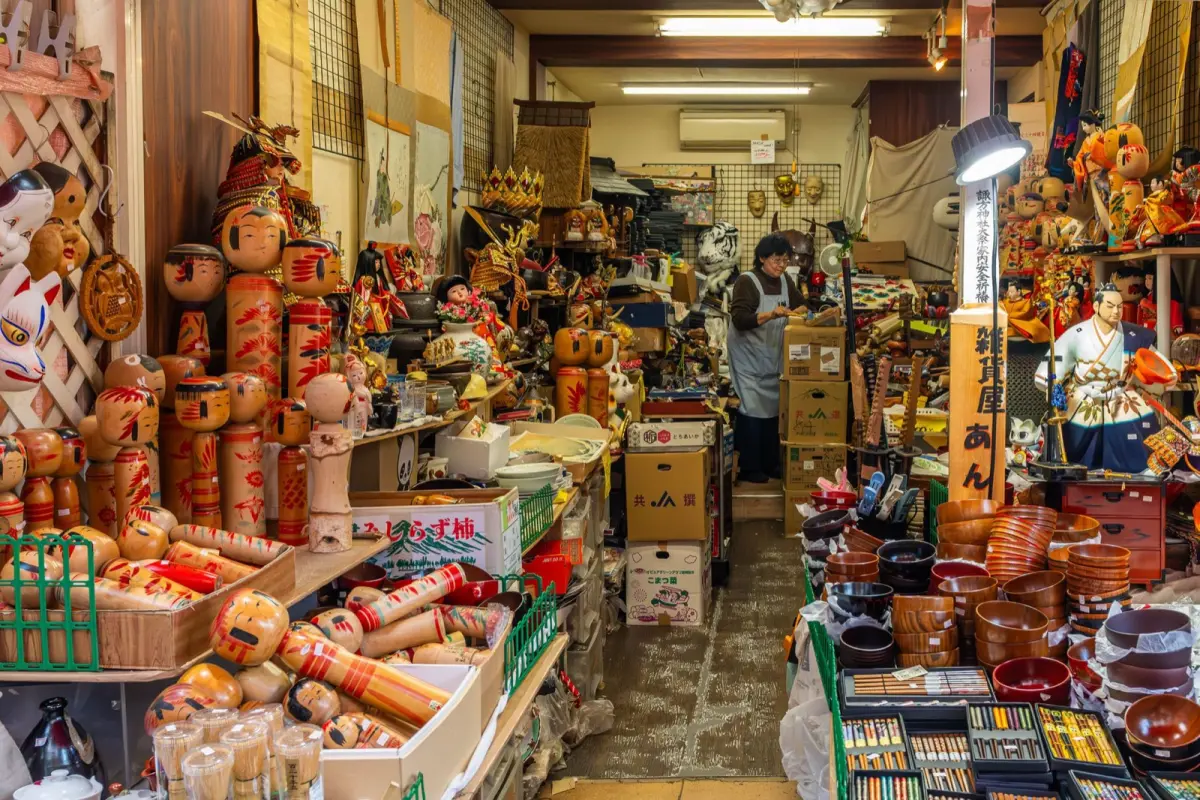
The Naruko type is unmistakable: a large, gently rounded head; a body that tapers at the waist before flaring slightly at the base; and surfaces alive with chrysanthemum patterns—bold, radiating blooms rendered in red, yellow, black and green. But the doll's most famous feature is audible. The head is fitted onto the body not with glue or pegs, but by friction alone, pressed on while the lathe spins. Turn it, and the wood fibres rub and compress, producing a distinctive kyu-kyu squeak. For generations, that sound has been both proof of craft and a small delight, a whisper of the maker's hand.
Master to Pupil, Lathe to Lathe
The techniques of Naruko kokeshi pass directly from master to pupil, an unbroken lineage of turning, painting and fitting. Each maker works alone at the lathe, shaping the doll's form in a single session, then painting freehand—no stencils, no templates—the floral motifs and fine black lines that frame the face. The apprentice watches, then tries, then watches again. Around fifty makers continue the craft in Naruko today, their workshops clustered in the valley, their methods rooted in gestures learned by repetition and feel. The knowledge is embodied: how hard to press the head, how fast to spin the lathe, when the squeak will come.

A Doll, a Souvenir, a Voice
The kyu-kyu sound is not incidental. It is proof that the head and body were married on the lathe, that no adhesive intervened, that the maker trusted friction and fit.
For the bathers who first bought them, Naruko kokeshi were tokens of a journey—small, sturdy, unmistakably local. For collectors today, they remain markers of place and skill, each one a record of a particular hand, a particular day at the lathe. The dolls do not aspire to realism; their faces are serene, their proportions stylised. What they offer instead is presence: the warmth of turned wood, the brightness of hand-painted blooms, and that soft, insistent squeak when you turn the head—a voice that says I was made here, and made well.
Still Turning in the Valley
Naruko Onsen still draws visitors to its hot springs, and the workshops still turn. The craft has neither frozen into museum-piece nor dissolved into nostalgia; it persists as a living practice, adapted quietly to new hands and new markets but faithful to its core techniques. The Naruko kokeshi you find today are made much as they were in the late Edo period: one piece of wood, one lathe, one set of hands, and the friction that makes the doll sing.
In the valley where steam rises and wood turns, the squeak endures.
FAQ
Chaware curates authentic Japanese crafts — straight from the makers in Japan to your table.
Explore the Chaware collection →
Keep exploring


