Marugame Uchiwa: Inside Japan's Round Fan Capital and Its 300-Year Craft
On this page
Article Body
The port town of Marugame sits on the northern coast of Kagawa Prefecture, where the Seto Inland Sea meets the foothills of Shikoku. For nearly four centuries, its workshops have turned out rigid round fans by the million—each one carved, split, and pasted by hand through forty-seven distinct steps, each handle and rib emerging from a single length of bamboo.
A Priest, a Shrine, and a Souvenir
The story begins in 1633, during the tenth year of the Kan'ei era, when the head priest of Konko-in temple devised a shibu-uchiwa stamped with the character for Konpira. Pilgrims bound for the famous Kotohira Shrine landed at Marugame port, and the fans quickly became cherished souvenirs—light, practical, and blessed with the shrine's protective aura. By the 1860s, some 800,000 fans were leaving Marugame each year, carried home across the archipelago by travelers who had climbed the long stone stairway to pray.
The local domain, facing financial strain, soon recognized the fans' economic promise and actively promoted the craft. What had begun as a temple novelty became a regional industry, woven into the rhythms of port life and pilgrimage.
One Piece, Forty-Seven Steps
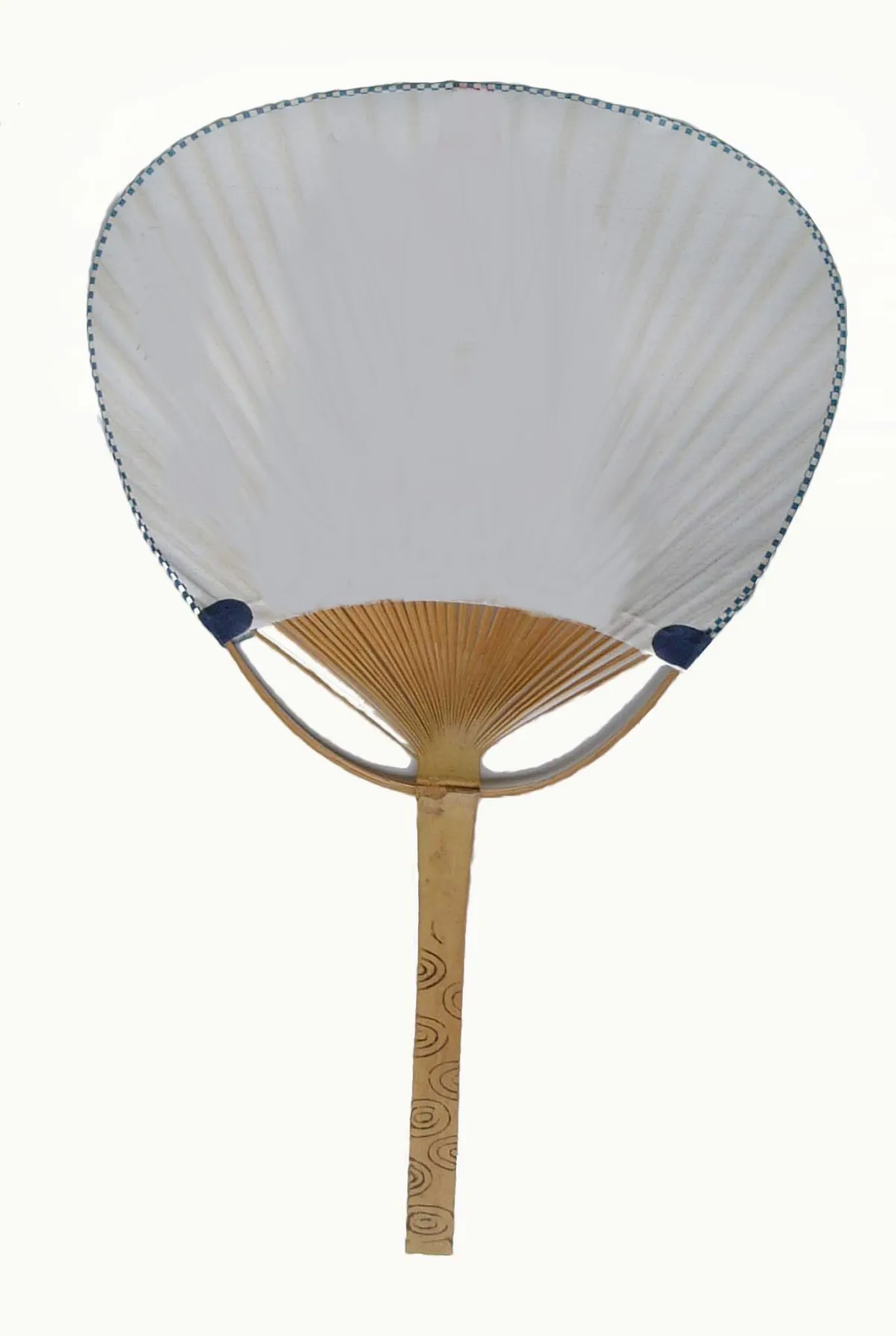
The defining feature of a Marugame uchiwa (丸亀うちわ) is structural: the handle and radiating ribs are cut from a single piece of bamboo, never joined or glued. This demands both precision and patience. A craftsman splits the bamboo lengthwise, shaves it to the correct thickness, then carefully fans out the ribs while leaving the base intact—a process that requires an intimate understanding of the grain and flexibility of each stalk.
From there, the fan passes through forty-seven steps before completion:
- Splitting and shaving the bamboo
- Fanning the ribs into their circular frame
- Pasting washi paper or fabric to both sides
- Trimming, drying, and finishing the edges
Each stage is traditionally handled by a specialist, though some artisans now master multiple steps to preserve continuity in smaller workshops.
The Flat-Handle Standard
Today's dominant form is the otake hira-e (大竹平柄) type, characterized by its flat handle and broad, sturdy ribs. This style balances elegance with durability, making it suitable for everything from summer festivals to everyday use. The flat handle sits comfortably in the hand, and the rigid frame—unlike folding fans—holds its shape through years of service.
Marugame now produces over 100 million fans annually, accounting for roughly ninety percent of Japan's total output. The scale is industrial, yet many workshops still honor the old methods, training apprentices in the patient art of splitting bamboo and aligning ribs by eye.

Beyond Function
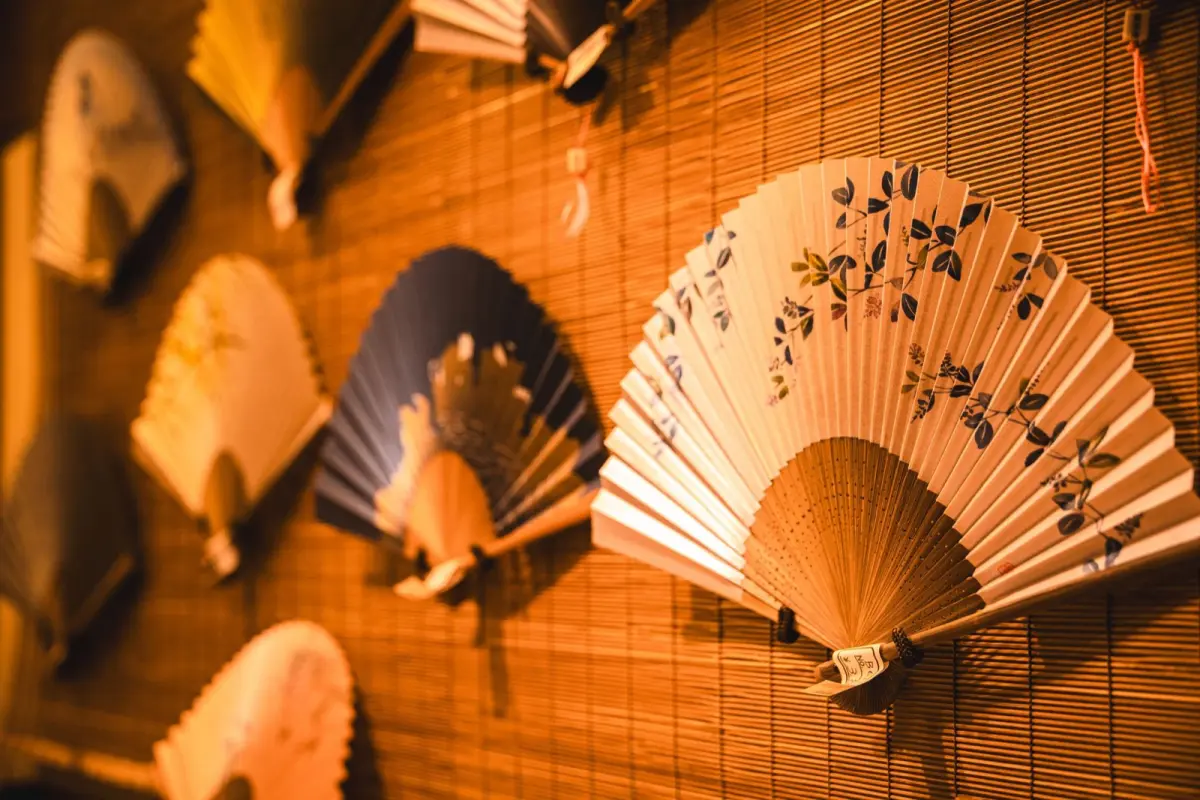
While the uchiwa is fundamentally a cooling tool, its surface has always invited decoration. Early Konpira fans bore sacred characters; later designs featured ukiyo-e prints, calligraphy, and seasonal motifs. Today's fans range from minimalist washi blanks to vibrant reproductions of Edo-period woodblocks, each one a small canvas that moves through the summer air.
The fan's rigidity—its refusal to fold—gives it a presence that folding fans lack. It hangs on a wall when not in use, a functional ornament that marks the season.
A Craft Rooted in Place
Marugame's fan-making endures because it grew from genuine need: pilgrims wanted mementos, the domain needed revenue, and the port provided both bamboo and distribution routes. The craft adapted—mechanizing some steps, refining others—but the core principle remains. One piece of bamboo, forty-seven steps, and a fan that carries four centuries of coastal history in its frame.
FAQ
Chaware curates authentic Japanese crafts — straight from the makers in Japan to your table.
Explore the Chaware collection →
Keep exploring


